Knowledge Networking Portal for Sustainable & Responsible Tourism


 RESTAURANT LUFTBURG
| Contributeur | Herbert Hamele |
|---|---|
| pays | Austria |
| Mots-clés |
|
| Organisation | RESTAURANT LUFTBURG |
| adresse postale | Prater 121, Hauptalleee, 1020 Wien |
| Site web | http://kolarik.at |
| Date de sortie: | 08/04/2022 |
| Type de milieu | urbain |
| Sujets |
|
| GSTC Criteria for Industry |
|
| Marketplace category |
|
| Type (traduire par un nom) |
|
| # | Nom du fichier | Contributeur | Date de sortie: | Uploaded by | Date de Mise a Jour | taille | Type de contenu |
|---|
|
|
|
|
Category: |
Restaurant |
|
Size: |
Medium |
|
Protected areas nearby: |
Wiener Prater, close to Donau-Auen National Park |
|
Certifying body: |
Austrian Ecolabel for Tourism |
|
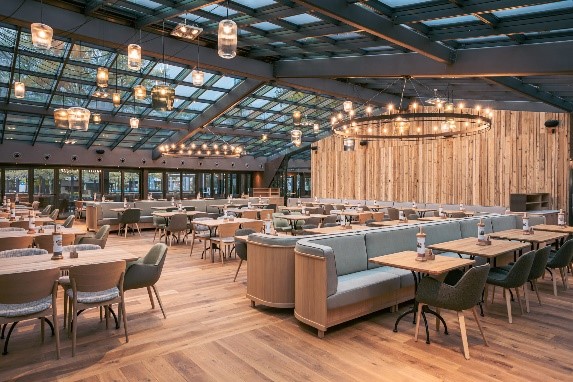
Outstanding contributions The Luftburg identifies itself as the largest fully certified organic restaurant in the world. It is located in the green Prater area of Vienna and carefully manages its site for biodiversity. Energy is partly provided by photovoltaic systems and ventilation and refrigeration uses heat recovery, with a future switch to 100% renewable energy. Waste separation, recycling and minimal use of water are all important to them, supported by regular staff training in these matters. A considerable effort is made by the team, together with their suppliers, to ensure that 100% of the food is certified organic. A local farmhouse beer from organic malting barley is used exclusively in the restaurant. Any leftover cooking oil is converted to biodiesel. Guests are encouraged to take away uneaten food in biodegradable containers. There is an active policy towards diversity. For years they have employed recognised asylum seekers who learn German with them and are helped to integrate into the local society. They have also created jobs for people with specific disabilities, supported by personal mentors. |
|
Key SDGs related to this action |
|
|