Knowledge Networking Portal for Sustainable & Responsible Tourism


 Manaslu Circuit Trek in Autumn VS in Spring
Learn the best trekking season for Manaslu Circuit Trek by comparing two seasons, Autumn and Spring, to plan your trek in the Himalayas effectively.
Actually, seasons selection plays an important factor in determining the overall experience of the Manaslu Circuit Trek (5106m). Hence, trekkers need to weigh the advantages of both autumn (September-November) and spring (March-May) seasons before choosing the most appropriate time for the journey. Autumn is characterized by clear skies, favorable weather, and rhododendron blooms, making it an ideal season for photographers, whereas spring provides trekkers with lush vegetation, favorable weather, and various flowers, making it an ideal season to take on this adventure.
Additionally, the temperature in autumn during Manaslu Circuit Trek is moderate in the daytime, making it suitable for high-altitude treks in Sirdibas (1,800m) and Jagat (1,300m). Spring, on the other hand, has warmer temperatures with melting snow, making it easier to access the high passes such as Larke Pass (5,106m). In addition, there are fewer trekkers in spring compared to autumn. Hence, it becomes imperative in making arrangements for Manaslu Circuit Trek.
Moreover, trekking operators provide Manaslu Circuit Trek packages according to seasonal variation. The cost for autumn is slightly higher owing to peak tourist season, while spring packages may require discounts but entail a slight risk of rain and snowfall. The trekking guides also provide instructions on techniques to acclimatize to the environment around Samagaon (3,530m) and Manaslu Base Camp (4,850m) for trekkers regardless of their travel season. Indeed, awareness about seasonal benefits and risks is essential to enable planning for a safe and rewarding trekking experience with minimal expenses.
Therefore, both autumn and spring seasons are favorable for a Manaslu Circuit trek. Trekkers can choose a season based upon weather stability, scenic beauty, exposure to culture, and difficulty level. By comparing both seasons, it is possible for the enthusiasts to have a complete experience amidst the Himalayas, while also staying safe and sound. The factors mentioned above will help the adventurers have a successful and unforgettable trekking expedition at a remote region in Nepal.
0.81855800%201738673284.webp)
Introduction to the Manaslu Circuit Trek Trail: Larke Pass & the Himalayan Region
Explore the trail of Manaslu Circuit trek, which includes Larke Pass (5,106m), and experience the untouched Himalayan regions for an unforgettable experience.
To begin with, the Manaslu trail length of the Manaslu Circuit Trek is around 177 km, and it circumambulates Mount Manaslu (8,163m), which is the world’s eighth-highest mountain. The trek passes through isolated villages in the Himalayas, and it passes along deep valleys and mountain passes, thus making it an adventure-filled trek. Points of interest along the trail include Soti Khola (700m), Jagat (1, 300m), Dharamsala (1,960m), Namrung (2,660m), Samagaon (3,530m), and Larke Pass (5,106m). Its varied altitudes provide an opportunity to encounter different environmental conditions, from subtropics to Alpine regions, thus providing an experience that encompasses trekking in the Himalayas.
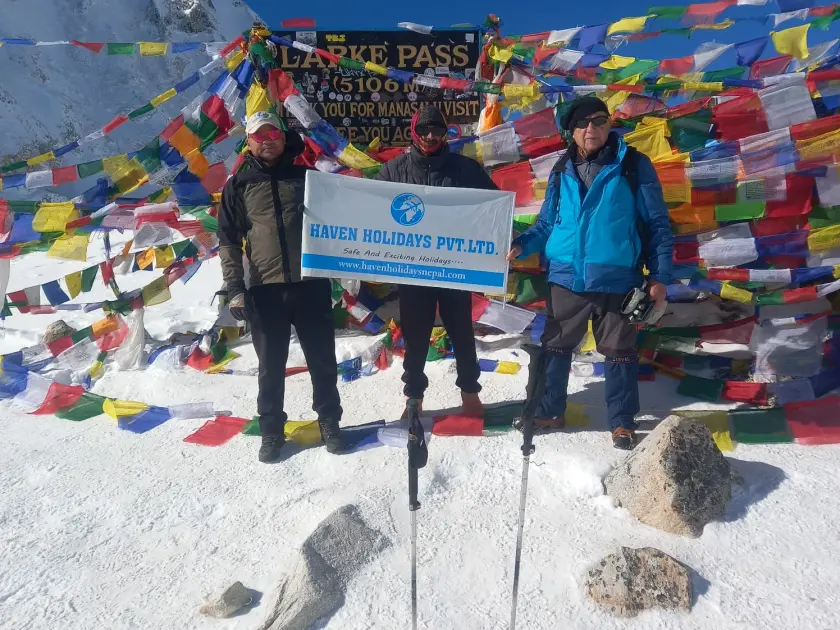
Furthermore, passing through Larkya La Pass, measuring 5,106 meters, is considered the most difficult part of this trekking adventure. Climbers have to acclimate and adjust themselves in Samagaon (3,530 meters) and Dharmasala (1,960 meters) if they want to successfully move past the pass. Climatic changes also vary, depending on whether it is autumn, where the trails are more evident, or spring, where there is melting and greenery on the trails.
In addition, being part of the Manaslu Circuit, there are culturally rich and remote villages that trekkers get a chance to experience, such as the Gurung, Tamang, as well as Tibetan communities. These villages, such as Namrung at 2,660m and Samagaon at 3,530m, help trekkers experience what it is like to be surrounded by Buddhist monasteries, festivals, and ways of life. In other words, trekking, as part of the Manaslu Circuit, offers trekkers a complete Himalayan experience.
In conclusion, Manaslu Circuit Trek is a perfect combination of adventure activity, cultural exposure, and witnessing nature’s grandeur. Climbing Larke Pass (5,106m) is an adventurous activity that physically challenges trekkers but at the same time rewards them with stunning views of the Himalayas. Hence, it is necessary to prepare oneself for Manaslu Circuit Trek to have a safe and rewarding experience.
Manaslu circuit Trek in Autumn vs in Spring: Important Seasonal Contrast Highlights
Compare Manaslu circuit Trek in autumn and in spring. Find out seasonal variations in climate/weather, scenery, and trekking in 2025.
The main differences between the seasons is the following:
| Feature | Autumn (Sept-Nov) | Spring( Mar- May) |
| Weather | Clear skies, stable | Moderate, |
| Landscapes | Dry and crisp mountains | Heavy vegetation, |
| Crowds | High, popular season | Low |
| Costs | Higher lodges & permits | Slightly lower |
| Wildlife & Flora | Limited blooms | Colorful flora, more sightings |
Firstly, autumn and spring seasons have their own special experiences in Manaslu Circuit Trek (5,416m). The trekkers during the autumn season have favorable weather, clear sky, and stunning views of mountains Manaslu (8,163m) and Himalchuli (7,893m). Additionally, during spring season, there is lush green vegetation, rhododendron flowers, and favorable weather, making it more favorable for trekking. Thus, it is evident that choosing seasons determines the level of scenery, safety, and trekker satisfaction.
Further, density in a crowd along Manaslu Circuit Trek differs greatly in both seasons. The autumn season is the best time for trekking, particularly in Larke Pass (5,160m) and Samagaon (3,530m). In contrast, Spring is a less crowded season, offering a peaceful Himalayan adventure along with a chance for spotting wildlife and interacting with locals in isolated villages such as Namrung (2,660m) and Sama (3,880m). As such, season differences influence all aspects of trekking. Keywords: Larke Pass trek, Manaslu trekking experience, Himalayan villages.
Likewise, trail conditions also vary according to the season. In autumn, the trail is relatively dry, thus less slippage and easier river crossings at Budhi Gandaki. In spring, there may still be mushy areas from melting snow, especially when trekking to Dharamsala (1,960m) and Bimtang (3,720m). Hence, appropriate gear such as trekking poles and preparing for changed conditions offered by the seasons is highly recommended. Keywords: Trail conditions of Manaslu, trekking conditions of Budhi Gandaki, trekking of high altitude.
Therefore, a comparison between the two seasons will help trekkers pick the most favorable time for the Manaslu Circuit Trek (5,416m). The possibilities in both seasons are:
Autumn: It has clear views and festivals. Spring has greenery and fewer people. Such parameters help trekkers have a safe and fascinating Himalayan trek.
Weather Conditions in Autumn vs Spring in Budhi Gandaki Valley
Weather patterns in the Budhi Gandaki Valley for Manaslu Circuit Trek. Comparison of autumn and spring treks.
Firstly, the Budhi Gandaki Valley (700-3,880m) has different types of weather conditions in autumn and spring. Autumn has favorable weather conditions with less rainfall, clear skies, and limited snowfall around passes such as Larke Pass (5,160m). In contrast, in spring, the weather conditions are slightly warmer with melting snow and rainfall, resulting in lush scenery but higher river levels.
Hence, it is important for trekkers to have an understanding of the weather conditions. Keywords: Budhi Gandaki Valley trekking, Manaslu Circuit weather, high-altitude conditions.
At the same time, variations in temperature can also affect acclimatization levels as you move through the valley. In autumn, day temperatures vary between 10°C at Jagat, with an elevation of 1,300m, to as low as -5°C at Larke, measured at 5,106m, though temperatures are a bit higher in spring, making it easier to endure mountain sickness exposure. Nonetheless, low night temperatures are experienced in both periods, necessitating the need for insulated sleeping bags.
Furthermore, the level of precipitation affects the safety on trails and landscapes. The dry trails in autumn make landslides less likely, and the mountain views are spectacular enough for picture-taking opportunities, especially for peaks such as Manaslu (8,163m) and Ngadi Chuli (7,871m). During the spring, the melting of snow causes higher levels in the Budhi Gandaki River, making trails slightly tough via river crossings and bridges.
As such, trekkers should be ready for the different trails associated with varying seasons. Additionally, the ever-changing season and related weather also influence the cultural and village aspects of the trek along the valley. Autumn leads to the festival and harvest celebration in Samagaon (3,530m) and Namrung (2,660m), thus increasing the cultural experience.
However, the spring season provides blooms and more sighted wildlife, especially around Bimtang (3,720m), along the trek to Manaslu Circuit.
To sum up, knowledge about weather variations in the Budhi Gandaki Valley is important for a Manaslu Circuit Trek that is safe and rewarding. Autumn is characterized by clear weather, dry trails, and cultural events, while spring is characterized by warm weather, vegetation, and scenic views.
 Macha Khola to Jagat Trail Condition during Autumn and Spring Seasons
Learn the trail conditions from Machha Khola (869m) to Jagat (1,300m) in the Manaslu Circuit Trek. See the differences in trekking trails between autumn and spring.
For purposes of comparison, it is helpful to refer to this seasonal table of trail conditions:
| Feature | Autumn | Spring |
| Surface material | Dirt & stone path | Dirt & stone path |
| River Crossings | Smooth, secure bridges | Large, tentative |
| Vegetation | Vegetation density, | vegetation openness |
Firstly, the trek from Machha Khola (869m) and Jagat (1,300m) to the Manaslu Circuit Trek (5,106m) is a section that needs to be taken seriously. During the autumn season (September to November), the trek will be dry and safe from landslides. However, during the spring season (March to May), the melting of snow and wet conditions from rains make the trek slippery as it follows the sides of the river.
Additionally, the river crossing as it leads to the Budhi Gandaki River will be problematic due to high river waters. However, trekking poles will be necessary.
Additionally, the trail surfaces are varied in this trek. The Autumn Trail has surfaces of the packed earth trail, stone steps, as well as wooden bridges. The Spring Trail has mud trails, parts of the trail are destroyed, minor swollen rivers, as well as suspension bridges. There is variation in the vegetation along the trail that the trekkers experience. The Spring Trail has full vegetation. On the other hand, the Autumn Trail has better views of the surrounding mountains.
Furthermore, acclimatization to high altitude is also crucial in lower regions. The trek from Machha Khola (869m) to Jagat (1,300m) is moderately difficult but provides a crucial acclimatization for crossing Larke Pass (5,106m). The autumn season provides a conducive environment for trekking because of the warm climates. On the other hand, during the spring season, due to higher temperatures and moist environments, it might impact acclimatization. Hence, trekkers are advised on proper daily distance coverage in a rhythmic manner for acclimatization.
To sum up, weather conditions while trekking from Machha Khola (869m) to Jagat (1,300m) play a crucial role in making this part of your Manaslu Circuit Trek more pleasant and safer. The climate in autumn offers stable trails with good views, while in spring, trekkers can look forward to lush vegetation and snowmelt trails that require some effort to climb.

Comparison of Mountain Visibility in Autumn and Spring from Namrung, Lho, and Samagaun
Comparison of Mountain Visibility Namrung: 2,660m, Lho: 3,180m, Samagaun: 3,530m, autumn and spring on Manaslu Trek Circuit
Mountain Visibility Chart as per seasons:
| Settlement | Autumn | Spring |
| Namrung (2,660m) | Clear peaks, | panoramic |
| Lo Ho (3,180m) | Fabulous views of Manaslu | Clear but may get cloudy |
| Samagaun (3,530m) | Crisp mountain views | Clear but may disturb by clouds |
Firstly, the visibility of the mountains is also an essential criterion for trekkers willing to take pictures of the peaks of the Manaslu Circuit Trek (5,106 meters). During autumn (September to November), the good weather offers panoramic views of Manaslu (8,163 meters), Ngadi Chuli (7,871 meters), and Himalchuli (7,893 meters) from the villages of Namrung (2,660 meters), Lho (3,180 meters), and Samagaun (3,530 meters).
During the spring (March to May), the visibility is moderate, having some fog and clouds in the morning, but in the afternoon, the trekkers will appreciate the breathtaking views of the Himalayas. Season, therefore, directly influences the observation and photography of the peaks. Keywords: Visibility of the Namrung mountains, trek to Samagaun.
In addition, visibility influences trekking activity in high-altitude settlements. Autumn enables trekkers to see unobstructed views of valleys, ridges, and terrained areas, making trekking even more satisfying. Spring brings vegetation and rhododendrons that flower, though they will hinder views of mountains in the distance, offering perfect landscapes for photographers.
Therefore, trekkers will consider striking landscapes of vegetation, as well as clear mountain views, while selecting trekking periods.
Also, altitude and weather characteristics affect the clarity of peaks. From Namrung (2,660m) to Samagaun (3,530m), the early-autumn morning trek offers clear views of Manaslu (8,163m) and Shringi Himal (7,187m) through fresh mountain air. However, spring morning treks can postpone the sight through cloudy formations and mist. Early starts or afternoon openings allow trekkers to take ample pictures.
Therefore, for trekkers giving prime importance to mountain visibility during their Manaslu Circuit Trek, autumn is considered a better season with clear views from Namrung (2,660m), Lho (3,180m), and Samagaun (3,530m). Although spring seasons have lush scenery with rhododendron flowers, visibility could be affected during mornings. Season-aware trekkers can take advantage of better photographic and sightseeing opportunities during Manaslu Circuit Trek.
Comparison of Spring Rhododendron Blooms and Autumn Golden Forests near Deng and Ghap
The Manaslu Circuit Trek offers spring rhododendrons in bloom and golden forests in fall around Deng (1,860m) and Ghap (2,050m).
To better see the differences between the seasons, a comparison chart can be very helpful:
| Feature | Spring (Mar–May) | Autumn (Sep–Nov) |
| Forest Color | Red, pink, white rhododendrons | Golden and amber trees |
| Trail Conditions | Lush, slightly damp | Dry, stable paths |
| Wildlife | Active birds, marmots | Fewer active animals |
| Mountain Views | Partly obscured by vegetation | Crisp, panoramic views |
| Trekking Experience | Scenic, moderate challenge | Comfortable |
Firstly, the route in the vicinity of Deng (1,860m) and Ghap (2,050m) on the Manaslu Circuit Trek (5,416m) provides spectacular seasonal variation in natural scenery. Spring (March-May) sees the hillsides decorated by blooming rhododendron, while autumn (Sept.-Nov.) provides golden-colored forests, creating breathtaking mountain views in both directions, encompassing Manaslu (8,163m) and Himalchuli (7,893m) in the valley below. 
Thus, trekking route choice, in part, relies on scenic preferences, which depend on trekking route times.
Further, these seasonal variations influence the trekking experience as well as the sightings of the Himalayan wildlife. The greenery of the season of Spring brings in the birds’ sightings, the monkeys, as well as the Himalayan Marmots. The Golden forests of the Autumn season ensure easier routes, firmer surfaces, as well as fewer flies. Thus, the trekkers must consider the seasonal attractions in relation to the routes of the trekking in Deng and Ghap.
Furthermore, the effects of altitude and microclimates also affect the visibility of flora. While the altitude of Deng (1,860m) supports the earlier blooming of rhododendron flowers, that of Ghap (2,050m) supports the late autumn colors of leaves. Furthermore, spring’s moderate climate and levels of moisture increase the density of flowers, and the dry atmosphere of autumn improves the views of the distant mountains.
Hence, the choice of seasons significantly affects the landscape of trekking routes.
In conclusion, trekkers in the vicinity of Deng (1,860m) and Ghap (2,050m) have the opportunity to witness nature's wonders in whatever season they choose to set off on their journey. Rhododendrons bloom during spring, presenting picturesque scenes, although golden forests during autumn help increase visibility of mountains trekkers want to see. Taking into consideration flora, trekkers should also think about fauna activity during the journey of the Manaslu Circuit Trek.
Differences in Temperatures During Autumn and Spring in Higher Villages like Samdo
Read about temperature variations in Samdo (3,860m) and above in the autumn and spring seasons when trekking in the Manaslu Circuit.
Firstly, temperature variation greatly impacts trekking conditions in high-altitude villages such as Samdo (3,860m) during the Manaslu Circuit Trek of 5,106m. The temperature variation during autumn season (September-November) provides a cooler temperature of -5°C to -10°C at night and a 5°C to 10°C temperature during daytime. The temperature variation during the spring season of March-May provides a cool temperature of -2°C to -5°C in the night and an 8°C to 12°C temperature during the daytime. Therefore, temperature variation plays a critical role in preparing equipment for trekking.
In addition, it should be noted that seasonal temperatures play a crucial role in influencing snow and trail conditions. During autumn, the colder evenings ensure that there is little to no snowfall around Samdo (3,860m) and Dharmasala (1,960m), making the trail quite stable and snow-free. During the spring season, the melting of snow causes snow to soften, making it necessary to take great care to traverse towards Larke Pass (5,106m). Thus, a trekker needs to readjust their gear according to the temperatures they are going to experience.
Finally, variations in temperature during Manaslu Circuit Trek affect trekking speeds and energy patterns. The cooler climate in autumn ensures better visibility but may necessitate wearing additional clothing for insulating in early morning treks. The warm climate in spring makes acclimatization less strenuous, allowing trekkers to hike faster but may lead to some trail saturation. Adaptation plans, breaks, and fluid intake should thus factor in varying thermal changes according to the season.
In summary, temperature variations in higher villages such as Samdo (3,860m) and Lho (3,180m) must be considered when trekking. Autumn is favorable as it is cooler with stable trails, while spring is slightly warmer with challenges of melting ice. Trekkers should organize trekking activities in line with temperature variations for a safe and enjoyable Manaslu Circuit trek.
Acclimatization Experiences in Samagaun During Autumn and Spring
Read acclimatization tips and experiences in Samagaun 3,530m during autumn and spring on the Manaslu Circuit Trek. Optimize high-altitude trekking safety.
For a better planning, the following table is helpful for a seasonal acclimatization comparison:
| Factor | Autumn (Sept–Nov) | Spring (Mar–May) |
| Daytime Temperature | 8°C–12°C | 10°C–14°C |
| Nighttime Temperature | 2°C to -5°C -1°C to 2°C |
| Trail Conditions | Dry, stable paths | Wet, partially snowy paths |
| Acclimatization Hikes | Moderate, easy pace | Shorter, cautious pace |
| Recovery & Rest | Comfortable in teahouses | Slightly damp, moderate comfort |
Acclimatization at Samagaun will correctly prepare one for the Manaslu Circuit Trek to 5,106m. Autumn-September to November-offers crisp air, stable temperatures, and minimal precipitation, which all make for easier and more predictable acclimatization. Spring-roughly March to May-presents slightly warmer conditions, denser vegetation, and occasional snowfall that may affect both trekking pace and the time required for recovery. Thus, seasonal variances play a significant role in determining rest days and strategies for altitude adjustment.
Furthermore, different daily trekking schedules in Samagaun are possible according to the season. During autumn one is able to perform day-long, moderate hikes around Samagaun (3,530m) for acclimatization, exploring nearby villages and Buddhist monasteries, without overexertion. In spring, because the trails are wet and sometimes patches of snow make every step quite cautious, one needs to take shorter acclimatization hikes before higher passes like Larke pass at 5,106m. In that way, seasonal planning will be just about energy management and altitude adaptation.
Besides this, also accommodation and nutrition are important in acclimatization. Autumn has warmer daytime temperatures indoors in teahouses, promoting recovery, whereas spring nights are a little warmer; however, daytime humidity could impact the quality of rest. Trekkers should focus on hydrating well, taking high-calorie meals, and resting enough to avoid altitude sickness. Therefore, understanding seasonal conditions allows trekkers to adjust dietary and sleeping strategies for safe acclimatization.
In short, Samagaun at 3,530 meters offers an acclimatization stop for the Manaslu Circuit Trek. Autumn offers stable and predictable adaptation with crisp trails, while spring offers milder temperatures but slightly more challenging conditions. Understanding seasonal differences will give trekkers the ability to plan rest days, hiking schedules, and nutrition that can create safer high-altitude trekking and make the experience more enjoyable.
Crossing of Larke Pass in Autumn and Spring: Snow, Wind, and Safety Factors
The comparison of crossing the Larke Pass at a height of 5,106m during the autumn and spring in the Manaslu Circuit Trek from various angles, including snow and wind conditions and overall safety.
Clarity is enhanced by the following comparative safety and trail condition chart:
| Feature | Autumn (Sept–Nov) | Spring (Mar–May) |
| Snow Coverage | Minimal, dry trail | Partial, soft snow |
| Wind | Moderate, predictable | Gusty, unpredictable |
| Trail Surface | Stable rocks & dirt | Icy or muddy patches |
| Trekking Difficulty | Moderate | Challenging |
| Safety Precautions | Standard | high-altitude gear, extra layers, poles, crampons |
First, the highest and most challenging point of Manaslu Circuit Trek is Larke Pass, which attains 5,106m above sea level, whereas the pass itself reaches 5,416m. During autumn, the season ranges from September to November, on the pass dry trails, low snowfall, and stable winds allow relatively safe crossing for properly acclimatized trekkers. In spring, from March to May, conditions change because of melting snow, occasionally high winds, and softer trails, which enhance technical difficulties and demand extra caution for crossing. Thus, seasonal differences greatly affect the strategy for trekking, safety, and success rate.
Furthermore, changes in weather conditions have a direct bearing on crossing timings and preparation. While the autumn mornings are usually clear, allowing for early crossing before afternoon winds rise, spring weather can change abruptly, with fog or cloud cover in the morning affecting visibility; thus, schedules should be flexible enough to include alternative planning. Therefore, the trekkers need to monitor conditions closely and follow experienced guide advice for safe passage.
Furthermore, altitude acclimatization and the equipment used for Manaslu Circuit trekking play a very important role. During autumn, the snow level is low, and cold, dry air reduces the risks of slips, while during spring, crampons, poles, and layering clothes are needed to navigate partially icy or soft sections. Windproof gear is necessary during both seasons, but at spring time, wind speed can attain 40–50 km/h. Thus, proper preparation is very important to guarantee safety, comfort, and successful crossing.
In essence, autumn and spring are two complete opposite scenarios while crossing the Larke Pass at 5,160m. While autumn offers dry and stable trails with clear skies and moderate winds, spring shows patches of snow, higher winds, and a need for more caution. Seasonal development of snow and wind conditions, coupled with proper equipment and acclimatization, are important factors to note for a safe and successful Manaslu Circuit Trek.
Crowds on the Manaslu Circuit: Autumn Peak Season vs Quieter Spring Trails
In the autumn peak season and spring, compare the crowd on the Manaslu Circuit Trek-5,416m. Plan your Himalayan adventure efficiently.
To put this into perspective, a crowd calendar comparison based on seasons is helpful:
| Factor | Autumn (Sept–Nov) | Spring (Mar–May) |
| Trail Congestion | High, busy paths | Low, quiet trails |
| Tea-house Availability | Limited, book in advance | Wide availability |
| Trekking Cost | Slightly higher | Moderate |
| Wildlife Sightings | Less frequent | More frequent |
| Overall Trekking | Experience POPULAR, | FESTIVE REMOTE, PEACEFUL |
Actually, the trekking experience in the Manaslu Circuit Trek at 5,416 meters is influential of crowd levels. Indeed, villages such as Samagaun at 3,530 meters above sea level and Lho at 3,180 meters above sea level are filled with trekkers during the peak season between the months of September and November. Teahouses and trails can be full, and the number of trekking permits may be limited. Spring offers quieter trails, fewer trekkers, and less crowded accommodations for a more secluded Himalayan experience.
Moreover, higher crowd density affects logistical planning and travel comfort during your Manaslu Circuit Trek. During autumn, trekkers may experience longer waiting times at teahouses in Namrung 2,660m or Ghap 2,050m, with costs rising slightly due to high demand. In spring, fewer crowds may lead to more lenient accommodation options and lower prices for trekking packages. Thus, travelers have to balance crowd enjoyment with convenience, cost, and safety during the travels.
Furthermore, this impacts the trekking speed and even the group dynamics. For this reason, autumn trails are sometimes really crowded, calling for some careful navigation across suspension bridges and narrow paths along the Budhi Gandaki River. During spring, less crowding on the route allows faster progress to be made, with reportedly better trail experience and better opportunities to spot wildlife near Deng (1,860m) and Bimtang (3,720m). This implies, therefore, that seasonal planning will affect both efficiency and trekking satisfaction.
In short, the crowding on the Manaslu Circuit Trek can be quite dramatic between autumn and spring. While autumn presents teeming trails with bustling social interactions, spring is the assurance of quiet and immersive trekking in the remote Himalayas. A trekker needs to consider a season based on preference for crowding, cost, and cultural interaction.
Ethnics festivals encountered in autumn vs spring along the Manaslu route
Learn about the cultural festivals that one gets to experience around the Manaslu Circuit Trek during the seasons of autumn and spring at 5,106m above sea level. Behold the traditions and rituals of the locals living in the Himalayas.
For showing the timing of festivals, as well as experiences, a seasonal cultural comparison chart is helpful:
| Village | Autumn Festivals | Spring Activities |
| Samagaun (3,530m) | Harvest festivals masked dances | Local festivals viewing flowers |
| Namrung (2,660m) | Monastery rituals, community gatherings | Small rituals, spring planting. |
| Lho (3,180m) | Cultural dances, prayer ceremonies | Quiet community activities |
| Samdo (3,860m) | Tibetan festivals, seasonal offerings | minimal festival activity, natural scenery |
Actually, cultural experiences along the Manaslu Circuit Trek at 5,106 meters vary seasonally, enriching the trekking journey: autumn from September to November coincides with the big Buddhist and Hindu festivals in villages such as Samagaun at 3,530 meters and Namrung at 2,660 meters. The harvest festivals, masked dances, and monastery rituals create ample opportunities for authentic cultural immersion for the trekkers. Spring, on the other hand, runs from March to May and offers smaller festivals and local ceremonies, with the rhododendrons in bloom and community activities.
Besides, the seasons determine whether more leisured paces can be taken and more interactions in villages are possible. In autumn, local festivals take place, making the teahouses and trails around Lho (3,180m) and Samdo (3,860m) full of vibrancy. In spring, the cultural experience is less intrusive since the villages allow trekkers the opportunity to intermingle at closer quarters with Tibetan and Gurung communities amidst flowering landscapes. In consequence, the trekking schedule for maximum experiences should be programmed in accordance with these cultural highlights.
In addition, cultural festivals have an impact on accommodation and local services. Teahouses and lodges are often busier during the festivals in autumn and need to be booked in advance. For spring, cultural sites are more accessible with no large groups, meaning freedom in creating flexible itineraries and personal village interactions. Understanding seasonal cultural patterns, therefore, enhances safety as well as deepens cultural enrichment.
In fact, the cultural experiences vary significantly between autumn and spring on the Manaslu Circuit Trek. This varies from active festivals, rituals, and lots of cultural interactions in autumn to quieter village interaction and natural beauty in spring. Nature and culture could thus be combined in a planned manner for both seasons by trekkers for better trekking adventure and improvement of cultural understanding.
Availability and Comfort in Tea Houses from Jagat to Dharamsala by Seasons
Find the availability and tea house quality from Jagat (1,300m) to Dharamsala (1,960 m) for the Manaslu Circuit Trek during autumn and spring.
A comparison table shows how tea house accessibility and comfort change across the seasons:
| Feature | Autumn (Sept-Nov) | Spring( Mar-May) |
| Room Availability | Limited, book early | Wide availability |
| Crowd Level | High, Busy Tea Houses | Low, Quiet |
| Heating & Comfort | STANDARD WOOD STOVES | Comfortable |
| Amenities | Basic beds, shared bathrooms | More personalized service |
| Cost | Slightly higher due to demand | High |
As a start, the presence and comfort of tea houses matter greatly during trekking between Jagat (1,300m) and Dharamsala (1,960m) along the Manaslu Circuit Trek (5,106m). When trekking during the autumn season (September–November), the high season for trekking causes the teahouses to be filled quickly, hence the need for pre-booking. Additionally, during the spring season (March-May), there are few people trekking, hence easy access to tee houses with minimal noise and personalized services.
Further, personal comfort also differs in line with demand during a particular season. For example, tea houses in Namrung (2,660m) and Jagat (1,300m) during autumn are filled with trekkers. On the other hand, tea houses during spring are less filled. Furthermore, during this season, trekkers receive better services. Therefore, during low-demand seasons, adventurers are able to have comfortable sleep as well as interact well with residents.
In addition, there are factors related to seasonal climatic conditions that could impact tea houses. The autumn season has optimal, arid climatic conditions, meaning there are no limitations to providing heating and cooked meals as a result of heating facilities. The wet nature of springs’ trails and sometimes snow could limit the use of heating facilities, but there are fewer trekkers to put pressure on the facilities. Thus, trekkers should be ready to experience slight differences associated with the seasons regarding room comfort and facilities provided.
In conclusion, the availability and comfort of tea houses between Jagat (1,300m) and Dharamsala (1,960m) differ greatly depending on the season. The season of autumn promotes early booking because of the high demand but provides an enjoyable atmosphere, whereas in spring, trekkers will enjoy quieter, personal care lodging. Awareness of the above seasonality helps trekkers to maximize their rest, comfort, and experience in Manaslu Circuit Trek.
Tea House Food variety and meal experience in Autumn vs Spring
Discover food diversity and cuisine experiences within tea houses during Manaslu Circuit Trek in autumn and spring seasons.
A comparative table sheds light on the food and dining experience in different seasons:
| Feature | Autumn (Sept-Nov) | Spring ( Mar-May) |
| Variety of Meals | Standard dishes of Nepal | Varied Both Nepali and Continental |
| Lunch Comfort | Functional heating, packed meal | Quite restaurant, custom-made meal |
| Availability of Snacks | Basic tea and snacks | Options available, fresh fruits & local eats |
| Energy Support | Meals high in carbs, | Energy filling |
| Meal Cost | Slightly higher due to peak season | Moderate, standard pricing |
Firstly, meal variety in tea houses significantly improves the overall satisfaction of trekking in Manaslu Circuit trekking (5,106 meters). Note that in autumn (September to November), there are considerable trekking activities that, in turn, lead to menu variety in the available Nepali foods such as dal bhat, momo, and noodles. In spring (March to May), there is less trekking activity, and therefore personalized meals are allowed, which further improves meal variety in tea houses. Hence, season impacts meal variety and quality in tea houses.
In addition, there are seasonally driven factors associated with food preparation and comfort. Weather conditions are stable during autumn, allowing for easy preparation of warm foods, as teahouse warming is readily available in villages such as Jagat (1,300m altitude) and Namrung(2,660m altitude). During spring, the nature of the weather is relatively unstable, but fewer tourists make it easier to concentrate on food quality, offer more snacks, and offer regional cuisine, thus improving the experience associated with trekking.
Moreover, meal diversity helps in managing energy during high-altitude trekking. Autumn trekkers benefit from wholesome foods rich in proteins and carbs enough to withstand the journey. Spring trekkers enjoy customized foods with convenience in terms of dietary needs, vegetarian diets, as well as bite-sized portions necessary for acclimatization during the trek. Thus, awareness about the seasonal variation in meals is imperative for optimal health during trekking.
In light of the above arguments, it is clear that meal variety and experiences along Manaslu Circuit tea houses vary during autumn and spring. While autumn offers trekkers access to reliable and healthy food during peak season, spring offers trekkers personalized and healthy options. Trekkers can improve their energy, health, and trek experiences by taking into consideration the prevailing season that affects their menus.

Sightings of Wild Life & Natural Landscapes: Spring vs Autumn in Manaslu Conservation Area
Learn about wildlife and natural sightings in Manaslu Conservation Area (5,416 meters) During springs and autumns. Learn about Himalayan Flora and Fauna trek.
A comparison table shows the seasonal sightings of various animals in the wild:
| Feature | Spring (Mar-May) | Autumn(Sep-Nov) |
| Wild Life | Himalayan tahr, red panda, birds | Snow leopard, blue sheep |
| Vegetation | Rhododendrons and dense green forests | Golden |
| Waterfalls & Streams | Active because of Snow-melt | Partially active |
| Mountain Views | Partly obscured by greenery | Crisp, panoramic |
| Trek Experience | Colorful and picturesque | Fabulous |
Firstly, Manaslu Conservation Area, with a height of 5,106m, offers trekkers breathtaking sceneries of natural wonders all year round. Manaslu Circuit Trek in Spring, from March to May, offers trekkers spectacular views of scores of rhododendron flowers, lush vegetation, and abundant wildlife such as Himalayan Tahr, Red Pandas, and various birds in and around Bimtang, which is 3,720m high, and Samdo, standing 3,860m tall.
Likewise, Autumn, from September to November, offers trekkers magnificent views of snowy mountains with minimal vegetation, making spotting snow leopards, Blue sheep, and Himalayan Monals easier when trekking along high ridges. Seasonal change therefore plays a significant role in determining both natural wonders and wildlife spotting while trekking Manaslu Circuit.
Further, seasonal variation impacts animal movement. Spring’s warmth and blooming plants make feeding activities of lower and mid-altitude forest-dwelling animals possible in lower-altitude forests of Deng (1,860m) and Namrung (2,660m). The dry condition of autumn; that is, crisp weather condition of autumn, contributes to a reduction in leaf cover. As a consequence, trekkers view high-altitude animals clearly in treeless mountain tops of Samagaun (3,530m). The availability of wildlife viewing by trekkers differs based on season, altitude, and plant density.
Biodiversity and Environment:
Here, natural sighting in this case will include special plant and animal species, as well as Alpine regions and waterfalls. These sights make the spring season special in that it presents opportunities for waterfalls created by melting snow, flowers, and valleys, which are an addition to the scenic beauty of nature and photographical opportunities. Autumn will feature an addition of the forests turning gold, peaks covered in snow, as well as the view of Manaslu (8,163 meters) and Himalchuli (7,893 meters).
In summary, the types of wildlife and natural sighting in Manaslu Conservation Area are distinctly different in spring and autumn seasons. In the spring season, the valleys are lush, rhododendron in bloom, and rich in wildlife activities. In autumn, the high altitude areas are clear for natural sighting of Alpine species. Knowledge of seasons can add more fun to your trekking adventures in Manaslu Circuit.
Autumn and Spring Comparison - Photography Opportunities around Manaslu Base Camp Viewpoints
Compare photography opportunities in Manaslu Base Camp (4,800m) in autumn and spring. Capture pictures of the Himalayas, valleys, and culture.
| Feature | Autumn | Spring |
| Sky & Visibility | Clear, crisp, high contrast | Slight haze, soft light |
| Mountains | Spectacular views of Manaslu peaks | Some peaks hidden, view |
| Flora | Clearing of sparse, | golden forests |
| Views | Villages & Culture | Minimal activity, scenic |
| Active | festivals, | vibrant villages |
| Style of Photography | Upwards panorama and high contrast Soft |
Firstly, the photography in Manaslu Base Camp (4,800m) changes with seasonal variation, which impacts the photography output in the Manaslu Circuit Trek (5,106m). Autumn (September to November) provides clear blue skies, which provide excellent landscape photography opportunities of Manaslu (8,163m), Ngadi Chuli (7,871m), and Himalchuli (7,893m). The spring (March to May) season provides rhododendrons in bloom, greenery, and fog, which provide excellent foreground photography. Thus, the choice of season impacts the photography style considerably.
Additionally, lighting and climatic factors affect picture quality. The dry climate in autumn makes for crisp and high-contrast pictures with less fog, which is perfect for taking snaps of sunrise and sunset from viewpoints in Samagaun (3,530m and 3,860m in Samdo). Foggy, cloudy, and diffused sun in spring makes for softer and more atmospheric pictures. Photographers can therefore pick and choose which season to go on the Manaslu trek depending on the picture clarity and quality that wants to achieve.
Also, natural and cultural landscapes capes add to the photographs. Spring shows the blooming of rhododendrons and the surrounding villages of Ghap (2,050m) and Namrung (2,660m), which add action shots to the pictures. Autumn focuses on the mountain ranges and the clean environment with little to ignore in the pictures, ideal for a wide-angle shot of Larke Pass (5,106m) and the surrounding summits. Hence, knowing the aesthetics of the seasons can enable the trekker to shoot accordingly.
In summary, the conditions around the Manaslu Base Camp, located at 4,800 meters, are ideal in autumn as well as in spring, though in a different manner. While autumn gives nice mountain sceneries with high contrast, spring offers colorful and dramatic pictures including flowers and cultures. It is appropriate for trekkers to choose the right season depending on the objective of photography.
Trail Safety/Risk Factors during Manaslu Circuit Trek in Autumn vs Spring: Landslides, Snowfall, Avalanches
Discussion of trail safety and risk factors on the Manaslu Circuit Trek-5,106m in autumn as compared to spring-hazards related to landslides, snow, and avalanche.
The following table provides a comparison, highlighting trail safety and risk factors:
| Factor | Autumn (Sept–Nov) | Spring (Mar–May) |
| Landslide Risk | On Low, dry trails on | Moderate, wet paths |
| Snow Cover | Minimal, stable | Soft snow in places, icy patches |
| Avalanche Risk | Low | Moderate on steep slopes |
| Trail Conditions | firm & stable; | Slippery, soft in some areas |
| Safety Equipment | Long standard trekking equipment | poles, crampons, layered clothes |
Actually, the conditions of the trails, safety concerns over landslides, snowfall, and avalanches are linked to the season on Manaslu Circuit Trek at 5,106 meters. Generally, autumn carries less chance of landslides and presents a period of dry and stable trails from September to November, while Budhi Gandaki Valley near Jagat and Namrung lie at an altitude of 1,300 and 2,660 meters, respectively. In spring, from March to May, the melting of snow makes the paths wet and, once in a while, unstable, making it more feasible for minor landslides and soft snow accumulation in the vicinity of Larke Pass, which is 5,106 meters high. This would, therefore, require trekkers to modulate gait, gear, and caution according to the specific seasonal hazards they might face.
Moreover, snow and avalanche hazards vary according to the seasons. During autumn, high-altitude villages such as Samdo 3,860m and Dharamsala at 1,960m are expected to receive minimal snowfall, therefore presenting fewer avalanche hazards. During spring, passes with melting snow may have soft layers while fluctuating temperatures lead to potential avalanches on steep slopes. Because of this, trekkers are recommended to carry safety gear for spring trekking: trekking poles, crampons, and layered clothes.
Added to that, rainfall and the condition of trails factor into landslides really affect your Manaslu Circuit Trek. The low rainfall in autumn stabilizes the trails as well as the river crossings both near Ghap at 2,050 meters and Bimtang at 3,720 meters, making those points safer to pass. Waterways are swollen with spring rainfall and snowmelt, which makes the paths slippery and may give way to landslides. Thus, trekkers have to monitor current conditions and adhere to the guide's advice in order to reduce risks.
In conclusion, there is a high difference in the trail safety of the Manaslu Circuit Trek regarding autumn versus spring. Autumn provides stable trails with low risks from landslides and avalanches, while spring requires more careful conditions due to snow melting, wet paths, and hazards of soft snow. Understanding seasonal trail conditions ensures safer, well-prepared trekking along high-altitude routes.
Cost and Logistics Differences between Autumn and Spring Manaslu Treks
Cost and logistic differences between autumn and spring for Manaslu Circuit Trek at 5,416m, including permits, accommodation, and packages.
The following comparative table shows how the various costs and logistics stack up:
| Feature | Autumn (Sept–Nov) | Spring (Mar–May) |
| Trekking Package | Price Higher, increases 10–20% | Moderate, standard rates |
| Permits | Require early booking | Flexible, easier processing |
| Tea-house | Accommodation crowded, book in advance | quieter - flexible |
| Transportation | Buses crowded | easier, less crowded |
| Availability of Guide & Porter | High demand, early booking | Readily available |
Actually, Autumn (September–November) and spring (March–May) Manaslu Circuit Treks vary significantly in costs and logistics to 5,106m. Indeed, since autumn is the peak season, there may be a 10–20% increase in the costs of trekking packages, teahouse accommodation, and food. On the other hand, spring brings fewer trekkers and, thus, better accommodation costs and logistics flexibility from Jagat (1,300m) to Samdo (3,860m). Consequently, seasonal planning will affect the budget and convenience of high altitude trekking.
Furthermore, the arrangement of permits and guides also depends on the season. Although the price for the Manaslu Restricted Area Permit and TIMS card remains the same, high demand in the autumn requires making reservations well in advance. It is possible to process permits with more flexibility during the spring and also to hire guides and porters more easily, which decreases administrative hassle. Thus, appropriate selection of seasons may also offer optimal scheduling and cost efficiency for trekkers.
Moreover, logistics like transportation and accommodation availability depend on the season. In autumn, buses from Arughat 600m to Jagat 1,300m are very crowded, and teahouses in Lho 3,180m or Samagaun 3,530m might be fully booked. Spring offers less crowded transport, wider availability in lodges, and fewer trekkers on the trail, making it easier to plan better journeys. Hence, this season choice influences the budget and comfort during trekking.
In short, costs and logistics for the Manaslu Circuit Trek vary by season between autumn and spring: autumn provides peak season experiences with higher costs and crowded services, while spring offers flexible logistics, moderate prices, and quiet trails. It is upon the trek planners to weigh budget, convenience, and comfort when choosing the season.
Who Should Choose Autumn and Who Should Choose Spring for Manaslu Circuit Trek
Find out which hikers should consider either the spring or fall season to undertake the Manaslu Circuit Trek (5,106m). Classify according to adaptations and preferences.
A useful comparative table provides the best trekking options according to the season of the year:
| Feature | Autumn (Sep-Nov) | Spring ( Mar-May) |
| Trekkers’ Favorite | Views & social experience | Nature, Photography |
| Cultural Exposure | High, festivals & village interaction | Moderate, quieter villages |
| Wildlife Observation | Limited due to crowds | High Possibility of Observations |
| Logistics & Comfort | Busier, more expensive | Easier, more comfortable |
Further, experience on a trek and one’s level of fitness affect decisions on when to go. Autumn provides stable climatic conditions and a solid trekking trail, making it suitable for trekkers of medium experience. Spring presents a need for caution on a soft and occasionally slippery trail for trekkers who can handle any climatic conditions, snow, and crossing rivers in Budhi Gandaki Valley. As such, a compatibility of experience and season avoids risks in trekking.
Moreover, cultural and social preferences are considered in the process of decision-making. In autumn, there are festive interactions with villagers, cultural events, and throngs of people at teahouses ranging from Jagat to Samdo, elevating to 1,300m to 3,860m respectively. In the autumn, the cultural experience is a highlight, and thus a trekker who wants to enjoy the cultural experience can use autumn, and a lone trekker may use spring.
In summary, whether to go for the Manaslu Circuit Trek in autumn or in spring relies upon personal preferences. Autumn enables those in search of clear mountain views, interactions with fellow trekkers, and exposure to festivals, while the spring season helps nature lovers, photographers, and those preferring less crowded trails.
Conclusion: Autumn or Spring - Which Season is Best for Manaslu Circuit Experience?
Decide which season is better off in the Manaslu Circuit Trekking experience with an elevation of 5,416m in either Spring or Autumn.
A final summarizing comparison table shows the strengths and weaknesses of each season:
| Feature | Autumn (Sept–Nov) | Spring (Mar–May) |
| Weather | Clear, stable, crisp | Mild, occasionally foggy |
| Mountain Views | Sharp, panoramic | Soft, partially obscured by greenery |
| Trails & Safety | Stable, minimal risk | Softer trails, moderate risk |
| Crowds | High, social trekking | Low, peaceful trekking |
| Flora & Wildlife | Sparse, golden forests | Rhododendrons, wildlife sightings |
| Cost & Logistics | Slightly higher, busy | Moderate, flexible |
Firstly, for the Manaslu Circuit Trek (5,106 meters), an assessment of which season is best will require analyses of climatic conditions, trekker traffic, cultural experience, and scenic beauty. While autumn (September to November) provides trekker opportunities for taking pictures of Manaslu (8,163 meters), Larke Pass (5,106 meters), and Himalchuli (7,893 meters), as the climates are clear and scenic, spring (March to May), on the other hand, provides opportunities for trekker immersion in the natural environments of the regions as rhododendrons are in bloom and valleys are green and less crowded.
Additionally, crowd dynamics, as well as crowd logistical aspects, influence the overall trekker experience. Autumn season experiences high trekker volumes, which are accompanied by crowded teahouses from Jagat (1,300m) to Samdo (3,860m) and associated higher expenses, but also provide ample opportunities for social interactions. The spring season promotes fewer trekkers, increased ease of accessing teahouses, and medium expenses, resulting in peaceful trekker experiences. Thus, the choice of trekker season depends on personal choices to trek alone, in comfort, or in groups.
Secondly, seasonal risks and considerations are also an aspect in determining how the seasons suit the trek. Autumn trekkers enjoy dry trails, snowfall, and the risk of avalanches is negligible at Larke Pass (5,106m) and in the Budhi Gandaki Valley. In spring, trekkers have to contend with snow, melted streams, and landslides, so planning and expertise are required during this season of the year. Safety factors, trail conditions, and personal risk-taking behavior should all be considered when planning the best season to go on the Manaslu Circuit Trek in Nepal.
In conclusion, both autumn and spring are great times to enjoy a Manaslu Circuit Trek, but the choice between the two depends on personal preferences. While autumn is the time to enjoy scenic viewpoints, festivals, and social interactions, spring is ideal for nature lovers, photographers, and those who seek fewer crowds on the trail. Advanced planning, based on the time of year, safety, and personal preferences, can make a Himalayan adventure of Manaslu Circuit Trek memorable and rewarding.
Note: This article originally appeared on the Haven Holidays Nepal Blog and has been republished here with permission..
About Haven Holidays Nepal: Haven Holidays is a locally based trekking company in Kathmandu, offering tailor-made adventures to Nepal’s most iconic destinations including Annapurna Base Camp, Everest Region, Manaslu Circuit, and Langtang Valley. Visit us at www.havenholidaysnepal.com
| Concerned URL | https://www.havenholidaysnepal.com/blogs/manaslu-circuit-trek-in-autumn-vs-in-spring |
|---|---|
| Address | |
| Source | https://www.havenholidaysnepal.com/blogs/manaslu-circuit-trek-in-autumn-vs-in-spring |
| Keywords | Manaslu Circuit Trek |
| Target group(s) | Destinations , Businesses , Travellers , Education, Research, Consultancy , NGOs, Partnerships, Networks |
| Topics | Natural Heritage & Biodiversity , Travel, Transport & Mobility |