Knowledge Networking Portal for Sustainable & Responsible Tourism


 Everest Base Camp Trek in Autumn VS in Spring
Everest Base Camp Trek in autumn versus spring, explained through real trekking experiences, weather, views, crowds, and costs for perfect season selection.
Comparison of Seasons-Highlights :
| Factor | Autumn EBC Trek | Spring EBC Trek |
| Weather | Stable and dry | Mild with clouds |
| Sceneries | Sharp peaks | Flowers and colors |
| Crowds | High but steady | high and lively) |
| Price | Slightly high | Moderate |
| Best For | Views and clarity | Warmth and culture |
| Why Season | Matters on the Everest Base Camp Trail |
Meanwhile, the weather, scenery, conditions of the trail, and general trekking experience are compared between autumn and spring in the Everest Base Camp Trek. The trekkers walk from Lukla, at 2,860 meters, to Everest Base Camp at 5,364 meters below Mount Everest at 8,848.86 meters. Planning discussions about the Everest Base Camp Trek in Autumn, the Everest Base Camp Trek in Spring, and the best time to go on the EBC Trek may be dominated by one question: which season should you go in? Hence, the choice of season shapes safety, comfort, and mountain visibility throughout the Khumbu region.
Everest Autumn trekking, on the other hand, ranges from late September to November and is characterized by stable skies and crisp air. On personal autumn treks, the mornings felt cold at Namche Bazaar (3,440 m), while afternoons remained comfortable. The views of Everest from Tengboche (3,867 m) appeared very sharp under deep blue skies. Thus, autumn Everest trekking offers clear mountain views and stable weather for photographers and first-time trekkers.
EBC Spring trekking also extends from March to May; the temperatures are warm and the landscape blooms. During spring treks, rhododendron-colored forests near Phakding (2,610) and Dingboche (4,410). Mt. Ama Dablam (6,812 meters) appeared dramatic against mixed clouds and sunlight. Spring Everest Base Camp Trek is combined with floral scenery and energy of climbing season on the trail.
Additionally, the crowd density and trail mood are different in both seasons. Autumn trails felt busy but organized, especially between Namche Bazaar (3,440 m) and Lobuche (4,940 m). In spring, routes feel festive because of expedition teams that head toward Everest Base Camp (5,364 m). Hence, crowding clearly varies with the season of trekking in Nepal and the variation in trail experience between autumn and spring. Besides, the costs of Everest Base Camp Trek remain nearly the same over the seasons but vary depending on demand. The average cost of the Everest Base Camp Trek costs around 1,200-1,600 USD, depending upon the services. In autumn, the prices go a little high because of peak demand and limited flights available to Lukla at 2,860 meters. Hence, the cost of EBC trek, trekking permit of Nepal, and the seasons prices determine the budget.
Importantly, the altitude acclimatization challenges remain the same in both seasons. The trekkers acclimatize both at Namche Bazaar and Dingboche, whether it be timed or not. In both seasons, slow walking reduced the altitude sickness risks near Kala Patthar. Hence, altitude acclimatization, Everest Base Camp altitude, and trekking safety remain essential year-round.
While autumn offers more predictable weather, spring offers dynamic mountain life. Autumn mornings stayed consistently clear during treks toward Gorak Shep (5,164 m). Sometimes, spring afternoons would bring in clouds, but it always paid off with dramatic light for those who could be patient. Due to this fact, there are subtle differences in the reliability of the weather, variety in mountain photography, and trekking satisfaction.
Finally, EBC Trek in autumn and EBC Trek in spring depend on the priorities, as autumn suits trekkers seeking clarity, stability, and classic Everest scenery. Spring suits trekkers desiring warmth, color, and expedition energy. Therefore, Everest Base Camp Trek comparison, autumn versus spring trekking, and best EBC seasons guide informed decisions.
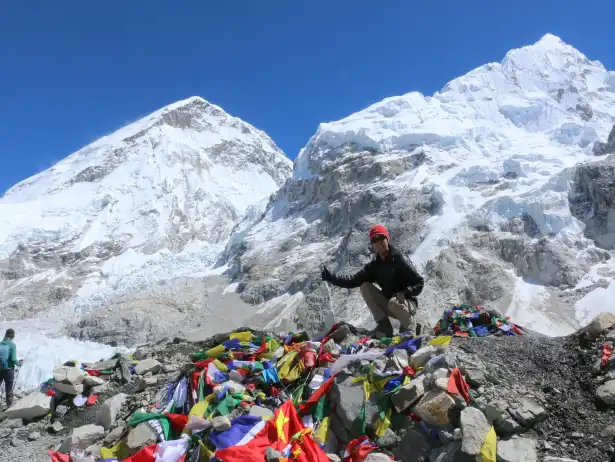
Why the season is important on Everest Base Camp Trail is explained here: real trekking insights, safety, and weather impact based on costs and overall success of the trek.
First, the EBC Trekking season directly affects safety, comfort, and success on the Everest Base Camp Trail. Trekkers will pass through Lukla at 2,860 meters above sea level, Namche Bazaar at 3,440 meters, and Everest Base Camp at 5,364 meters above sea level. The weather at Everest Base Camp, the trekking season in Nepal, and trail conditions determine the quality of daily walks. Thus, comprehension of seasonal impact ensures realistic expectations and safer planning.
Key Seasonal Impacts on the EBC Trail:
- Weather stability and temperature control daily comfort.
- Dryness and moisture of the trail in question has direct implications for safety.
- Accommodation availability varies according to crowd levels.
- Mountain visibility shapes trekking satisfaction
- Overall trek cost is influenced by Seasonal demand.
Second, the weather stability during Everest Base Camp Trek significantly changes with seasons in the Khumbu region. The clear morning dominated during autumn treks on the trail to Tengboche at 3,867 meters. During spring treks, the air was warmer; however, afternoon clouds occasionally appeared near Lobuche at 4,940 meters. Thus, weather patterns, EBC trekking climate, and seasonal visibility influences day-to-day scheduling.
Further, temperature on Everest Base Camp Trek fluctuations influenced the level of physical resistance and equipment taken. Autumn nights at Dingboche (4,410 m) dropped below freezing, so heavier sleeping bags were needed. Nights during spring felt softer, especially at Namche Bazaar (3,440 m). For this reason, the trekking equipment, Everest Base Camp packing list, and seasonal clothes have great differences.
Besides, Everest trail conditions depend considerably on seasonal weather behavior. The autumn trails were dry and dusty between Phakding at 2,610 meters to Namche Bazaar at 3,440 meters. The spring trails felt damp in lots of places because of the melting snow near Gorak Shep at 5,164 meters. Thus, the trial safety, trekking comfort, and the walking speed are all different in different seasons.
Moreover, it is mountain visibility that underscores motivation and overall EBC Trek satisfaction. During autumn, Mount Everest, at 8,848.86 m, and Lhotse, at 8,516 meters, were unhindered in their view. During spring, peaks such as Nuptse at 7,861 m were shown through shifting cloud windows. Consequently, timing underlies Himalayan views, Everest photography, and trekking morale.
Importantly, the seasonal crowd pattern affects accommodation and logistics: autumn teahouses filled up fast at Lobuche (4,940 m) and Gorak Shep (5,164 m); spring crowds increased because climbing expeditions stage at Everest Base Camp (5,364 m). Hence, accommodation availability counts much in EBC trek planning and booking strategy.
Notably, Everest Base Camp Trek costs fluctuate slightly due to seasonal demand. Autumn flights to Lukla (2,860 m) often face delays yet remain highly in demand. Spring flights happen more frequently with similar pricing. Hence, all three factors interlink pretty closely: Everest Base Camp Trek cost, flight reliability, and seasonal demand.
Finally, the appropriate selection of the season coordinates the Everest Base Camp trekking objectives with natural conditions. Autumn favors clarity, predictability, and classic trekking success. Spring favors warmth, color, and mountaineering energy. Hence, the best season for Everest Base Camp Trek, the success factors of trekking, and individual preferences define the ideal choice.

Lukla Flight Experience in Autumn Vs Spring
Lukla flight experiences in autumn and spring explained in real insights, weather reliability, and delays, safety questions, costs for Everest Base Camp trekkers.
Lukla Flight Comparison:
| Factor | Autumn Flight | Spring Flight |
| Weather | Clear and stable, | Variable and warm |
| Risk of | Delay | Low | Moderate |
| Crowd Type | Trekkers | Trekkers and climbers |
| Cost | Slightly higher, | Standard |
| Overall Experience | Predictable - Scenic but Uncertain |
Meanwhile, the experience of the Lukla flight defines the emotional start of the Everest Base Camp Trek. Flights land at Tenzing Hillary Airport, Lukla, at 2,860 meters above sea level amidst steep mountainsides. Lukla flight autumn, Lukla flight spring, and Everest Base Camp flight safety remain major concerns for trekkers. Hence, there is strong season selection affecting flight reliability and stress levels.
Here, the main factor is that autumn flights operate amidst clearer and more stable weather patterns. During the autumn journeys, the early morning skies remained mostly cloudless above Ramechhap at 474 m. Aircraft landed smoothly with minimal turbulence at Lukla at 2,860 m. Hence, autumn Lukla flights, coupled with clear weather and stable visibility, increase confidence.
During spring flights to Lukla from Kathmandu, moreover, there is more variation in atmospheric conditions in spite of warmer weather. During spring travel, clouds formed faster after sunrise above the Khumbu region. Many pilots delayed departures until weather windows opened. Thus, Lukla flights in Spring, weather delays, and flight timing require patience.
Besides, the frequency of flight delays changes significantly in different seasons: there were fewer cancellations of autumn flights because of steady high-pressure systems. Spring flights received moderate delays due to shifting winds and rising temperatures. Thus, flight reliability, Everest Base Camp logistics, and seasonal planning vary.
Additionally, there is crowd pressure at airports during peak seasons. Autumn is preferred by trekkers because of the clearer mountain views, increasing flight demands in this season. Spring sees climbers head towards Everest Base Camp at 5,364 m for summit attempts. Hence, peak season flights, Lukla airport congestion, and seat availability become very important.
Importantly, the safety standards remain high throughout both seasons. Experienced pilots specially train for Lukla's short runway landings (2,860 m). Aircraft operate only under visual flight rules. Hence, Lukla airport safety, mountain aviation Nepal, and pilot expertise ensure controlled operations.
Notably, the costs of Lukla flight in both seasons nearly remain the same with slight variations. The cost of a flight to Lukla generally ranges from 220 to 230 USD one way. The prices for the autumn season sometimes increase due to demand pressure. Additionally, one would need to put thought into the cost of flights to Lukla, the Everest Base Camp budget, and seasonal pricing.
Actually, Autumn offers smoother and more predictable flights. Spring flights offer breathtaking views of dramatic cloud formations. Both the seasons offer unforgettable flight arrivals in the Himalayas. So, here are the final choices regarding the comparison of Lukla flight experiences, autumn versus spring trekking, and the EBC Journey Planning Guide.

Phakding to Namche Bazaar: Trail Conditions in Autumn and Spring Autumn vs Spring
Phakding to Namche Bazaar trail conditions explained from real trekking experiences; safety, weather condition, scenery, and comfort.
Seasonal Trail Condition Highlights :
- Autumn supplies dry, hard going.
- Spring is full of warm-weather temperatures and floral scenery.
- Bridge conditions are highly sensitive to moisture
- Crowd flow changes walking rhythm
- Acclimatization stays constant both seasons.
First, the trail from Phakding to Namche Bazaar introduces trekkers to Khumbu terrain. The section crosses suspension bridges and forested paths. Phakding to Namche trail, Everest Base Camp trekking route, and seasonal trail conditions affect early acclimatization. Thus, season choice shapes first trekking impressions.
Second, the conditions of the trails from Phakding to Namche in autumn are dry, firm, and predictable. On autumn walks, Dudh Koshi River valleys remained clear and dust-free; forest paths felt sure with little mud. Hence, autumn trekking trails are dry, and comfort in walking usually prevails.
Besides, the trail conditions from Phakding to Namche in spring feel softer because of melting snow and moisture. On spring hikes, wet dirt appeared along riverbanks below 2,835 meters Monjo. However, warmer air resulted in reduced muscle stiffness. Thus, the spring trekking trails, mild temperatures, and trail moisture characterize the experience.
Besides, vegetation changes increase the seasonal contrast along the track. The autumn forest was golden with crisp air; the spring forests were in bloom with rhododendrons near Jorsale (2,740 m). Hence, along with beautiful trail sceneries, seasons acquire colors and the Himalayas change their shades.
Besides, suspension bridges acted differently under seasonal traffic and weather. Autumn bridges stayed dry with strong visibility across valleys. Spring bridges have felt a little slippery during early mornings. Therefore, bridge safety, trail awareness, and trekking poles matter.
Importantly, the density of the crowd affects the trail rhythm in both seasons. In autumn, there are steady streams of trekkers walking at a consistent pace. During spring, a variation in speed due to climbers and support teams is experienced. Thus, the flow of trekking is seasonal, as well as trail congestion and the comfort of walking.
Notably, the benefits of acclimatization remain similar irrespective of seasons. Gradual ascend from Phakding 2,610 m helps the body acclimatize before reaching Namche Bazaar at 3,440 m. In both seasons, there is a possibility of proper hydration and rest stops. Thus, altitude adaptation, health, and safety during trekking remain manageable.
Finally, seasons to be chosen affect comfort rather than difficulty on this trail: autumn provides dryness and stability, while spring provides warmth and color. Thus, the Phakding to Namche trail comparison, autumn versus spring trekking, and EBC trail conditions all support informed decisions.

Namche Bazaar in Autumn Vs Spring: Acclimatization and Atmosphere
Namche Bazaar in autumn compared to spring in regards to the benefits of acclimatization in the villages, climatic conditions, and trekking costs to the Everest Base Camp.
Namche Bazaar Seasonal Acclimatization Highlights :
- There are comfortable routes and balanced oxygen in autumn.
- There is warmth and social motivation in sprin
- Acclimatization hikes are always necessary in both seasons
- Expenses remain constant, even as demand
- Atmosphere reflects trekking and climbing cycles
Firstly, Namche Bazaar (3,440m) is a major factor in acclimatization during the Everest Base Camp Trek. Two nights are spent before proceeding further. Namche Bazaar acclimatization, Everest Base Camp Trek, and acclimatization are the major concepts of this phase. Thus, this phase is deeply impacted by seasonal variations.
Secondly, Namche Bazaar in Autumn provides cool air and stable weather. During autumn stays, the mornings were cold but invigorating. Clear skies allowed for acclimatization hikes to Everest View Hotel (3,880 m). Thus, autumn acclimatization, favorable weather, and good visibility make acclimatization easier.
Also, Namche Bazaar in Spring provides relatively warmer climatic conditions. Additionally, spring season trekker experiences warmth in the day, which facilitates extended walks within the village. The cafes and bakeries are always bustling with climbers and trekkers. Thus, spring season, acclimatization, warmer weather, and energy of the season influence trekker experiences. Moreover, acclimatization hikes in Namche Bazaar vary very slightly with seasons. The noise level on trails leading to Khumjung (3,790m) appeared less during autumn hiking. The atmosphere appeared lively during spring hiking with teams gearing up for Everest Base Camp (5,364m). Hence, acclimatization hiking, trekking pattern, and energy levels vary.
Likewise, weather factors also affect sleep at Namche Bazaar. Nights during autumn were cool but arid, contributing to better sleep. Nights during spring were warmer but sometimes windy. Hence, sleeping comfort, acclimatization recovery at higher altitudes, and weather conditions affect acclimatization success.
Notably, the ambience of Namche Bazaar keeps varying as per the type of crowd present. Autumn is when solo trekkers as well as photographers wanting clear views of the Himalayas come. Spring is when climbers of Everest, with a height of 8,848.86 m, come.
Notably, the services and prices are consistent during both seasons. The prices for meals vary between 6-10 USD based on demand. Additionally, the prices may increase slightly during autumn due to a high number of trekkers. Therefore, Namche Bazaar price, the cost for Everest Base Camp budget, and the season are well managed.
Moreover, health awareness is even more apparent during acclimatization days. The Autumn group experienced less headaches because of stable oxygen conditions. The Spring group enjoyed warmth but required hydration. Therefore, altitude sickness protection, trekking health factors, and season strategy are important.
Accordingly, sight enjoyment contributes to mental acclimatization. During autumn, there are clear views of Kongde Ri (6,187 m) from the edge of the villages. During spring, there are colorful prayer flags and markets. Thus, sight enjoyment, immersion, and trekking encouragement all improve.
Finally, autumn or spring also determines acclimatization type, but not difficulty level. Autumn enables passive and focused acclimatization. Spring enables social and active acclimatization. Thus, Namche Bazaar autumn versus Namche Bazaar spring, acclimatization techniques, and Everest Base Camp Trek travel guide determine the best option.

Visibility and Mountain Views from Namche Viewpoint in Autumn vs in Spring
How the visibility at Namche Viewpoint compares in autumn versus spring with authentic trekker tips, picture clarity, weather conditions, and scenic beauty.
Seasonal Visibility Comparison :
| Factor | Autumn | Spring |
| Peak Clarity | Very high | Moderate to high |
| Cloud Formation | Minimal | Afternoon clouds |
| Light Quality | Crisp and neutral | Dramatic and warm |
| Best Viewing Time | Early morning | Early morning |
| Photography Value | Sharp landscapes | Artistic contrasts |
To begin with, the Namche Viewpoint (3,440 m) provides the first Himalayan sight of the Himalayas during your Everest Base Camp Trek. Trekkers will spot the summit of Everest (8,848.86 m), Lhotse (8,516 m), and the Ama Dablam Mountain (6,812 m). Sight availability for the Namche Viewpoint, the availability of the Mountain Everest sight, and trekking photography provide expectations.
Secondly, the best season for mountain visibility is in autumn. During the morning hours in this season, mountain peaks appeared distinct with deep blue skies. Climax peaks like Everest and Lhotse dominated the sky without any obstruction from clouds. Thus, mountain visibility during autumn is spectacular.
Additionally, spring openness remains impressive though not as predictable. The visual experience of the morning always showed Everest before the clouds gathered. The afternoons offered haze that blunted the definition of Ama Dablam (6,812m). Thus, mountain openness, lighting, and depth associated with spring.
Moreover, weather patterns also dictate viewing opportunities for Namche Viewpoint. The presence of high-pressure systems in autumn ensures stable air quality for a couple of hours. Spring convective systems cause clouds formation in the early morning.
Moreover, light quality also changes significantly with seasons. The light during autumn is crisp and neutral. The light during spring produces high contrast between light and dark. As a consequence, light quality during photography changes.
Notably, the quantity of the crowd participating in the event has an effect on the experience. Those who go during the autumn season arrive early in order to enjoy the view without any obstructions. Those who go in the spring season include people who have just accomplished acclimatization.
In particular, visibility affects the psychological motivation for trekking during the initial stages of trekking. Views in autumn are motivating as they induce confidence and calm anticipation. Views in spring are motivating as they induce excitement and social energy.
Moreover, the temperature affects the time trekkers spend at the sighting point. In autumn, it can be chilly, restricting trekkers' time at the point. In spring, trekkers can spend more time observing because of the warm temperature.
Additionally, visibility consistency also makes it easier to plan acclimatization trekking routes. Autumn trek routes can be planned to reach the Everest View Hotel (3,880m) on schedule. Spring season routes cannot be planned to reach the hotel strictly according to timing.
Finally, both seasons offer unbeatable Himalayan scenery in Namche Viewpoint. Autumn ensures clarity and sharpness. Spring offers drama and contrast. Thus, Namche Viewpoint autumn vs. spring, visibility in mountains, and Everest Base Camp Trek satisfaction are relative.

Tengboche Monastery: Festivals in Autumn Vs Rhododendrons in Spring
Comparison of the actual versus the expected of the Tengboche Monastery in the fall versus spring seasons based on Mani Rimdu festivals, rhododendron flowers, climatic conditions, and experiences.
Tengboche Seasonal Features :
- Autumn has Mani Rimdu Buddhist festival
- The rhododendron flowers are in full
- Mountain views are beautiful at all times of the year
- “Cultural depth reaches its climax in the fall
- “Natural Color” peaks in spring
First of all, Tengboche Monastery (3,867m) marks the religious focus of the Everest Base Camp Trek. Trekkers arrive at this religious spot beneath the shadow of Ama Dablam (6,812m). Tengboche Monastery visit, Everest Base Camp culture, and Himalayan spirituality constitute this point of the trek. Thus, the selection of the season determines the cultural and natural experience.
Secondly, another aspect that defines Tengboche Monastery during autumn is festivals and spiritual power. Mani Rimdu is one of the well-known festivals that takes place during October and November. The event is characterized by mask dances and religious performances that are held inside the courtyard of the monastery. As such, festivals like Mani Rimdu and Buddhist culture during autumn are draws for people who visit for cultural adventures.
Further, there is a sense of serene and crisp weather during autumn too. Blue skies surround Mount Everest (8,848.86 m), Lhotse (8,516 m), and Nuptse (7,861 m). Prayer flags wave vigorously in the blue sky. Therefore, there is a sense of deep experience of Tengboche in autumn.
Moreover, the changing colors of nature in the spring season are a transformation in itself, as it changes Tengboche into a colorful natural wonder. The forests surrounding Tengboche are filled with red, pink, and white rhododendrons, and the treks are refreshed with new greenery in the springs following the winter season.
Furthermore, spring seasons bring warmth, extended daylight hours, and sunlight in and around the monasteries. Trekkers extend their resting periods in the ground surrounding the monasteries. Softer clouds also make for beautiful backdrops in Ama Dablam (6,812 meters).
Notably, cultural engagement varies with the seasons at Tengboche. Visitors during the autumn season interact extensively with monks and rituals. Visitors during the spring season interact casually with the local monks while trekking. Therefore, cultural depth, seasonality, and visitor engagement vary.
Note that the crowd composition differs according to the seasonal attractions. Autumn attracts cultural tourists and picture enthusiasts. Spring attracts trekking and climbing tourists going to Everest Base Camp(5,364 m). This therefore alters the visitor motivation, ambience of the monastery, and the seasonality.
In addition, the cost of accommodation is nearly equal in both seasons in the vicinity of Tengboche. The cost of meals in the lodges is from USD $6 to $10. Autumn season costs are slightly higher when there are festivals. As such, Tengboche costs and trekking costs are within control.
Moreover, spiritual significance persists throughout the year. Autumn promotes ritual experience and silence. Spring promotes experiences of joy by way of colors and light. Hence, emotional experience, spiritual satisfaction, as well as seasonal significance, co-exist.
Lastly, personal preferences of culture or nature will decide whether one chooses the autumn season or the spring season. The autumn season is ideal for people who are looking for festivals. The spring season is ideal for nature lovers who are photographers. Thus, the Tengboche Monastery season comparison guide.

Namche to Tengboche Trail - Crowd Levels in Autumn and in Spring
Comparative levels of crowd in the trail of Namche to Tengboche in autumn vs. spring for real trekking experience.
Seasonal Crowd Comparison :
| Factor | Autumn | Spring |
| Crowd Type | Mostly trekkers | Trekkers and climbers |
| Trail Pace | Uniform | Mixed speeds |
| Atmosphere | Calm and focused | Lively and energetic |
| Lodge Availability | Tight by evening | Busy but flexible |
| Overall | Comfort Structured | Dynamic and social |
Firstly, Namche Bazaar (3,440m) to Tengboche (3,867m) trail is a major part of the Everest Base Camp Trek. The trail goes through forest, ridge, and suspension bridges. The Namche to Tengboche trail, the Everest Base Camp trek, and the number of trekkers influence the comfortable trek. Thus, the season determines the rhythm.
Secondly, the weather is accompanied by large, manageable trekker traffic in the autumn season. From Naaka, most trekkers walk together to Tengboche Monastery (3,867m). The tea houses run at full capacity. Thus, the trekker traffic and interaction along the trail can be measured.
Further, the pattern of crowd movement in spring appears more dynamic and diverse. There are interactions between climbers, porters, and expeditions, and general trekking crowds. The rate of walking differs greatly in the ridges around Kyangjuma (3,570 m).
Additionally, the congestion levels at viewpoints and rest stops are different. Rest stops in autumn are crowded but well-arranged. Rest stops in spring feel lively and even noisy. Therefore, crowd behavior in seasons, rest comfort, and trekking breaks differ.
Further, wildlife and landscape interaction is affected by crowd density. In autumn, the crowd flows steadily, permitting observation of landscape scenery. In spring, the crowd halts to take pictures of rhododendrons. Nature experience, photography halt, and trail speed are thus affected.
Notably, safety is well manageable during both periods despite the crowd. The trails are well defined and wider, thus reducing dangers. Guides control crowd flow during peak times. As such, crowd control and trekking safety are well in place.
In fact, psychologists experience different things as a result of crowd density. Autumn crowds promote reinforcement. Spring crowds evoke exhilaration. Summer crowds evoke relaxation. Hence, trekking attitude, emotional comfort, and crowd ambiance vary.
Moreover, the plans for the EBC trekking accommodations vary according to the seasons. There are peak seasons. The lodges near Tengboche become full by the afternoon of autumn. During the spring seasons, the lodges have the capacity to accommodate more people.
Further, differences in costs are also small, regardless of differences in crowds. The prices for meals remain consistent in a fixed range of USD 6 and 9. There are also possible small additional costs in Autumn during peak weeks. Therefore, all factors related to trekking costs, seasonality of demand, as well as costs, are stable.
Finally, the season of choice for the crowd is determined by preference. Autumn is ideal for trekking enthusiasts who would want to trek at a decent speed and in an organized manner. A spring season is ideal for trekking enthusiasts who enjoy an active trek and diverseness in social composition. Hence, the difference in the crowd for the trek from Namche to Tengboche, trekking in autumn

Dingboche days of acclimatization – weather and trek
Acclimatization in Dingboche described in relation to autumn versus spring weather, trekking ease, altitude, cost, and Everest Base Camp trekking facts.
Dingboche Acclimatization Comfort Summary:
- Autumn brings dry air and stable skies.
- Spring has favorable hiking temperatures inEbensee.
- Wind exposure varies according to season.
- Hydrated requirements rise during all seasons.
- Acclimatization remains essential regardless of timing.
To begin with, Dingboche (4,410 m) is an essential acclimatization point on the Everest Base Camp Trek. Climbers tend to stay for two nights in Dingboche. Climbing safety at high altitude and altitude of the Everest Base Camp are the characteristics of this phase. Hence, climatic conditions are an important factor that impacts hiking comfort.
Secondly, the autumn climatic conditions found in Dingboche are relatively dry, cold, and very stable. Freezing temperatures and clear morning conditions are common. The afternoon sun brings warmth for acclimatization walks. Accordingly, the autumn climatic conditions of Dingboche make for effective acclimatization.
In addition, the climatic conditions experienced in Dingboche during spring are milder. The temperatures during daytime increase. This diminishes stress caused by cold during walks. Nonetheless, clouds tend to form in large numbers during afternoons. Therefore, the climatic conditions, temperature, and cloud cover influence daily activities in Dingboche during spring.
Moreover, the comfort of hill trekking while acclimatizing differs seasonally. Autumn trekkers have dry air and hard paths while trekking towards Nagarjun Hill (5,100 meters). Spring trekkers have soft paths with moderate exposure to cold.
Likewise, the wind currents also affect overall comfort in terms of wind experience in Dingboche. The winds during autumn are sharp and for a short while during morning hours. However, during spring, winds feel less harsh but linger for a longer time. Hence, sensitivity to wind exposure and layer wear becomes highly important.
In fact, it is worth noting that hydration patterns during the winter season are different. The dryness in the atmosphere during the autumn season makes it prone to dehydration in high-altitude areas. It is imperative to note that the rising temperatures in the spring season lead to dehydration during longer treks.
Specifically, scenery is a factor that affects mental relaxation during acclimatization days. Autumn scenery is dramatic with Island Peak (6,189m) and Ama Dablam (6,812m). Spring offers more subtle colors with a touch of contrast from the snow. Therefore, visual comfort and motivation vary.
Moreover, lodge comfort is not affected much by modifications in weather. The nights in autumn are felt as too cold even in lodges with blankets. The nights in spring experience warmth, sometimes accompanied by winds.
In addition, expenses in Dingboche are constant throughout the year. Food prices are between 7 to 10 USD, depending on the availability of food. The prices increase marginally during autumn as a result of peak season demand for trekking expeditions to Everest Base Camp. Thus, the cost associated with Dingboche, Everest Base Camp budget, and seasonal variations remain consistent
At last, the acclimatization experience at Dingboche works successfully in all seasons. Autumn is ideal for trekker groups who value certainty. Spring is ideal for trekker groups who value warmth. Thus, the acclimatization conditions, trekking conditions, and the guide to planning the Everest Base Camp Trek determine the ideal trekking seasons.

Nang Kartshang Peak Views in Autumn vs Spring
Nangkartshang Peak view comparisons in Autumn and Spring with honest trekking experiences on Nangkartshang Peak treks in Nepal.
Nangkartshang Peak View Comparison:
| Factor | Autumn | Spring |
| Visibility | Very high | Moderate to high |
| Light Quality | Crisp and sharp | Dramatic and soft |
| Temperature | Cold | Mild |
| Viewing Duration | Shorter | Longer |
| Photography Style | Landscape clarity | Artistic contrast |
Firstly, Nangkartshang Peak, with a height of 5,083m, is one of the prominent spots for acclimatization with a great view over Dingboche at 4,410m. Trekkers hike up Nangkartshang Peak to acclimatize. Acclimatization at Everest Base Camp, Nangkartshang Peak, and viewpoints of the Himalayas make this trek significant.
Secondly, the weather during autumn provides outstanding views from Nangkartshang Peak. The atmosphere is cloud-free during autumn peak climbs. Mountains are clearly visible from afar. Therefore, clear views during autumn Nangkartshang Peak, clear visibility, and Himalayan clarity Are highlighted.
Additionally, the sight of Nangkartshang Peak in the spring season has a dynamic nature. There is the possibility of reaching the top in the early morning before the clouds form. The afternoon sunlight offers contrast. Therefore, the sight of Nangkartshang in the spring season is a lasting aspect of the experience.
Further, the mountain sceneries have subtle changes based on the seasons. Autumn features defined images of Makalu (8,485m), Lhotse (8,516m), and Ama Dablam (6,812m) mountains. Spring features blurred images due to the diffusion of light.
Moreover, the duration that the trekker spends at the summit will be influenced by the temperature. The cold temperature during autumn will not allow much stay time at the summit, even with clear sight. Warmth during spring will allow more observation and photography.
Notably, the effects of the wind also impact the experience when climbing Nangkartshang Peak. Winds in autumn are stronger but of short duration. In the spring, the winds are lighter but more sustained. Accordingly, the measures to mitigate the effects of the wind differ depending on the season.
In fact, it is worth noting that the presence of crowds influences summit experience. Autumn season witnesses organized groups reaching the summit early. Spring season witnesses various groups of climbers/travelers reaching at different times.
In addition, consistency in acclimatization confidence relates to consistency in trekker vision. Axiomatically, consistent negativity in trekking psychology entails a less-fortunate acclimatization confidence. Conversely, consistent confidence in trekker psychology engenders a very fortunate acclimatization confidence.
Moreover, photography opportunities also keep on varying with the season and quality of light produced. Sharp landscape photography is optimal in autumn. Art photography of the clouds and shadows between the mountains is ideal in spring. Hence, trekking photography and preference play a role.
Finally, Nangkartshang Peak offers rewards to trekkers regardless of the season they undertake. autumn Nangkartshang Peak will treat trekkers to clarity and sharpness, while spring Nangkartshang Peak will provide them with warmth and pictorial magic. Thus, Nangkartshang Peak autumn/spring, mountain views, and Everest

Comparison of High-Altitude Atmosphere from Dingboche
Dingboche to Lobuche High Altitude Environment Comparison in Autumn vs. Spring altitude change Everest Base Camp trek information, conditions, and advice.
High-Altitude Trail Highlights:
- Autumn: crisp air, firm trails, high visibility.
- Spring has average temperatures that are quite warm. During this season, there
- To ensure safety while trekking, you will need “layered clothing, for
- Lodges and food prices remain constant
Firstly, the trek from Dingboche (4,410m) to Lobuche (4,940m) entails high-altitude acclimatization. The trekkers go through rocky trails, steep ridges, as well as glacier sights. The trek from Dingboche to Lobuche, high-altitude trekking in Nepal, as well as Everest Base Camp training are the encompassing aspects of this section. Hence, the issue of season variability has a great influence on this section.
Secondly, in autumn, there are clear skies, solid trails, and cool air. Moreover, the early morning temperature can go below freezing levels. This makes the trail quite icy in the areas which receive less sunlight. However, by late morning, the trail has been rendered warm by the sun. Therefore, better high-altitude trekking in autumn ensures safe climbs.
Further, the spring season has atmospheric conditions that feel warmer. However, clouds in the afternoon can lower visibility. Also, the melting of the snow can make the trekking trails wet or even muddy in areas close to Thukla (4,620 m). Soft atmospheric and moderate wind conditions make it comfortable for the trekker.
Furthermore, challenges posed by height have not faded with changing seasons. Exercise-induced breathlessness, fatigue, and cold limbs demand caution and water intake. The advantages with autumn lie in breathing and oxygen need with constant temperatures. This is unlike spring, where varied body warming and sun exposure need adjustment. Moreover, the landscape of the trail also differs according to the season. During the autumn season, there are clear sightscapes of Pumori (7,161 meters) and Nuptse (7,861 meters) without much haze. During the Spring season, the landscape features blooming rhododrenodens lower up.
Importantly, crowd factor affects trail condition. Trails in Autumn are crowded but organized, especially around rest stops. Trails in Spring are overcrowded with climbers and trekkers of varying speeds. Therefore, trekker stream, trail occupancy, and crowd interaction vary depending on season.
Noticeably, the measures for hiking should incorporate the changes brought by the season and the corresponding weather. For the autumn hiker, the route should be ice-free, while for the spring hiker, the route should be given particular attention, especially where the route may be damp and slick. Both require trekking poles, layered clothing, and water.
Additionally, costs and logistics do not change regardless of the season. The cost of meals at Lobuche lodges varies between 8 to 12 USD per meal. Flights and fees do not change. Therefore, budget from Dingboche to Lobuche and costs associated with trekking to the Everest Base Camp remain guaranteed.
Next, selecting a season of trekking influences comfort, paces, and scenery but not difficulty. Autumn provides a clear trail and stable conditions. Spring provides warmth, colorful scenery, and lively trail energy. In summary, Dingboche to Lobuche high-altitude trekking, trekking by season, and Everest Base Camp trek planning inform trek preparation.
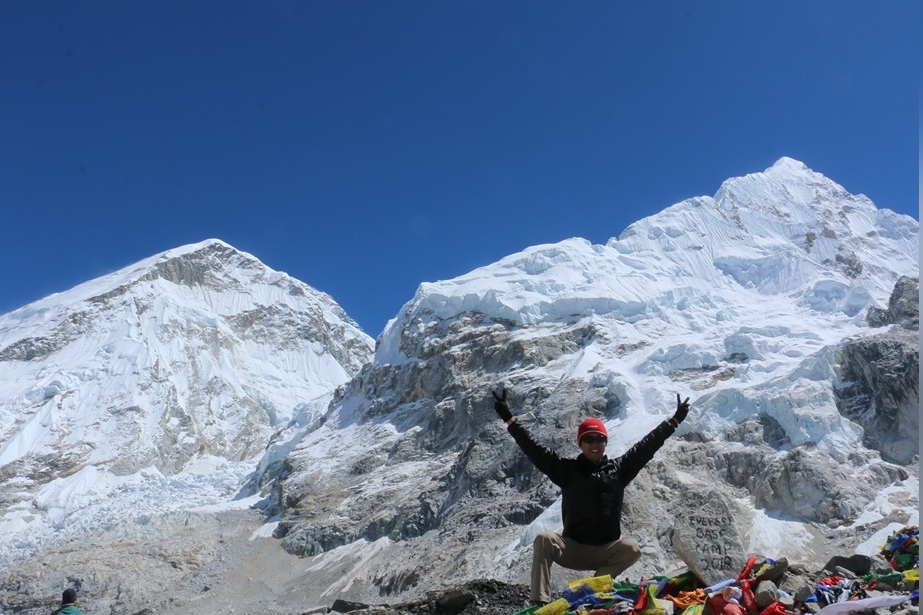
Everest View from Thukla Pass (Memorial Hill) in Autumn and in Spring
A view of Everest from Thukla Pass relative to autumn and spring in terms of trekking information, view, weather, mountain scenery, and photo opportunity.
To start with, Thukla Pass with a height of 4830 m, also known as Memorial Hill, offers beautiful views of Mt. Everest with a height of 8,848.86 m during the Everest Base Camp Trek. Visitors stop here just to see the views and relax. The importance of Thukla Pass lies in the views of Mt. Everest Base Camp trek, photography, and mountain views.
Secondly, the autumn season boasts a clarity and stable environment conducive to observing Everest and Lhotse (8,516m). The morning shows sharp peak contrasts against a blue sky. The sun is ideal with little cloud cover. As a result, the appearance through Thukla Pass, clearer viewing, and optimal lighting bring enhanced photography outcomes.
In addition, the spring season receives scenic but variable Everest views. Morning scenes can offer clear Everest profiles before the development of clouds. Finally, the after haze/clouds offer varying perspectives to Ama Dablam (6,812m). Therefore, scenic Thukla Pass views, dynamics of the atmosphere, and variances in scenery characterize the spring season.
Additionally, temperature influences comfort while view observation. Autumn coldness limits staying times at summit view stations. Warmth in spring enables more resting stops to take photographs and engage in acclimatization walks. Hence, summit comfort, temperature, and staying times differ.
Moreover, the wind patterns also tend to have an effect related to safety and clothing. Breeze patterns during autumn tend to be sharp yet intermittent. However, the wind during the spring season tends to be moderate with persistence.
Significantly, it should be noted that crowd presence affects the experience too. Autumn brings trekkers looking for peace and clear mountain sights. Spring brings mixed groups of climbers, porter groups, and expeditions, leading to lively spotting points. Therefore, the level of crowd intensity, interaction at the summit, and the experience level will vary.
Notably, seasonal light characteristics influence photography style. Autumn light has crisp and neutral characteristics ideal for taking clear mountain photographs. Spring has dynamic and colorful contrasts that emphasize cloud and atmospheric perspectives. Hence, photography and trekking experiences differ.
Moreover, consistency in visibility helps in the planning of trekking. There is predictability of climate in autumn for acclimatization and the logistics of EBC. Spring season allows the flexibility of planning to capture favorable visibility.
In addition, there are psychological and motivating factors that change depending on the season. “There are autumn views that call for calm and concentration in order to ascend. There are spring views that call for excitement and socialization.” Hence, trekking psychology and motivation change.
At last, Everest vistas from Thukla Pass are simply unforgettable in either season. There will be crystal clarity in Autumn. There will be warmth, activity in the sky, and drama in Spring. It is therefore that preference guides Thukla Pass in Autumn vs. Spring, Everest vistas, and Everest Base Camp Trek satisfaction.

Lobuche to Gorakshep: Cold, Wind, and Trail Challenges
Lobuche To Gorakshep Trek Conditions In Autumn, Spring Compared – Real Trekking Tips – Altitude, Wind, Cold, And Trekking Safety.
High-Altitude Trail Highlights :
- The trails will be hard in autumn, the weather will be very
- Spring: Temperate to warm, cloudy with occasional wetting
- Acclimatization at high altitude remains
- The cost incurred by lodges is consistent
Firstly, the trekking trail between Lobuche (4,940 m) and Gorakshep (5,164 m) puts trekkers in harsh conditions of high altitudes. This trail passes through moraines, rocky areas, and glaciers. Lobuche to Gorakshep trekking trail, high altitude, and preparation for Everest Base Camp constitute this phase. This step can be highly influenced by weather conditions.
Secondly, autumn has optimal climatic conditions, including a clear sky, low temperatures, and firm ground. The early morning temperatures are below −10°C, though the sun increases temperatures to make it relatively warmer. The lack of moisture makes it relatively safe to move around moraines and rocky slopes, as there are fewer chances of slippages.
Further, there are a few differences in spring. Compared to summer, the conditions in spring feel warmer but less predictable. This is because clouds during the afternoons may reduce visibility on ridge tops. On another note, glacial streams may also make trail surfaces slippery due to the melt. As a result, comfort and safety during high-altitude trekking in spring are also affected.
Additionally, exposure to wind increases the difficulties associated with trails regardless of the season. Autumn winds can be felt to be sharp and episodic along ridges. Spring winds are moderate and continuous all day. The factor of wind effect, trekking clothing, and energy conservation changes according to seasons.
Moreover, adjusting to high altitude is important in this section as well. Difficulty in breathing, tiredness, and chill in feet need to be taken into account. Oxygen demand in Autumn treks remains constant because of constant temperatures. Oxygen demand in spring treks changes as one has to adjust to changing warmness and sun exposure.
Notably, the mountains and landscapes on the trekking trail change according to the season. In autumn, there are clear sights of Pumori Mountain (7,161 m), Nuptse Mountain (7,861 m), and Mt. Everest (8,848.86 m). In spring, there are varying effects of haze and snow contrasts.
Specifically, crowd influence affects trail conditions. Trail conditions during Autumn have consistent movement and flow of people. Trail conditions in Spring have dynamic groupings with mountain climbers and trekkers at differing speeds. Therefore, interaction, congestion, and trail pace are seasonal.
Moreover, lodge availability and pricing are constant in Gorakshep. Meals vary from USD 8 to 12 per sitting, as per season. Autumn might experience minor escalation during peak trekking times. The availability of accommodations, seasonal pricing, as well as trekking budgets, therefore, remain constant.
Lastly, Lobuche to Gorakshep requires acclimatization to coldness, wind, and trek difficulty. Autumn season ensures clarity in views, coldness, and stable ground. Spring season ensures warmth in climate, optimal wind, and varied trek ground. Hence, Lobuche to Gorakshep high altitude and Everest Base Camp trekking require acclimatization.

Everest Base Camp Trek in Autumn vs Spring
Comparison of trekking experience in Everest Base Camp in autumn and spring seasons with actual trekking information and experiences of adventure in the Himalayas.
Everest Base Camp Seasonal Comparison (Support):
| Factor | Autumn | Spring |
| Weather | Clear and stable | Warm with clouds |
| Mountain Views | Sharp and crisp | Dramatic and colorful |
| Crowd | Organized trekkers | Trekkers and climbers |
| Emotional Impact | Calm and focused | Energetic and lively |
| Cost | Slightly higher | Standard |
Firstly, Everest Base Camp, with a height of 5,364 m, holds the highest achievement for trekkers in Nepal. The trekkers reach here after spending days in acclimatization through the Khumbu valleys. Everest Base Camp trek, high-altitude adventure, and experience in the Himalayas are characteristics of this region.
Secondly, there is stable weather in autumn, blue sky, and clear visibility of the mountains. The definition of Mount Everest (8,848.86 m), Lhotse (8,516 m), and Ama Dablam (6,812 m) is clear in the blue sky. Cameras can take advantage of the clear sight and lighting. Therefore, the autumn Everest experience and weather stability improve trek satisfaction.
Additionally, the season of spring comes with warm conditions, rhododendrons in bloom, and high trail energy. Clouds can roll in at times, hence making it an ideal season for scenic Everest photos. Climber groups make for a festive atmosphere. This makes Everest Base Camp in the season of spring an experience. Likewise, there is variation in the crowd density depending on the seasons. Autumn sees trekkers in groups and alone in pursuit of answers. Spring witnesses climbers on their way to summit Mt. Everest, alongside trekkers.
In addition, acclimatization methods are vital in whatever season too. Trekkers have to monitor oxygen consumption, fluid balance, and paces in trekking. The ease of advancement in autumn facilitates standard acclimatization. In spring, warmth from the sun and cloud cover variability call for adaptable acclimatization processes too.
Notably, emotional response is season-dependent. Autumn is associated with peaceful, dedicated success amidst clear scenic views. Spring is associated with lively, lively festivities amidst valleys in bloom and expedition activities. Consequently, mental satisfaction, mood, and trekking motivation change.
Specifically, the Everest Base Camp Trek cost remains almost same in both seasons. Permits, guide, food, transportation and accommodation at Everest Base Camp cost between 1,200-1,600 per package. Additionally, the cost might go higher in fall due to increased demand. Therefore, cost at Everest Base Camp and organizing packages based on cost and season plays an essential role.
Again, photography and visual experience are different. Sharp, clear mountains are ideal during autumn. Dynamic skies, light, and rhododendrons are ideal during spring. Hence, trekking photography, aesthetic preferences, and personal choice are factors for visual satisfaction.
In addition, factors related to weather conditions affect trekking preparations. Autumn trekking conditions are certain regarding clothing, equipment, and trekking speed. Spring trekking conditions demand layers of clothing, protection from the sun, and flexibility in timing.
Lastly, Everest Base Camp offers trekkers from both seasons memories of their lifetime in the Himalayas. Autumn offers perfect clarity and defined perspectives, while spring offers warmth and dynamism. So, when considering Everest Base Camp trek, satisfaction of trek, and experience in the Himalayas, choices between spring and autumn become subjective.

Kala Patthar Sunrise: Best season for photo shooting
Kala Patthar Sunrise Comparison: autumn versus spring, tips, and expert photography guidance to capture the breathtaking mountain landscape and Everest Base Camp experience.
Kala Patthar Sunrise Photography Recommendations:
- Autumn: Harsh peaks, blue skies, sharp light
- Spring: Dynamic clouds, colorful sunrises, atmospheric depth
- Pre-dawn hiking requires layering and trekking poles
- Summit crowd affects photography opportunities
- Lodging and guide support remain consistent
- Temperature Differences Above 5,000 Meters
Firstly, Kala Patthar (5,545m) provides the famous sunrise viewing point of Everest (8,848.86m) as part of the Everest Base Camp Trek. Hike early in the morning to behold mountains when they turn golden. Kala Pattharsunrise, photographing Everest, and trekking in the Himalayas make this experience. So, selecting a favorable season is directly related to picture taking.
Second of all, the autumn season provides the best and most precise weather. The fresh air provides distinct images of Lhotse (8,516 m), Nuptse (7,861 m), and Ama Dablam (6,812 m) mountains. The formation of clouds is minimal. Therefore, the autumn season provides optimal opportunities to capture the best photographs of the Kala Patthar sunrise.
Also, the spring season offers dramatic light and color. Clouds can develop, forming an interesting layering of sunrise colors behind the peaks of the Khumbu mountains. Red and pink hues light up the surrounding glaciers and ridges. Therefore, spring Kala Patthar sunrise, contrast, and dynamic light provide good photo opportunities.
Moreover, temperature and wind conditions need to be considered regarding pre-dawn hikes. During autumn, the morning is extremely chilled, with temperatures below −15°C. This increases the need for layering. Spring undershoots the temperature by a few degrees as it requires protection from the wind.
Further, crowd levels are a consideration in framing and composition. Autumn brings solo hikers and organized groups of hikers, making for peaceful photographic angles. In spring, mountain climbers and support teams for expeditions are in season, adding more pedestrians at the peak.
Notably, the speed and acclimatization issues come into play. Trekkers need to begin their day early, from 2-3 am, to witness the sunrise from Kala Patthar. The stable weather in Autumn helps to walk at fixed intervals. The flexibility to adjust because of cloud development and wind is needed during Spring.
Specifically, the visual factor changes with the seasons and the type and intensity of light. While autumn offers strong contrast between brown and white elements, spring contributes artistic haze, soft shadows, and interesting foreground colors. Therefore, visual narration changes.
Moreover, the cost, as well as the logistic involved, does not fluctuate regarding the seasons. The cost for meals in the lodging available near Gorakshep, which is 5,164 meters, is between USD 8–12. Guides for the early morning trekking can also be required for safety and familiarity with the route.
Finally, it all depends on the outcome in terms of photography. Autumn is associated with guarantees of clarity and visibility. There are warm and artistic atmospheres in spring. Hence, Kala Patthar sunrise in autumn compared to spring, photography, and Everest Base Camp trekking are responsible for planning.
Temperature Variations above 5000m in Autumn and in Spring
Temperature variation at above 5,000 meters in autumn and spring compared to trekking, high altitude, clothing, acclimatization, and Everest Base Camp.
High-Altitude ( above 5000m) Temperature Summary:
| Factor | Autumn | Spring |
| Morning Temp | 15°C−10°C |
| Afternoon Temp | 5°C - 0°C |
| Night Temp | 20°C−10°C |
| Wind Chill | Sharp but intermittent | Moderate and persistent |
| Hiking Comfort | Cold but predictable | Milder but variable |
Firstly, the temperatures above 5,000 meters, including Gorakshep (5,164 m) and Kala Patthar (5,545 m), greatly impact trekking conditions. The trekkers experience extremely cold temperatures, the effect of wind, and the risk of fast-changing weather. Temperature at the Everest Base Camp and Everest Base Camp trekking conditions are defined by the mentioned factors.
Secondly, the temperatures in autumn are extremely low with low humidity. Morning temperatures can go below −15°C, but afternoons can warm up to −5°C in open places. Clear skies make it impossible for sudden snowstorms to occur. In this case, the temperatures of high altitudes in autumn, the possibility of predicting weather conditions, and the requirements for trekking make it possible to go for treks.
Additionally, the spring temperatures are relatively more modest, averaging -10° C during the morning hours and 0° C during the afternoon hours. The affected trails are warmed by increased sunlight exposure, though the shaded parts are icy. Conditions can be affected by the formation of clouds in the afternoon.
Moreover, the effects of the wind chill feature prominently in the cold experiences in the seasons. The autumn winds in the region remain quite sharp but intermittent in the ridges. Spring winds in the region are moderate but persistent.
Further, taking into consideration the comfort of hiking during daytime, accessibility to sunlight and trail exposure should also be factored. During autumn, clear sky conditions promote anticipated heating effects while climbing. Conversely, during spring seasonality, scattered sky patterns signify varying heating effects and thus varying speeds and attire.
Generally, the temperature for sleep differs in the lodges beyond an elevation of 5,000 meters. The nights in autumn can sink below −20° C in basic lodges in Gorakshep, which is 5,164 meters high. Spring nights, however, are slightly warmer, sensibly reaching −10° C.
In particular, factors relating to hydration and nutrition are affected by temperature, as "cold weather decreases your ability to detect sweat," which can lead to dehydration during fall. "Hot weather during spring means you need to be aware of sun exposure and hydration."
Additionally, taking pictures and sightseeing also rely upon the temperature that changes according to the seasons. The cold weather of Autumn ensures clear sight, which is perfect for taking clear photographs of Mt. Everest (8,848.86 m) and surrounding peaks. The warmth of Spring enables more time to observe without harsh lighting.
Further, the cost factors remain the same. Lunches, permits, and camps beyond an altitude of 5,000 meters cost between USD 8-12. The extreme cold temperature of autumn might add to the fuel consumption for heating.
Finally, it is crucial to comprehend the difference in temperature above 5,000 meters to ensure comfortable trekking. Autumn conditions involve extreme cold with stable sunlight. It offers warmth with dynamic sunlight during spring. Hence, temperature conditions during autumn and spring at higher altitudes, preparation of trekking materials, and Everest Base Camp Trek offer guidelines to the trekker.
Availability and Booking for Tea Houses in Autumn and Spring
Factors affecting tea house availability and bookings, the difference between autumn and spring for Everest Base Camp trekking, and information about tea house bookings.
Tea House Availability Comparison:
| Season | Availability - Booking Pressure - Cost Variation Notes. |
| Autumn | Limited High - Slight increase - Advance booking needed. |
| Spring | Moderate - Medium Stable - Expedition groups impact occupancy. |
Firstly, the tea houses during Everest Base Camp Trek, such as Namche Bazaar (3,440m) and Lobuche (4,940m), act as crucial halting points. The tea houses offer food, heating, and resting opportunities for trekkers. Hence, tea house availability, Everest Base Camp Trek planning, and Everest Base Camp Trekking are major considerations within this criterion. Also, it is affected by seasonal pressure.
Secondly, Autumn is the peak period for EBC trekking, and it has strong booking pressure. Teahouses are filled by mid-afternoon, especially in Namche Bazaar and Tengboche (3,867m). Also, it would mean that customers would need to book or hire guides to help them book teahouses. Therefore, the issue of teahouse space and booking pressure in Autumn affects trek planning.
In addition, spring season attracts large numbers of trekkers but with slightly more flexible availability. Climbers going for Everest summits have shared accommodation with trekkers. The tea houses around Gorakshep (5,164m) and Everest Base Camp (5,364m) run near full capacity. This means the tea house occupancy in the spring season, group size of expeditions, and booking options are different.
Moreover, trail pacing is another factor that influences accommodation availability. In autumn, trekkers generally keep regular schedules as they need to arrive in tea houses before the evening. In spring, trekkers may vary their schedules depending on the weather as well as their expeditions.
Second, weather stability is another factor that affects both occupational and comfort activities. During autumn, arid or dry weather conditions enable easy accessibility and warm environment in rooms. However, in spring season, warm weather may be hampered by snowmelt in favored tea house locations.
Significantly, there are slight variations in the cost due to changes in seasonal demands. The peak weeks in autumn can raise the cost for accommodation and meals by USD 1-2. Spring seasons retain fixed costs, though there can be variation in and around Gorakshep or Kala Patthar (5,545 m).
In fact, it is worth noting that cultural attractions and natural scenery also influence booking preference. Travelers trek in autumn for optimum viewing of Everest (8,848.86 m) and Ama Dablam mountains (6,812 m). In spring, trekkers prioritize warmth and being near expeditions. Hence, differences in season preference, tea houses, and trekking experience exist.
In addition, booking in advance guarantees safety as well as minimal stress involved. Guides will arrange rooms beforehand to ensure a place to rest along the journey. Fall and spring trekkers will benefit from a booking process, particularly in highly sought after regions. Thus, tea house operation, season, and efficiency in trekking are essential.
Finally, it is a must to understand the availability of the tea houses in the season in order to have a successful trek. Autumn needs advance booking in order to be comfortable and safe. Spring has moderate levels of flexibility in the booking process but needs particular consideration in the areas of major attractions. Hence, the availability of the Everest Base Camp tea houses in the season of high demand affects the success of the trek.

Crowd Management and Trekking Pace in Autumn and Spring
Crowd Management and Pace of Trek Compared for Autumn and Spring Seasons Based on Insights from Everest Base Camp.
Crowd and Pace Comparison:
| Factor | Autumn | Spring |
| Trail Flow | Steady | Variable |
| Crowd Type | Organized trekkers | Trekkers and climbers |
| Lodge Access | Predictable - Mixed timing |
| Safety | Stable - Requires caution |
| Motivation | Focused - Energetic |
Firstly, the speed of trekking depends on the route conditions, elevation, and density of crowds along the route to Everest Base Camp. For instance, the trek from Namche Bazaar (3,440 m) to Tengboche (3,867 m) is an example of where there are maximum crowds. Crowd management and trekking efficiency determine overall trekker comfort.
Secondly, there are organized and large crowds during autumn. Organized crowds trek at a steady pace on ridges and suspension bridges. Coordination on routes prevents congestion on routes. Therefore, during autumn, management of crowds, trekking pace, and human interaction are smooth.
Further, spring offers challenging trail dynamics. Climbers intending to trek Everest summits, as well as regular trekkers, congregate. Some treks result in slow speeds, leading to congestion at rest stops. Depends.
In addition, altitude and acclimatization also interact with the issue of pace in both seasons. While stability in autumn permits predictable progress for teams trekking in the high-altitude regions of Dingboche (4,410 m) and Lobuche (4,940 m), warmth and cloudy conditions in the spring season dictate adaptability in planning trekking routines.
Secondly, the location of lodges and tea houses influences the pacing process as more demanding destinations such as Gorakshep (5,164 m) and Everest Base Camp (5,364 m) require early bird access to accommodate tea houses or lodges earlier. Consequently, crowd scheduling, pacing, and access to tea houses vary depending on the season, autumn fixed schedules and spring irregular schedules.
Notably, issues relating to safety affect hiking speeds. The trails that pass through stable autumn routes are accident-free and provide a clean flow. However, during spring, route variability and expeditions pose a threat and demand appropriate hiking approaches, especially around areas with moraines and ridges.
In fact, it is worth noting the influence of the visual or motivational component of speed. The clear sky of autumn encourages a steady pace towards the viewpoint. The flowers of spring and the dynamic light delay the journey as trekkers take pictures. Thus, the motive of trekking, the season, as well as the time of the trekking journey, differ.
In addition, guide interaction maximizes crowd control and pace management. Trekkers need guides to help in the planning of resting, eating, and accumulated daily distance goals. Autumn and spring seasons benefit from well-orchestrated guide interaction, with spring season needing additional facilitation considering the presence of climbers.
Moreover, the satisfaction of EBCC trek participants is also influenced by their crowd and rhythm experiences. Autumn provides trekkers with smooth and orderly rhythm, with known stops. However, spring experiences offer trekkers fun, interaction, and irregular rhythm. Thus, trekking ease, experience, and mental hardiness are season-dependent.
Additionally, it is pertinent to note that understanding crowd and pace dynamics also ensures safety and enjoyment while trekking to Everest Base Camp. Everest Base Camp in Autumn emphasizes harmony and order. Everest Base Camp in Spring is centered around energy and variability.

Overall Safety, Weather Stability, and Trekking Comfort in Autumn and in Spring
Safety, Stability of Weather and Ease of Trek to Base Camp of the Everest Analyzed in Autumn and Spring Seasons Based on High Altitude Experience.
Safety and Comfort Comparison:
| Factor | Autumn - Spring |
| Weather | Clear, stable - Mild, variable clouds |
| Trail Safety | High - Moderate, careful attention |
| Temperature | Cold, predictable - Milder, fluctuating |
| Crowd Flow | Organized - Mixed, dynamic |
| Acclimatization | Predictable - Requires flexible pacing |
In the first instance, the safety that can be attained in the Everest Base Camp Trek is dependent on altitude, weather, and conditions. Additionally, the trek involves safety in trekking through routes that begin from Lukla, which is at 2,860 m, and end at Everest Base Camp at 5,364 m.
Secondly, the season provides reliable weather with clear skies, low chances of precipitation, and easily forecasted weather. Suitable trail conditions with little chances of slippage are ensured from Namche Bazaar (3,440 m) to Dingboche (4,410 m). As a consequence, the safety and efficacy of trekking during the autumn season in the Everest region are guaranteed.
Additionally, spring season has warm weather and scenic environment. Cloud formations in the afternoon may occur in Lobuche (4,940 m) and in Gorakshep (5,164 m), resulting in low visibility at times. Trekkers need to exercise care on rocky and glacier trekking routes. This makes spring trekking safety and environment more challenging.
Further, challenges at high altitude are generally unchanged during both seasons. Factors such as acclimatization due to exposure to low temperatures, altitude sickness, and wind chill at over 5,000 meters pose significant challenges. The season of Autumn provides a high level of predictability, whereas Spring season conditions are characterized by warmth. Therefore, high altitude, safety, acclimatization, and
Further, temperatures, wind, and the availability of lodges also affect comfort. The cold nights in autumn can be complemented by the brightness of the day and the sunlight. Warm weather in spring enhances sleep and trekking convenience but may also be the season of wet trails.
Here, the density of crowds also affects safety and comfort, though. Thus, autumn trail conditions are quite congested but orderly, making trail running relatively smooth and easy. The trail has a mix of mountaineers and trekkers, so one needs to be patient, as safety factors are also involved here.
Notably, gear and clothing requirements differ. For instance, fall needs thick layering for pre-dawn climbs to Kala Patthar (5,545 m). Also, spring needs moderate layering and protection from the sun due to the longer hours of daylight.
Moreover, mental comfort is aided by clear visual conditions. Autumn clear conditions of Mount Everest at 8,848.86 m, Lhotse at 8,516 m, and Ama Dablam at 6,812 m boost confidence levels. Spring soft light conditions along with cloud coverage necessitate precise path planning but add variety to scenic beauty. Hence, confidence in trekking, scenic visual conditions, and mental comfort match.
On the other hand, the cost side of things remains the same. The cost of food and accommodations remains between USD 8-12 per stop. The cost of seasonal peak weeks will slightly increase, especially during the autumn season.
Lastly, both seasons are excellent for safe and rewarding EBC treks. Autumn is excellent in terms of stability, clarity, and safety for Everest Base Camp Trek. Spring is excellent in terms of warmth, scenic views, and high energy levels. Thus, safety, stability, and trekking ease in autumn compared to spring are essential in determining the best Everest Base Camp trek.
Conclusion: Selecting the Best Season for the Everest Base Camp Trek
Deciding the Best Season to Go on an Everest Base Camp Trek: Autmn vs Spring Based on Weather Conditions, Visibility, Crowd, Cost, Safety, and Trekking Experience.
Seasonal Comparison Summary:
| Factor | Autumn - Spring |
| Weather | Clear, stable - Mild, cloudy |
| Visibility | Excellent - Dramatic, variable |
| Crowd | Organized, predictable - Mixed, lively |
| Temperature | Cold - Mild |
| Experience | Structured, calm - Warm, vibrant |
Firstly, in choosing the best season for the Everest Base Camp Trek, various preferences such as visibility, comfort, and concerns for personal safety are taken into consideration. Climbers ascend from Lukla at 2,860 m to Everest Base Camp at 5,364 m. This acts as a determinant of overall satisfaction. Secondly, the weather is stable during autumn with clear skies. The visibility of Mt. Everest (8,848.86m), Mt. Lhotse (8,516m), and Mt. Ama Dablam (6,812m) is also clear. Additionally, there are many people that facilitate a fast pace and the availability of accommodation. As a consequence, it is easy during autumn.
Additionally, spring provides warmth, rhododendrons in bloom, and vibrant cloud formations. The afternoon clouds at Gorakshep (5,164m) and Kala Patthar (5,545m) are beautiful. The presence of adventure teams on popular trekking trails adds excitement. Thus, spring Everest Base Camp trek, atmosphere, and temperature build adventure to suit trekkers who value ambiance rather than precise predictability.
Moreover, adaptability to altitude and safety measures at high altitude are very important throughout the year. In autumn, the certain temperatures make it easy to plan paces and use oxygen. In spring, the warm days with changing light make it necessary to deploy tactics and observe closely.
Additionally, there are slight variations in the accommodation and tea house booking. There is a requirement for pre-booking in autumn peak weeks in Namche Bazaar (3,440 m) and Tengboche (3,867 m). In spring, there is flexible accommodation available for moderate trekker traffic that might also correspond to the time of the expeditions.
Notably, the EBC Trek cost factors differ very little. The cost of staying in the lodges, as well as the meals, usually falls between USD 8 and 12, although there may be an increase depending on the demand for the autumn season. The spring season, however, maintains the same budget, which promotes cost-effective trekking.
Primarily, the photography interests affect the best season to visit with respect to climbing the highest peak in the range. Fall allows one to see the images of the Himalayas in sharp and clear focus. Spring provides opportunities to take photographs of cloud formations and lighted subjects. Therefore, the impact of the season and photography interests on the Everest Base Camp trek cannot be overlooked.
Additionally, mental and physical comfort should be taken into consideration. Comfort in Autumn relies on organized pacing and environment and pleasant weather. Comfort in Spring relies on warm environment and scenery. Hence, comfort and inspiration to trek are taken into consideration.
Secondly, factors such as trail safety and stability and season change lean towards the choice of autumn. On the other hand, factors such as warmth, landscape change, and social interaction lean towards spring. Everest Base Camp trekking in relation to autumn and spring, in respect of safety and fun, depends on personal preference.
Finally, both seasons allow trekkers to have great experiences at Everest Base Camp. Autumn is ideal for trekkers who want clearness, stability, and well-organized flow. On the other hand, spring is ideal for trekkers who want warmth, colorful scenes, and an adventure-filled journey. Thus, it is essential to consider factors such as weather, safety, visibility, comfort, and personal preferences in order to determine the best season to go to Everest

Note: This article originally appeared on the Haven Holidays Nepal Blog and has been republished here with permission..
About Haven Holidays Nepal: Haven Holidays is a locally based trekking company in Kathmandu, offering tailor-made adventures to Nepal’s most iconic destinations including Annapurna Base Camp, Everest Region, Manaslu Circuit, and Langtang Valley. Visit us at www.havenholidaysnepal.com
| Concerned URL | https://www.havenholidaysnepal.com/blogs/everest-base-camp-trek-in-autumn-vs-in-spring |
|---|---|
| Address | |
| Source | https://www.havenholidaysnepal.com/blogs/everest-base-camp-trek-in-autumn-vs-in-spring |
| Keywords | Everest Base Camp Trek |
| Target group(s) | Destinations , Businesses , Travellers , Education, Research, Consultancy , NGOs, Partnerships, Networks |
| Topics | Natural Heritage & Biodiversity , Travel, Transport & Mobility |