Knowledge Networking Portal for Sustainable & Responsible Tourism


 Cultural Highlights on Langtang Valley Trek
Experience the lifestyle of the Tamang people, monasteries, and festivals of the Langtang Valley Trek.
Important Cultural Elements in the Langtang Valley Trek:
- Tamang culture & Himalayan lifestyle
- Buddhist Monasteries & Prayer Structures
- Traditional food, costumes, and hospitality practices are an
- Community Resilience & Culture Protection
Meanwhile, the Langtang Valley Trek presents evidence of cultural landscapes influenced by mountains, migration, and religious resilience.
Accordingly, Langtang Valley (3,430m) offers a living culture that is based on Tamang culture, Buddhist beliefs, and Himalayan survival.
Further, trekkers see settlements that have struggled but were rebuilt, with their identity maintained via traditions, language, and mutual efforts.
In addition, their conventional settlement patterns include stone architecture, prayer walls, and agriculture tailored to support alpine climates.
As such, places like Lama Hotel (2,470m) are depicted as having daily village activities revolving around grazing cattle, barley cultivation, and communal labor.
Therefore, the Langtang Valley Trek cultural experience involves the direct encounter with mountain life as influenced by altitude and climatic conditions.
In addition, Buddhist traditions extend to the prayer flags, the mani walls, and the village monasteries found along the route. Hence, the religious practices dictate the agricultural cycles, journeys, and harmony within the valley settlements.
Therefore, the highlights of the Langtang Valley Trek include the integration of religious systems and Himalayan topography.
Meanwhile, regional festivals punctuate moments of transitions, agricultural achievements, and faith celebrations.
Consequently, the masked dance, chanting, and offering ritual takes place in the village.
In fact, this leads to immersion a crucial part in the activities associated with the Langtang Valley Trek adventure.
In addition, hospitality customs still flourish, particularly in family-owned tea houses along the trail.
Therefore, hosts offer trekkers butter tea, local foods, and storytelling after long days of trekking.
Thus, the cultural experiences during the Langtang Valley Trek seem more personal, more respectful, more humane.
Significantly, clothing patterns also show cultural identities and adaptation to environmental conditions.
For instance, the traditional clothing of the Tamang tribe consists of thick woolen fabrics that can be worn in cold elevation areas.
Thus, practical clothing mirrors both heritage and skills for survival accumulated over the years.
Likewise, it shows close connections to altitude agriculture and trading routes.
Therefore, some common foods in Nepal are buckwheat, potatoes, yak products, and fermented foods
Therefore, the food in the Langtang Valley Trek experience links the concepts of culture, nutrition, and geography.
Moreover, music and oral tradition are also transmitting antiquated histories and spiritual teachings.
Therefore, the lore passed down by the elder generation concerns legend about mountains and mountain guardians.
Consequently, the trek becomes a journey into the living Himalayan stories.
At last, respectful trekking helps in the preservation of culture.
Thus, guide services, homestays, and small contributions make these traditions alive.
In conclusion, there is much cultural significance in the landscapes around Langtang Valley beyond just its natural beauty.

Langtang Valley: Where Tibetan Heritage Intersects Himalayan Living
Learn about the Tibetan-influenced culture you experience while trekking the Langtang Valley Trek, including monasteries, yak herding, mountains, and rural villages.
Meanwhile, in Langtang Valley Trek, one gets to experience a unique combination of Tibetan culture and Himalayan lifestyle.
Hence, the culture shows experiences of migration and spiritual practices for several centuries.
Furthermore, the Langtang Valley (3,430m) retains its culture influenced by Tibetan Buddhism and geographical isolation.
Further, the ethnic group, the Tamang, has also cultural affinities with the Tibetans in terms of their language,
Therefore, residences sport flat roofs, carved wooden architecture, and prayer niches pointed towards holy peaks.
Therefore, the cultural experiences in the Langtang Valley Trek are characterized by the dominant Tibetan culture.
Moreover, the monasteries provide an anchor for spiritual life as well as a sense of identity in the places
Kyanjin Gompa (3,870m) thus becomes a religio-cultural center for all the settlements around it.
Therefore, monks direct the procedures of rituals, seasonal blessings, and meditations.
Also ongoing is the important practice of yakin herding.
Hence, herders seasonally mobilize their cattle to the alpine meadows.
Thus, trekkers get to experience the living cultures related to altitude and geography.
Additionally, trade routes had links with Tibet. This somehow influenced the material culture.
So, there were exchanges in salt, wool, and grain. As a result, Tibetan cuisine and utensils are still common until now. Correspondingly, clothing traditions show Tibetan aesthetics suitable to the climate in the Himalayas.
Therefore, thick woolen overcoats and handmade jewelry are the prevailing features of people’s everyday clothes. Therefore, clothes display pride in culture and intelligence in nature. Religious symbols also illuminate the trekking trail with religious significance.
Accordingly, prayer wheels are seen on Langtang trails, being turned by trekkers seeking merit and protection. So, walking becomes a meditative cultural act within the context of the Langtang Valley Trek. Not to be forgotten is the role of festivals in bringing villages together through Tibetan Buddhist events. Therefore, the celebrations involved in the Losar Festival include chanting ceremonies, group dances, and As such, the trekker is enlightened about the spiritual cycles of mountain culture.
Additionally, tourism has become supportive of cultural sustainability if done in a responsible manner. Hence, employing local guides, staying at teahouses, has benefits for families. Therefore, the cost of trekking, averaging moderate daily expenses, contributes to the preservation process.
At last, the Tibetan heritage, as well as the life in Himalayas, coexists in respect for land and belief. Thus, Langtang Valley Trekking cultural experiences are more than just physical trekking.
In closing, the valley becomes a living bridge connecting the Tibetan tradition to the-resilient Himalayas. Cultural expressions of Tibetan influence: Buddhist monasteries and rituals Yak herding and highland living
The presence Tibetan cuisine, dress, and architecture Spiritual trail markers and festivals also represent an important part.
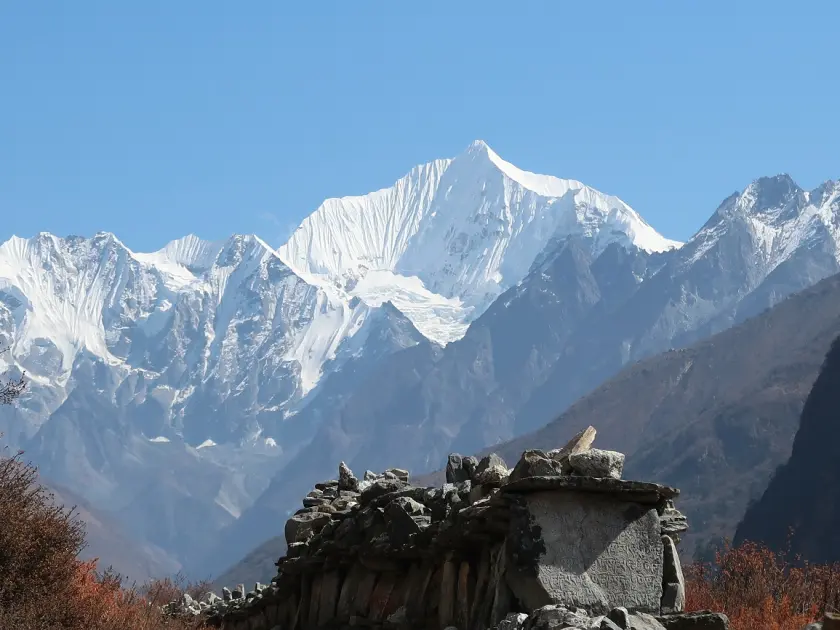
Tamang Ethnicity and their Intimate Connection to the Langtang Region
Explore Tamang culture during Langtang Valley Trek via history, ceremonies, Buddhism, Tamang culture, and examples of Himalayan culture.
Essential Components of Tamang Ethnicity:
- Faith and practices of Tibetan Buddhism
- Tamang language and Tamang Oral Traditions
- Yaks grazing, farming in the mountains
- Festivals, music, and community activities
Meanwhile, from The Langtang Valley Trek, one is introduced to the Tamang ethnic group as part of the cultural foundation of that region.
As such, the Tamang communities trace their ancestry through the Langtang Valley (3,430m) through language and cultural rituals.
Further, the culture of the Tamang people intertwines the tradition of Tibetan Buddhism and the geographical background of the Himalayas.
Moreover, there is evidence of ancient migration from Tibet through the Tibetan plateau to the northern hill regions of Nepal that forms part of the history
As a result, a sense of cultural identity emerged around mountain survival skills, trade routes, and religious fervor.
Therefore, the ethnic identity of the Tamang continues to be inextricably linked with the experiences on the Langtang
Additionally, the language spoken in the community is Tamang, which is part of the Tibeto-Burman language family and is widely spoken
Hence, the oral tradition sustains myths, stories of migration, and religious instructions.
Consequently, the language serves to enhance cultural continuity in the region of Langtang.
Meanwhile, Tibetan Buddhism influences Tamang’s religious life and ethics.
Therefore, there are rituals conducted in accordance with Lama’s instructions, where villagers worship the deities of the mountains
Consequently, religion shapes the patterns of everyday life and annual activities.
Further, monasteries serve as cultural hubs for Tamang communities.
Therefore, KYANJIN GOMPA (3,870m) facilitates all aspects of spiritual education
As a result, the identity of the Tamangs is inextricably linked with Buddhism
In like manner, traditional livelihoods indicate how well-liked altitudes.
Therefore, the Tamang community rear yaks for livestock, grow potatoes for food, and also conduct periodic trading.
Moreover, the Tamang dress represents cultural identity and awareness.
Hence, woolen clothing offers insulation as well as a traditional look.
Therefore, clothing also supports identity by means of functional design.
Interestingly, the festivals of the Tamang community hold significance in terms of shared memory and religious
Thus, events such as the celebration of ‘Losar’ also bring families together through such activities such as dance, prayer
Therefore, cultural ties are strengthened during festive times.
In addition, music and dances serve to maintain the storytelling performances among the Tamang
Therefore, rhythmic instruments are accompanied during ceremonies and social gatherings.
Therefore, art is what keeps culture alive.
On the other hand, while the social structure for Tamang promotes cooperation and reverence for elders.
Hence, the community labor contributes to agriculture, construction activities, and preparation of festivities.
Therefore, shared responsibility brings about survival and oneness.
Moreover, tourism has an impact on the livelihoods of the Tamang community along the trekking routes
Thus, guiding, portering, and managing teahouses can be sources of earning.
Therefore, the cost of trekking indirectly supports the preservation of culture. In addition, the rebuilding that took place after the earthquake improved the unity and strength
Therefore, the communities rebuilt their homes while retaining their cultural identity.
Thus, the cultural identity only came out stronger.
Finally, the ethnicity of the Tamang tribe gives the soul of the Langtang Valley Trek.
So, the cultural experiences add to their authenticity, which transcends natural beauty.
In summary, the Tamang roots sustain the “living Himalayan” legacy found in Langtang Valley

Traditional Tamang Villages along the Langtang Valley Trail
Langtang Valley Trek includes visits to traditional Tamang villages where you will see stone homes and monasteries.
Meanwhile, Traditional Tamang villages in Langtang Valley Trek display a deep sense of Himalayan cultural adaptation.
Hence, the settlements ensure a balance between spiritual practices, living in a self-supporting manner
Furthermore, rural life occurs in perfect harmony amidst dramatic mountain surroundings.
Further ahead lies Syabrubesi (1,550m), which is the cultural entrance to the Langtang Valley Trekking.
Accordingly, the Tamang houses seen here feature stone walls, prayer flags, and carvings.
So, first contacts introduce real-life conditions in Himalayan villages.
In addition, the transition pattern displayed by Lama Hotel (2,470m)
Hence, the locals help trekkers while maintaining their agricultural traditions.
Thus, hospitality is a combination of commerce and culture.
Simultaneously, the Langtang village stands at an altitude of 3,430m,
Therefore, the residents were able to rebuild homes while maintaining traditional designs and practices.
This brought cultural continuity in spite of natural disasters.
Consequently, flat roof houses resist snow effectively, besides receiving ample sunlight.
As a result, architecture reflects environmental intelligence.
Moreover, farming has adapted to cope with short growing seasons and rocky land. Accordingly, the villagers grow potatoes, barley, and buckwheat. Consequently, food systems are assured of being robust and sustainable.
Significantly, yak herding is also of importance to the economy and culture of villages along Hence, alpine meadows around LangshishaKharka (4,200m) support Therefore, pastoral traditions are continued.
In addition to that, social environments bring cohesion to villages. Hence, community kitchens, as well as courtyards, invite story-telling and parties. Thus, social ties are maintained. At the same time, festivals make rural areas vibrant places of culture. Thus, dances, chanting, and celebrations can be seen in village courtyards during Losar. Therefore, the tradition facilitates common identity.
Additionally, the trekking tourism business influences the current village economy. Thus, the teahouses are sources of income and, at the same time Thus, moderate trekking costs support local sustainability. In addition, responsible trekking practices emphasize the importance of respecting and preserving cultures.
Therefore, local guides will give information on customs, etiquette, and history. Thus, cultural exchange still has meaning. After that, traditional Tamang villages complete the Langtang Valley Trek experience.
In this way, immersion in culture adds to every day of walking. Finally, rural life in the Himalayas presents eternal realism.
Important Tamang Villages on the Trail:
- Syabrubesi (1,550m)
- Lama Hotel (2,470m) - forest settlement
- Langtang Village (3,430m)
- Cultural Kyanjin Village is 3,870m above sea.
Influence of Tibetan Buddhism in Daily Life in Langtang Valley Trek
Langtang Valley Trek greets its guests with Tibetan Buddhism in the form of ritual performances, monasteries, prayer flags, village life, and even the Himalayan way of spiritual existence.
Daily Buddhist Practices Observed on the Trail:
- Prayer flags and mani walls
- Monastic rituals and teachings
- Home altars and butter lamps
- Ritual observances at festivals, Chanting
But, this does not mean Tibetan Buddhism shapes every aspect of daily life along the Langtang Valley Trek.
Therefore, spiritual beliefs guide farming cycles, travel decisions, and relationships in the community.
The Langtang Valley, at an elevation of 3,430 meters, stands as a testimony to the living Buddhist landscape sculpted by centuries of devotion.
Besides, every morning, the villagers start with the prayer to the sacred mountains.
It is because of that very reason that peaks such as Langtang Lirung receives offerings for protection and balance.
Thus, spirituality easily becomes woven into a daily schedule.
In addition, trails, roofs, and mountain passes crisscross the valley with lines of prayer flags.
It so follows that the wind carries mantras believed to spread compassion and harmony.
Consequently, even walking becomes an act of spirituality.
Mani walls, on the other hand, mark the entrances to villages and sacral paths.
Thus, locals and trekkers walk clockwise to show respect.
Consequently, religious discipline follows with motion.
Moreover, monasteries are spiritual and social centers.
Thus, Kyanjin Gompa (3,870m) hosts rituals, teachings, and seasonal ceremonies.
Consequently, monks guide the moral values and assure cultural continuity.
Likewise, agricultural and festival calendars are determined by Buddhist ones.
Hence, auspicious dates affect the timing for planting, harvesting, and traveling.
Here, economic decisions are shaped according to belief systems.
Besides, the home altars also remain the center of Tamang households.
Accordingly, families light butter lamps and recite mantras daily.
Thus, it strengthens family unity through faith.
Importantly, compassion and nonviolence guide social behavior.
Therefore, communities stress the importance of cooperation, hospitality, and respect for life.
As a result, the social harmony is well maintained in Langtag Valley that the trekkers can experience it on the trail.
Other traditions that influence food habits include Buddhist teachings and seasonal fasting.
Thus, the villagers enjoy simple meals that correspond to spiritual abstinence.
Thus, diet reflects belief and environment.
While rituals address natural problems of high mountains.
Consequently, lamas perform rituals for good weather and safe journeys.
Therefore, faith provides emotional comfort.
Moreover, festivals strengthen Buddhist values from generation to generation.
Therefore, chanting, dances, and symbolic offerings are part of Losar celebrations.
Thus, younger members are passed traditions by them.
In addition, trekking tourism also respects Buddhist customs in terms of local guidance.
Visitors, therefore, follow etiquette around monasteries and holy objects.
It follows that cultural respect therefore heightens experiences.
It is donations that also help to fund monastic education and maintenance.
Thus, this directly contributes to the preservation of culture with modest costs.
Therefore, tourism carries on spiritual heritage. Tibetan Buddhism finally defines the cultural rhythm of Langtang.
Daily life thus expresses the harmony between belief and nature.
In a nutshell, spiritual influence enriches each step undertaken during the Langtang Valley Trek.
Ancient Monasteries and Sacred Sites of Langtang Valley
Discover the most ancient monasteries and sacred places on the Langtang Valley Trek, which includes gompas, pilgrimage landmarks, and the spiritual heritage of the Himalayas.
Meanwhile, it is ancient monasteries that define the sacred geography of the Langtang Valley Trek.
Spiritual landmarks, therefore, guide tourists through faith-filled landscapes.
Additionally, sacred sites preserve the tradition of Himalayan Buddhism over centuries.
Moreover, monasteries anchor village identity and spiritual education.
Thus, Kyanjin Gompa at an altitude of 3,870m is considered the most important religious center.
Accordingly, monks perform rituals that maintain cultural continuity.
Furthermore, sacred texts, statues, and meditation spaces are housed in this monastery.
Knowledge is thus passed down through generations spiritually.
Hence, learning and devotion are not mutually exclusive.
Meanwhile, chortens mark spiritually powerful locations along the trail.
As a result, villagers keep these structures as protective signs.
It is for this reason that sacred energy can be said to define the route.
There are also meditation caves near the Langtang Village at 3,430 meters.
These were used as retreat places by monks in the past.
Thus, these areas are dominated by silence and reverence.
Anymore, the sacred mountains frame spiritual narratives across the valley.
Hence, Dorje Lakpa-6,966m is considered to be a sacred protector.
Therefore, peaks remain objects of prayer. Furthermore, the pilgrimage traditions are connected with Langtang to Tibetan Buddhism.
Accordingly, many devotees visit gompas for blessings and acquiring merit. Thus, spiritual travel keeps on going. Importantly, the rituals address natural forces that affect mountain life.
Therefore, ceremonies have to honor the deities controlling weather and land stability. Faith, therefore, supports survival. Additionally, monastery festivals bring people of surrounding communities together.
Thus, chanting fills courtyards, and mask dances and offerings abound. Consequently, sacred sites solidify social bonds. Meanwhile, architecture reflects adaptation to alpine environments. Accordingly, stone walls and flat roofs bear harsh conditions. Hence, form follows faith and function.
In addition, trekking tourism contributes to monastery maintenance. Therefore, the restorations and educative programs are funded by donations. Therefore, modest costs help preserve them.
Additionally, guides explain sacred etiquette to visitors. Therefore, respectful behavior safeguards spiritual integrity. Therefore, no imbalance in cultural exchange persists. Sacred landscapes promote mindful trekking experiences, as well.
Thus, visitors walk at a slower pace and observe traditions. Consequently, journeys are meaningful. Finally, monasteries and sacred sites define the spiritual identity of Langtang.
Therefore, faith enhances cultural discovery. It is for this reason that sacred heritage makes the trekking tour of Langtang Valley more than an adventure.
Major Sacred Sites in Langtang Valley: Kyanjin Gompa (3,870m) - main monastery Langtang Village meditation caves - 3,430m Chortens and mani walls along trails Sacred peaks abound, including Dorje Lakpa 6,966m.

Prayer Flags, Mani Walls, and Chortens Along the Langtang Valley Trek
Explore prayer flags, mani walls, and chortens on the Langtang Valley Trek. Uncover the symbolism behind the Tibetan Buddhist elements.
Nonetheless, prayer flags, mani walls, and chortens factor significantly in the religious environment in the Langtang Valley Trek.
Accordingly, these sacred symbols offer directions to the trekkers in Buddhist teachings and the culture of the Himalayas.
In addition, the Langtang Valley with an altitude of 3,430m offers spirituality intertwined in the trekking trail.
Moreover, prayer flags can be seen near village entries, ridges, and hilltops.
Hence, the five colors symbolize elements, balance, and harmony.
Therefore, wind carries prayers from valleys to mountains.
Moreover, they display flags in order to worship divinities and safeguard visitors.
Consequently, the faded flags represent prayers that have been released into nature.
Thus, renewal portrays persistent dedication.
Simultaneously, mani walls are erected along routes near settlements as well as mani routes.
Stone slabs are engraved with mantras like "Om Mani Padme Hum" in particular.
Thus, going around clockwise is a sign of respect and awareness.
In addition, mani walls serve as demarcations between physical and spiritual realms.
The villagers, therefore, regard them as protective shelters to their communities.
Therefore, cultural etiquette becomes an integral part of trekking.
Chortens are also landmarks that symbolize respect and worship of Buddhism.
Therefore, the whitewashed buildings are thus representative of enlightenment and compassion.
So, chortens mark their importance in the Langtang Valley Trek.
Moreover, there are chortens around villages such as Lama Hotel (2,470m
Therefore, trekkers display respect to them as they undertake their daily walks.
Therefore, movement is consistent with spiritual tradition.
In particular, prayer networks link communities across ages.
Thus, it becomes the responsibility of elders to teach children what symbols and rituals mean.
Therefore, cultural knowledge is maintained.
Additionally, these non-secular features indicate Tibetan Buddhist influence.
Therefore, the culture of the Langtang people represents the culture of other Himalayan regions
Hence, a common heritage enhances one’s identity.
In contrast, trekkers attain spiritual tranquility through continued exposure.
Thus, symbolic repetition promotes reflection and respect.
Further, festivals involve renewing prayer flags and mani walls.
Accordingly, community work enhances collective faith.
Therefore, maintenance upholds tradition.
Moreover, tourism helps promote conservation through awareness and donations.
Thus, the contributions are modest to maintain the settlement
Thus, trekking impacts negatively on cultural sustainability.
Also, the guides provide interpretations regarding symbolism to those who visit along the route.
Therefore, cultural insight is refined.
Therefore, experience acquires meaning.
Lastly, prayer flags, mani walls, and chortens are what give Langtang a trail identity.
Therefore, spiritual landmarks add value to the journey.
In sum, sacred symbols make the Langtang Valley Trek a cultural pilgrimage.
Sacred Symbols Met with in the Trail:
Prayer flags depicting the five elements of nature
The walls are decorated with Buddhist mantras inscribed on man
Buddhist religious monuments. Chortens depicting Buddhist symbols
Kyanjin Gompa: The Spiritual Heart of Langtang Valley
The spiritual center of the Langtang Valley Trek, however, is defined by Kyanjin Gompa.
Thus, such a holy monastery influences the religion among the surrounding villages.
Kyanjin Gompa (3,870m) is, in fact, the highest cultural center in the Langtang valley.
In addition, there is a monastery that marks Kyanjin Village (3,870m).
Hence, spiritual practice and living are always interrelated.
Thus, faith dictates community rhythms.
In addition, monks also hold prayers, festivals, and teachings.
Consequently, the community came for blessings of health, harvest, and safe journey.
It is clear, then, that belief has real
However, there is also the monastery, which contains scriptures, statues, and meditation chambers.
As such, they retain Tibetan Buddhist teachings.
Therefore, the process of learning continues.
Further, Kyanjin Gompa lies above peaks such as Langtang Lirung.
Therefore, sacred geography upholds spiritual reverence.
Mountains, therefore, become heavenly protectors.
Likewise, devotees go to Kyanjin Gompa to generate merits and seek blessings
Therefore, the spiritual path fosters culture bonds.
Thus, the phenomenon of pilgrimage is still Further, the festivals cause Kyanín Gompa to become a cultural meeting point. Thus, chanting, mask dances, and offerings fill the courtyards. This is how tradition becomes alive.
Notably, the monastery promotes social cohesion within the valley. Consequently, monks resolve conflicts and set moral standards.
Consequently, there is unity. It should be added that architecture is an indicator of adaptation to challenging conditions of an Therefore, stone walls, and flat rooftops, protect against snow and wind.
Therefore, design becomes a combination of faith and functionality. On their part, trekking tourism raises the visibility of monasteries. As a result, the onlookers watch the Thus, cross-cultural experiences emerge.
In addition, donations are used to maintain monastery infrastructure. So, moderate costs promote repair work and education. Therefore, tourism promotes preservation. Furthermore, there are instructions on etiquette in sacred sites given in the guides. As such, respect maintains spiritual integrity.
Thus, experiences prove authentic. Furthermore, the silence surrounding the gompa promotes reflection. As such, trekkers reduce speed. Hence, mindfulness levels increase. Finally, there is the Kyanjin Gompa, the spiritual Thus, the cultural diversity adds to the trekkers' cultural experiences.
In conclusion, the monastery adds a spiritual element to the Langtang Valley Trek. Spiritual Roles of Kyanjin Gompa: Religious rituals, teachings, & Cultural preservation and guidance
Traditional Stone Houses and Highland Structures in Langtang Valley
Discover the traditional stone houses found during the Langtang Valley Trek, the highland architecture, the Tamang construction techniques, and the designs utilized in the villages in the Himalayas.
Important Architectural Features along the Trail:
- Thick walls, typically made of stone, with flat roofs
- South-facing windows to provide solar heating in Each room
- Central Kitchens/Prayer Facilities
However, the traditional stone buildings of the Langtang Valley Trek represent many years of Himalayan adaptation.
Hence, the Tamang community developed housing that would withstand the effects of cold air currents, snowfall, and seismic shocks.
In addition, the architecture in the highlands corresponds to mountainous environmental knowledge.
Also, settlements such as Syabrubesi (1,550m) have instances of early stone-based construction
Thus, local stone, wood, and mud mortar were used in construction.
Therefore, architecture becomes sustainable along with being region-specific.
Moreover, each house becomes stronger in terms of its structure along with increasing altitude.
Thus, settlements such as “Lama Hotel” (2,470m) will have thicker walls and smaller windows.
Consequently, natural insulation enhances.
On the other hand, the layout of Langtang Village (3,430m) illustrates typical
As a result, there is a compact grouping of houses to protect against wind effects
Consequently, the amount of warmth and community activity that takes place also increases.
Further on, Kyanjin Village (3,870m) boasts the most sophisticated high-altitude
Consequently, flat roofs facilitate snow removal and solar heating.
As a result, energy efficiency is enhanced
Also, stone houses will include animal shelters.
Therefore, the warmth from the livestock rises into living spaces.
Thus, architecture incorporates survival strategy.
Furthermore, interior designs also embody cultural values and habits.
As such, kitchens feature prominent locations for heating and socializing.
Consequently, design fosters family unity.
architecture brings spiritual life into the house.
In this case, the implication is that faith is always present each day
In addition, windows are oriented to face south to get maximum sunlight exposure.
Consequently, little winter solar gain remains.
Therefore, thermal comfort increases.
On the other hand, the courtyard offers social and functional areas.
As such, the residents dry their farm produce and hold functions at the location.
Therefore, there is a role that architecture plays in
In addition, post-earthquake reconstruction was done in conformity with traditional design principles.
Hence, the reconstruction work included the preservation of the authenticity of
Therefore, resilience enhanced identity.
Trekking tourism also contributed to architectural adaptation.
Therefore, teahouses combine traditional stone architecture with modern requirements.
Hence, comfort bred without loss of culture.
Further, the construction costs are kept relatively low as local materials are used.
Thus, affordability promotes sustainability.
Therefore, architecture persists.
Lastly, the stone houses add to the identity of Langtang.
As a result, rural areas have a sense of being timeless
In conclusion, Highland architecture is a manifestation of Tamang hardiness and Himalayan ingenuity
Local Dress, Ornaments, Cultural Identity, Tamang Culture, Tamang People
Learn about the traditional clothing and jewellery of the Tamang community during the Langtang Valley Trek.
Meanwhile, local attire and ornaments convey the cultural identity of the people of Tamang community in the Langtang Valley Trek.
Hence, the clothing reflects adaptation to the Himalayan climate as well as Tibetan influence.
Further, clothing is a symbol that reflects social values, beliefs, and heritage.
In addition, the dress among the Tamangs incorporates thick wool.
Therefore, clothes offer insulating capabilities at high altitudes such as the Langtang Valley (3,430m)
Therefore, clothing provides for survival and comfort.
Additionally, women wear colorful skirt wrappers and blouses.
Hence, layered fabrics resist the effects of cold as well as wind.
Therefore, function merges with aesthetics.
Simultaneously, men wear long robes with woolen pants.
Therefore, design promotes movement in herding and farming activities.
In effect, work efficiency increases.
Furthermore, the headgear prevents exposure to direct sunlight and coldness.
Therefore, hats have both functional and cultural significance.
Identity is therefore evident.
Ornaments, too, have various cultural meanings.
Therefore, silver necklaces, coral beads, and turquoise stones are prevalent.
Thus, jewelry symbolizes status and belief. Furthermore, decorative items are also passed down from generation to generation Consequently, the family retains lineage identity by dressing. Thus, heritage is living.
In particular, religious symbols can be seen in personal accessories. Consequently, amulets protect their wearers spiritually This means that faith accompanies people. Furthermore, festive wear is different from regular wear. Therefore, there are more vibrant colors used in festivals, along with more ornaments.
Therefore, the festivities underscore the culture's pride. At the same time, the Losar festival features the most colorful traditional dresses. Therefore, the community members come donning their attire for ceremony Therefore, unity is strengthened.
Additionally, the weather impacts the choice of color and thickness of material. Consequently, dark colors will absorb heat when used in cold surroundings. Therefore, clothing adjusts in an intelligent manner Further, the current trend in trekking tourism shapes the evolution of clothing.
Thus, functional layers blend with traditional designs. Consequently, culture evolves but doesn’t disappear. Furthermore, the women of the region also sell handmade ornaments to the trekkers. So, small costs contribute to household income. Therefore, crafts support livelihood.
Finally, Tamang dress and jewelry maintain a visible cultural identity. Therefore, clothes have stories that are told beyond words. Clothing therefore represents the spirit of endurance, faith, and the Himalayan tradition. Details of Tamang Clothing:
Tamang clothing has Clothing made of wool for protection against cold Silver, coral, and turquoise adornments Religious amulets and signs Festival specific ceremonial garments.
Language, Songs, and Oral Traditions of Langtang Communities
Language, song, and oral traditions on the Langtang Valley Trek provide an insight into Tamang language, folk music, storytelling, and Himalayan cultural heritage.
Forms of Oral Expression in Langtang:
- Tamang spoken language
- Traditional songs and ritual chants
- Mythological storytelling
- Festival music and dance
Mainly, the key cultural foundation of daily life along the Langtang Valley Trek is language.
As a result, the Tamang language dominates communication across villages in Langtang Valley (3,430m).
This Tibeto-Burman language preserves ancestral identity and also maintains the Himalayan worldview.
The elders also use Tamang language in order to pass on the cultural knowledge orally.
As a result, stories take the place of written records in most family settings.
Thus, oral traditions do not go away.
Furthermore, folk songs express history, tales of migration, and spiritual beliefs.
Hence, melodies reflect mountain life, hardship, and devotion.
Hence, music turns into one big pot of collective memory.
Meanwhile, songs accompany work in agriculture and seasonal rituals.
Rhythms, therefore, come along to synchronize labors and reinforce unity.
That way, work is communal.
Classic songs also describe sacred peaks like Langtang Lirung, at 7,227m.
Thus, mountains become the main characters of tales.
It is through them that geography first takes on spiritual significance.
Similarly, the sessions of storytelling occur during the winter evenings.
Hence, families gather around hearths for shared tales.
The reason is that oral heritage has survived through generations.
Myths also explain natural phenomena and moral values.
Stories thus teach respect to land and spirits.
Thus, ethics are transmitted culturally.
Importantly, Buddhist ceremonies are supported in ritual chants.
Hence, monks and villagers also chant mantras in rhythm.
The end result, therefore, is that sound enhances spirituality.
Festivals enhance musical expression, too.
Therefore, dances involving drums and cymbals are accompanied during Losar.
Accordingly, celebration reinforces identity.
In the meanwhile, children and youth learn songs easily by repeating them and participating in the lyrics.
Accordingly, education in culture happens whiles.
Hence, continuity is still strong.
It also allows cultural sharing in trekking tourism.
Thus, guides translate songs and stories for visitors.
Thus, awareness increases.
Besides, cultural performances sometimes appear in teahouses.
Consequently, small gratuities support entertainers.
Therefore, value comes with tradition.
Furthermore, there is a threat of modern influences on language retention.
Thus, elders actively promote native speech.
Consequently, preservation efforts increase.
Basically, the spirit of the culture of Langtang is verbally embodied and constitutes its oral traditions.
Thus, communication carries heritage beyond words.
Song and stories add much profundity to Langtang Valley Trek experiences.
Traditional Food Culture: Yak Products and Local Cuisine
Explore the Traditional Food Culture with Langtang Valley Trek highlighted with Local cuisine along with preserved Yak items, high-altitude diet, and Tamang cuisine heritage.
Key Foods on Langtang Valley Trek:
- Cheese and butter from yaks
- Po cha (butter tea) and thukpa
- Potato and buckwheat dishes
- Fermented Vegetables and Soups
However, traditional food culture sustains life along the Langtang Valley Trek.
Hence, meals reflect high-altitude adaptation as well as Tamang culinary knowledge.
Additionally, the Langtang Valley cuisine strikes a balance at 3,430m in terms of nutrition, climate, and availability.
Besides, yak products are a main component of local diets.
As a result, villagers depend on milk, butter, and cheese from yaks. Thus, livestock supports survival.
Besides, yak cheese production flourishes around Kyanjin Village at an altitude of 3,870 meters.
Fresh and dried cheese, therefore, provide protein-rich food.
Hence, dairy supports energy needs.
Meanwhile, butter tea is used to warm the body up in cold conditions.
Salt, tea, and yak butter combine accordingly for sustenance.
Consequently, warmth as well as hydration enhances.
In addition, staple foods consist of potatoes, buckwheat, and barley.
Thus, crops put up with short growing seasons.
Consequently, agriculture adapts well.
While soups are dominant in everyday meals.
Therefore, thukpa comforts and nourishes.
Therefore, comfort food matters. Additional fermented foods support digestion at height. Consequently, people here prepare traditional pickles and dried vegetables. Hence, it guarantees the supply throughout the year.
Importantly, meals mirror the traditions of communal sharing. Therefore, families eat together from shared dishes. As a result, social bonds strengthen. Moreover, food habits are influenced by religious beliefs.
Thus, simple meals support spiritual moderation. As a result of this, diet aligns with belief. While at the same time, trekking tourism brings menu variety. Teahouses accordingly serve local and basic international dishes.
Consequently, the options grow. Moreover, yak-based dishes remain high points for trekkers. Therefore, tasting local cuisine enhances cultural experience. Thus, food becomes learning. Moreover, meal expenses stay reasonable en route. As a result, daily food costs are manageable. Therefore, accessibility stays high. Besides, it is women who play a central role in food preparation.
Thus, culinary skills pass from generation to generation. Consequently, heritage continues. Finally, traditional dishes define Langtang's hospitality. Therefore, meals link people and place.
These products are a manifestation of Langtang's cultural resilience: yak products and local food.
Seasonal Festivals Celebrated in Langtang Valley
Explore seasonal festivals in Langtang Valley Trek such as Tamang festivals, Buddhist customs and rituals, Himalayan lifestyle traditions, and mountain ethnic group gatherings.
Major Festivals in Langtang Valley:
- Losar - Tibetan New Year
- Buddha Jayanti
- Seasonal agricultural celebration events
- Monastery ritual festivals
However, the seasonal festivals shape the cultural rhythm of life along the Langtang Valley Trek.
Thus, Tamang people celebrate festivals according to agriculture, religion, and seasons of Himalaya.
Besides, festivals in Langtang Valley (3,430m) are held to express gratitude, resilience, and spiritual balance.
Moreover, it is the most vital Tamang and Tibetan Buddhist festival.
Consequently, the villages celebrate New Year with prayers, dances, and togetherness in feasting.
The cultural unity thus strengthens down the generations.
Besides, Losar rituals start within monasteries and family dwellings.
Therefore, monks perform chants seeking prosperity and protection.
Therefore, spiritual renewal becomes central.
The villagers are with traditional dresses and ornaments at the time of celebration.
Accordingly, bright colours replace daily work clothes.
As a result of this, cultural identity becomes observable.
Additionally, agricultural festivals mark the periods of planting and harvest.
Thus, families thank mountain deities for crop survival.
Consequently, belief is connected directly with livelihood.
Similarly, Buddha Jayanti marks the birth of Buddha.
Hence, the prayer ceremonies occur in monasteries such as Kyanjin Gompa (3,870m).
Therefore, spiritual devotion intensifies.
Masked dances also appear on major festivals.
Accordingly, the dancers represent protective deities and moral lessons.
Thus, the narrative becomes visual.
Importantly, music and drums energize festival gatherings.
Therefore, the rhythmic beats unify participants emotionally.
Consequently, joy is shared in unison.
Moreover, festivals encourage people to cooperate with one another.
Hence, food, labor, and other celebration expenses are shared among families.
As a result, social bonds grow stronger.
Meanwhile, children learn traditions through participation.
Accordingly, elders guide rituals and meanings.
Therefore, cultural transmission goes on.
Besides, seasonal timing respects harsh Himalayan weather
Hence, festivals happen during accessible months.
The safety would, therefore, be in line with tradition.
In addition, trekking tourists sometimes observe festivals that are being celebrated.
This in turn makes for respectful observation and, therefore, enhances cultural understanding.
Hence, experiences become memorable.
Besides this, modest festival expenses stay in circulation within villages.
Thus, local economies benefit indirectly.
Tradition therefore, has the inherent capability to sustain livelihoods.
Finally, the living culture of Langtang is defined by seasonal festivals.
Celebrations reflect the harmony between people and mountains, therefore.
In the end, festivals enrich the Langtang Valley Trek beyond scenery.
Warm hospitality and a showcase of teahouse culture in villages in the Langtang areas.
Enjoy warm hospitality in the teahouse cultures on Langtang Valley Trek with local Tamang family lodges, authentic foods, and traditions related to Himalayan guests.
Key Features of Langtang Teahouse Culture:
- Family-run lodges
- Shared dining and heating spaces
- During expedition food consumption in the region is based on local food and yak products.
- Authentic Tamang hospitality
However, warm hospitality defines daily experiences along the Langtang Valley Trek.
Tamang villagers are therefore very receptive and welcome trekkers with lots of sincerity and generosity.
Besides, hospitality is a kind of cultural behavior based on the principle of mutual respect.
Teahouses also function as family-run guest houses.
Consequently, hosts share dwellings, food, and tales with others.
Thus, connections feel personal.
Teahouses also show up in villages like Syabrubesi (1,550m).
Therefore, the cultural immersion for trekkers starts at the trailhead.
Hence, comfort meets tradition early.
While Lama Hotel at 2,470 meters above sea level has simple lodges in forest villages.
Therefore, hot meals and warm dining rooms give energy.
Consequently, the signs of fatigue disappear.
Furthermore, Langtang Village View teahouses at 3,430m are resilient and hospitable.
Thus, rebuilt lodge demonstrates reflections of strength within the community.
Accordingly, the sensation of warmth is deeper. Similarly, Kyanjin Village at 3,870m is assured of the highest teahouse experiences.
Therefore, hosts prepare and serve meals based on yaks and other hot drinks.
Thus, comfort regarding altitude improves. Dining rooms further serve as social centers. Consequently, trekkers and locals share conversations by stoves. Therefore, the flow of cultural exchange is natural.
Importantly, hosts explain local customs and etiquette. Therefore, visitors understand the lives of villagers more. Consequently, respect rises. Besides, food service reflects concern for the people being served and is not a matter of speed. Thus, the meals arrive freshly prepared. The logical consequence is that quality matters.
At the same time, the cost of accommodation on the whole route remains reasonable. Thus, overnight expenses remain reasonable for the majority of trekkers. Thus, accessibility does not suffer. In fact, most of the operations of teahouses are run by women.
Thus, hospitality supports the family's revenues. Thus, tourism sends its empowerment to the family level. Teahouses also adjust according to trekking seasons. Consequently, facilities improve gradually. Therefore, comfort increases yearly.
Moreover, hospitality does not involve payment: Thus, hosts assist in case of illness or delays due to weather. As a result, safety increases. Teahouse culture finally defines the Langtang trekking experience.
Consequently, warmth meets the challenge of physicality. In conclusion, hospitality makes Langtang Valley Trek a shared human experience.
Role of Buddhism in Mountain Conservation and Lifestyle in Langtang Valley
Learn about the role Buddhism plays in influencing the conservation of mountains in the Langtang Valley Trek.
Related information is found on pages such as Trekking Regions. Compared with Annapurna Region Trek
However, Buddhist culture has a deep impact on mountain preservation and lifestyle in connection to the Langtang Valley Trek.
Thus, spiritual ethics regulate the treatment of the environment and use of resources.
Moreover, the philosophy of Buddhism promotes the idea of compassion towards all living organisms.
Hence, conservation of hunting as well as animal respect serves to preserve local biodiversity.
Therefore, ethical values help with conservations.
Moreover, sacred mountains also get spiritual reverence and protection.
Thus, peaks such as Langtang Lirung (7,227m) are left undisturbed
Therefore, it is belief that ensures the
On the other hand, the monastery fosters human-nature synergy.
Thus, monks preach moderation and handling nature properly.
This leads to the promotion of sustainability through culture.
Further, prayer flags represent harmony between natural elements.
Hence, Air, Earth, Fire, Water, and Space are still honored.
Therefore, the level of ecological consciousness increases
In the same way, mani walls also guide the movement of trails
Thus, regulated routes minimize environmental degradation.
Thus, ritual helps with preservation.
Moreover, Buddhist calendars also mark agricultural seasons.
Therefore, the agricultural process does not address or avoid the ecological
Therefore, the land self-reclaims.
Notably, the forest regions have spiritual value.
Hence, societies guard trees around places of worship.
In addition, monasteries promote waste minimization
Since simple living leads to living on less and consuming
This leads to a small footprint.
However, water sources are treated ritually.
Consequently, springs and streams are conserved in the village.
Thus, clean water remains.
Moreover, Buddhist rituals provide equality in a nature-affected setting.
Accordingly, rituals strengthen resilience and care.
Therefore, belief leads to stability of lifestyle
Furthermore, the trekking tour industry adheres to Buddhist ethics
Therefore, guides encourage being respectful.
Consequently, the effect brought about by visitors
Additionally, the contributions raised funds for conservation education led by the
Consequently, small costs underwrite awareness.
Therefore, the shield persists.
Lastly, Buddhism brings conservation into the mainstream.
Therefore, spirituality maintains mountains.
Thus, faith sustains the delicate ecosystem in Langtang
Principles of Conservation under Buddhism in Langtang:
- Compassion towards all life
- Mountain sanctums
- Sustainable farming ethics
- Agriculture as main occupation
- Simple living philosophy
Earthquake of 2015 and Its Effect on the Langtang Culture of Rehabilitation
Explore the effects of the 2015 earthquake on the Langtang Valley Trek, including cultural loss, community, and rebuilding heritage.
Actually, the earthquake that hit Langtang Valley in 2015 has had a significant effect.
Thus, landslides resulted in the destruction of settlements.
In addition to this, the entire Langtang Village was destroyed at
In this regard, many Tamang families lost homes, heritage, and loved ones.
It can be seen, therefore, that the impact of the
Thus, trauma altered community dynamics.
Moreover, monasteries and religious places also suffered.
Therefore, spiritual centers had to be rebuilt.
Therefore, faith was an anchor for recovery.
This is because the traditions were likely to be threatened by the earthquake.
As a consequence of this development, there was a momentary
Additionally, the sense of community spirit was enhanced in the process
Likewise, the reconstruction took place with consideration of traditional architecture.
Thus, the stone house made a comeback with seismic modifications.
Therefore, heritage continued to In addition, the Kyanjin Village of 3,870m also renovated Therefore, the tours began to gradually resume. Consequently, the rituals dealt with grief and fear. Consequently, hope was revived. Additionally, cultural practices became important again after loss. Therefore, festivals restored group potency. It led to an increase in Meanwhile, the trekking trails started to reopen. Therefore, the measures of safety increased. Therefore, confidence grew. In addition, foreign assistance was involved in the restoration Thus, there was a betterment in the areas Consequently, the rate of recovery.
Moreover, the process of sustainable reconstruction was influenced by the leadership Therefore, the villages struck a good blend between tradition and security Therefore, there was progress along cultural lines. In fact, earthquake memory affects contemporary lifestyle. This led to preparedness and awareness.
Ultimately, the revitalization of Langtang is an example Therefore, tragedy was a reinforcement of identity In conclusion, the culture of the people in Langtang existed in unity and faith. Post-Earthquake Recovery Highlights Community-led reconstruction Preservation of Tamang culture
Community-Based Tourism and Culture Preservation Projects in Langtang Valley
Learn about community-based tourism on Langtang Valley Trek and how culture preservation and local means of livelihood are important.
Contributions of community tourism:
- Ownership & employment - Local ownership & employment
- Cultural Storytelling and Guiding
- Monastery and Heritage Funding
- Sustainable village development
Meanwhile, community-based tourism contributes immensely to the preservation of culture during the Langtang Valley Trek.
Thus, by being community owned, tourism benefit retention remains within the Tamang community.
The villagers also run teahouses, guiding services, and porterage.
Therefore, income sustains families and cultural continuity.
Therefore, livelihoods are kept under local control.
Additionally, community tourism eliminates risks of cultural exploitation.
Hence, the residents themselves get to decide what constitutes acceptable tourist
Therefore, authenticity continues to be under the
In the meantime, the local guides can offer cultural stories and legends.
Consequently, storytelling is educating trekkers politely.
As a consequence, awareness is raised.
Furthermore, homestays facilitate greater cultural immersion.
Therefore, there is also an increase in
Likewise, tourism revenue is what maintains monasteries.
Thus, the holy sites continue to be active.
Consequently, spiritual heritage is preserved.
In addition, women play an active role in tourism business enterprises.
Therefore, teahouse administration empowers families.
Consequently, migration declines.
Hence, culture is maintained strong.
Furthermore, the earthquake reconstruction efforts placed a priority on the leadership of the community.
Therefore, the villages were able to preserve their architectural
Therefore, the heritage went on
While this happens, training courses also enhance the quality of services
Therefore, the locals are able to acquire skills
Consequently, the standards develop in a sustainable
In addition, there is a connection between conservation and tourism.
Consequently, waste disposal and maintenance processes as well as trails are also improved
Hence, nature benefits.
Further, the trekking fees also help develop the region.
As a result, joint costs are used to finance.
Therefore, the process of growth continues to flourish.
Further, ties with responsible trekking companies promote preservation.
Therefore, responsible tourist development further increases.
Therefore, culture receives permanent protection.
Lastly, Community Based Tourism helps keep the cultural heart of Langtang
Consequently, economic survival corresponds with heritage.
In conclusion, the sustainability in the Langtang Valley Trek is determined by Local Steward.
Respecting Local Customs & Cultural Etiquette while Trekking
To navigate Langtang Valley Trek on familiar terms with the local culture, it is necessary to know some cultural etiquette. This includes Tamang culture, Buddhist traditions, and conduct in the villages.
Meanwhile, following local customs helps to make meaningful experiences on the Langtang Valley Trek.
Thus, cultural sensitivity promotes more harmony between tourists and communities.
Furthermore, trekking expeditions should acknowledge locals courteously.
Therefore, simple greetings promote trust.
Therefore, the interactions seem real.
In addition, one must observe Buddhist icons.
Thus, circular walk routes around mani walls indicate respect.
Therefore, etiquette corresponds to belief.
Simultaneously, modest clothing continues to remain important in rural areas.
Therefore, the level of respect enhances. Further, permission is required prior to photography of others.
Therefore, asking first avoids awkwardness.
Therefore, dignity is maintained.
Likewise, entering monasteries also requires quietness.
Hence, ‘sacred’ is Moreover, they should avoid touching religious artifacts. Therefore, hands-off behavior maintains sanctity.
Consequently, boundaries remain clearly defined. Importantly, table manners include social norms. Therefore, to accept any food offered is a gesture of gratitude Consequently, hospitality is strengthened.
Furthermore, the disposal of waste also calls for responsibility Therefore, trash-carrying is a protective function Hence, cleanliness persists. “However,” continues the article, “simply Indeed, eating with patience is a way to respect hosts.
Therefore, the harmony continues. In addition, bargaining should also be conducted in a This means that just pricing enables livelihoods. Accordingly, Economic Respect is important.
Moreover, there are explanations about the culture of the people visited by the Therefore, the understanding level increases Consequently, errors decline. In addition, religious festivals must be handled with care Therefore, observing stealthily is observant. Therefore, it is appropriate to participate.
Finally, responsible trekking promotes the preservation of culture. So, manners preserve legacy.
Thus, awareness turns Langtang Valley Trek into a respectful cultural experience. “Essential Cultural Etiquette Tips Turn Clockwise around Holy Edifices Dress modestly in villages
Cultural Photography Tips on the Langtang Valley Trek
Take expert cultural photos on the Langtang Valley Trek by considering these responsible guidelines, which allow for the proper capture of Tamang culture, Himalayan village life, and holy places in Nepal.
Cultural Photography Checklist:
- Take permission from the locals
- Respect monasteries and holy places
- Respect Capture festivals, traditional houses, and ways of life.
- Utilize Natural Lighting and Wide-Angle Perspectives
Meanwhile, cultural photography must be done with a great deal of sensitivity and awareness in the context of the Langtang Valley
So, trekkers are encouraged to focus on respecting the locals while documenting life as Tamangs.
In addition, the Langtang Valley (3,430m) has colorful cultural events such as monasteries, festivals, and traditional
Moreover, documenting everyday life requires taking images with permission.
Thus, seeking permission from elders before photography is a sign of ethical consciousness.
Consequently, trust and cooperation increase.
Moreover, holy sites necessitate special attention.
Hence, it is best to refrain from taking pictures inside monasteries
Therefore, spiritual sanctity is still revered.
Conversely, festivals create exciting photo-shooting locations.
Hence, the Losar festival features dance, music, and traditional clothing.
Consequently, colors and movements are enhanced in photographs.
Furthermore, natural light improves Himalayan photographs.
So, the mornings and evenings are when the golden light falls on Langtang Lirung (7,227m)
As a result, landscapes and portraits come alive.
Likewise, photography of architecture has to emphasize details.
Thus, traditional houses in Kyanjin Village (3,870m) display the heritage of the Tamangs
Hence, compositions emphasize local workmanship.
Moreover, environmental awareness is equally important in photography.
Therefore, avoid treading on the holy places and sensitive areas.
Consequently, the sanctity of preservation is
Significantly, storytelling enhances cultural photography.
Hence, the images should be of village life, festivals, or daily activities.
Images, consequently, convey meanings.
In addition, there is a potential to produce candid pictures through interactions with locals.
So, sincere expressions add to visually storytelling.
This gives the impression that all photographs are
On the other hand, wide-angle lenses are used to capture the view of the Himalayas as well
As such, trekkers can experience Langtang Valley (3,430m) surrounded by mountains and culture.
Therefore, perspective always adds value to compositions
Moreover, ethical photography entails uploading images to the hosts.
Thus, reciprocity engenders trust and goodwill.
Therefore, community relations also improve.
Moreover, the trekking guides help with photographic points.
Therefore, they assist in acquiring genuine cultural experiences within safe conditions.
Thus, specialization increases the level of excellence
In addition, heritage is protected through observance of cultural restrictions
Therefore, refrain from taking pictures of religious rituals or private events without permission.
Accordingly, the level of ethical conduct remains high.
Third, cultural photography integrates aesthetics, ethics, and storytelling.
Hence, the trekkers report on the heritage of Lang
In conclusion, photography tips ensure that photographs are meaningful and respectful.
Conclusion: Experiencing Authentic Himalayan Culture during Langtang Valley Trek with Haven Holidays Pvt. Ltd.
Immerse in the culture of the Himalayas through Haven Holidays Pvt. Ltd. in Langtang Valley Trek, where you can learn about Tamang culture, monasteries, and festivals.
Key Highlights with Haven Holidays Pvt. Ltd.:
- Guided Cultural Interpretation
- Tamang Hospitality and Homestays
- Visits to monasteries and festivals
- Ethical Trekking & Photography Advice
- Sustainable community support.
Meanwhile, Langtang Valley Trek, offers a completely unique cultural experience with Haven Holidays Pvt. Ltd.
As a consequence, tourists experience Tamang culture, Buddhist monasteries, and the Himalayas firsthand.
Besides, the Langtang Valley itself (3,430m) encompasses spirituality, community.
Furthermore, trekking with a guide provides an opportunity to have
As a result, local guides interpret culture, festivities, and holy sites.
Consequently, the understanding of culture becomes enhanced In fact, homestays and teahouse experiences display Tamang
Consequently, the audience is treated to daily life, food, and stories.
Therefore, the feelings and bonds between people.
On the other hand, festivals & rituals display rich traditions.
Therefore, the addition of festivals like Losar, Buddha Jayanti, and agricultural festivals enhances the list
Consequently, the visitor gets to experience real displays of religious belief.
Furthermore, the monasteries such as Kyanjin Gompa (3,870m)
Thus, prayer, meditation, and architecture illustrate the strong Buddhist influence.
Thus, the tourists acquire important understandings.
Similarly, community-based tourism supports cultural conservation too.
Therefore, trekking is an activity that helps sustain local livelihoods.
Consequently, authenticity is maintained.
Moreover, responsible tourism behaviors boost cultural respect too. Consequently, they conduct instructions on local customs and photograph standards. Therefore, the interactions are held to remain.
Significantly, the preservation of mountains corresponds to culture. Thus, spiritual reverence leads to environmental sustainability. Therefore, landscapes and traditions live in harmony.
Further, trekking activities can be an educational and adventurous experience. Consequently, tourists get to experience the culture of the Himalayas amidst picturesque scenery.
Therefore, experiences are now transformative. At the same time, the annual programs emphasize shifting cultural environments. Hence, the autumn and spring treks expose the participant to festivals, flora, and the light of the mountains Therefore, timing is enhancing cultural experience.
Additionally, Haven Holidays provides logistics and safety. Therefore, the attention is directed towards cultural immersion instead of operational stress. Thus, there is a seamless experience.
In addition to this, local foods and yak-based foods add to the authenticity. As a consequence, the likes of thukpa, butter tea, as well as yak cheese, establish linkages between adventurers and Therefore, culinary culture becomes a part of the journey. In addition, photo shoots provide meaningful memories. Therefore, scenic and cultural footage retains experience. This leads to memories becoming long-lasting.
Lastly, one will experience true Himalayan culture while trekking with the help of Haven Holidays Pvt. Ltd Team. In other words, travelers become involved in the community in an ethical way, learn about the local people’s way of life.
To conclude, the Langtang Valley Trek is a unique blend of spirituality, heritage sites, and adventure in the mountains.
Note: This article originally appeared on the Haven Holidays Nepal Blog and has been republished here with permission..
About Haven Holidays Nepal: Haven Holidays is a locally based trekking company in Kathmandu, offering tailor-made adventures to Nepal’s most iconic destinations including Annapurna Base Camp, Everest Region, Manaslu Circuit, and Langtang Valley. Visit us at www.havenholidaysnepal.com
| Concerned URL | https://www.havenholidaysnepal.com/blogs/cultural-highlights-on-langtang-valley-trek |
|---|---|
| Address | |
| Source | https://www.havenholidaysnepal.com/blogs/cultural-highlights-on-langtang-valley-trek |
| Keywords | Cultural Highlights on Langtang Valley Trek |
| Target group(s) | Destinations , Businesses , Travellers , Education, Research, Consultancy , NGOs, Partnerships, Networks |
| Topics | Natural Heritage & Biodiversity , Travel, Transport & Mobility , Value Chain Management & Fair Trade |