Knowledge Networking Portal for Sustainable & Responsible Tourism


 Poon Hill Trek in Autumn VS in Spring
Compare Poon Hill Trek in autumn vs spring with real trail experience, best weather, view, cost, and guided service by Haven Holidays Pvt. Ltd.
Meanwhile, the Poon Hill Trek at 3,210 meters is yet the most popular short adventure trekking tour in Nepal for offering stunning sunrises of the Himalayas. It is because of accessibility, cultural villages, and consistent mountain visibility that trekkers choose this route.
Moreover, Haven Holidays Pvt. Ltd. professionally runs this trek with licensed guides, a flexible itinerary, and transparency in the cost. Thus, autumn and spring offer variant yet rewarding trekking experiences for every kind of travel style.
Here, Poon Hill trekking in Autumn, on the contrary, is available from September to November and offers stable weather conditions, crisp air, and good views. Thus, the trekkers can continuously view Annapurna South 7,219m, Machhapuchhre 6,993m, and Dhaulagiri 8,167m.
Besides, the dry Poon hill trails are less slippery; therefore, it is safer and more comfortable to walk around Ghorepani at 2,860 meters above sea level. Hence, autumn is good for photographers, beginners, and families who aim at predictable trekking conditions.
Meanwhile, Poon hill in Spring trekking from March to May offers colorful landscapes with the blooming rhododendron forests. Hence, the trails between Tikhedhunga (1,540m) and Ghorepani (2,860m) happen to be stimulating and dynamic. Besides, warmer temperatures in Spring enhance walking comfort during early mornings and evenings. Spring attracts nature lovers, botanists, and repeat trekkers just for the difference in visual variety.
Moreover, the experiences on trails very greatly during autumn compared to spring seasons. In turn, autumn trails are feeling busier because of peak demand for trekking and festival holidays.
However, spring trails feel quieter but a bit humid during afternoon climbs. Therefore, Haven Holidays manages pacing, rest stops, and accommodations carefully in both seasons.
Importantly, the sunrise views from Poon Hill vary subtly with the season. Hence, autumn provides the sharp golden light and crystal clear Himalayan silhouettes.
While spring brings softer colors with mist layers that add depth and atmosphere. Both seasons will, therefore, guarantee unforgettable sunrises with clear planning. Besides, accommodation and food provisions are equally assured in both seasons.
Therefore, restaurants and lodges in Ghorepani-2,860m are fully operational with hot food and hot rooms. Furthermore, Haven Holidays pre-books the lodging to avoid pressure during peak days.
Therefore, comfort and hygiene can be maintained throughout the journey. Notably, there is a slight difference in cost between autumn and spring seasons. Consequently, demand and lodge occupancy push the autumn packages slightly higher in price.
Meanwhile, spring Poon Hill Trek packages offer better value with flexible group discounts. Thus, Haven Holidays is competitively priced and does not cut corners when it comes to service. Ultimately, autumn or spring is a matter of preference, schedule, and visual priorities.

Therefore, Poon Hill Trek in autumn is suitable for those who love clarity, while spring is suitable for color lovers. Also, Haven Holidays Pvt. Ltd. tailors the programs according to the season and one's physical fitness. Thus, every trekker goes back with memories and makes every Poon Hill Trek an experience both safe and enriching.
Overview of the Classic Poon Hill Trek Route: Nayapul - Tikhedhunga - Ghorepani - Poon Hill.
Trek via the classical Poon Hill route: a great combination of panorama elevations, trail experience, and distances with Haven Holidays Pvt. Ltd.
Overview Table for the Classic Route:
| Location | Elevation | Key Experience |
| Nayapul | 1,070m | Trek start, rivers, villages |
| Tikhedhunga | 1,540m | Stone steps, forest trails |
| Ghorepani | 2,860m | Teahouses, mountain views |
| Poon Hill | 3,210m | Sunrise, Himalayan panorama |
Actually, the route of the classical Poon Hill Trek starts from Nayapul at 1070 meters, which is near Pokhara. Therefore, trekkers start off with a soft walk along the river and terracing farmland. Further, it is an early introduction of Gurung villages and traditional rural lifestyles.
Here, the cultural immersion, therefore, starts right from the very first day of the trek. From here, the trail rises very gradually to Tikhedhunga (1,540m) amid forests. Consequently, the trekkers cross suspension bridges and stone staircases.
In addition, the popular Ulleri steps have a test for the legs that pays off with great endurance. Hence, this part might test fitness but builds confidence quite fast.
Meanwhile, the track proceeds to Ghorepani (2,860m) through the forests of oak and rhododendron. Therefore, spring trekkers get to see vibrant blossoms whereas autumn trekkers are greeted with air that carries a crispness.
In fact, teahouses also offer rest, hot meals, and mountain hospitality. Thus, Ghorepani becomes a comfortable overnight hub. In addition, the early morning hike to Poon Hill 3,210m defines the highlight of the trek.
Correspondingly, the view of the sunrise over Annapurna I-8,091m, Annapurna South-7,219m, and Dhaulagiri-8,167m takes place in front of the trekkers. Besides, the skyline is dominated by Machhapuchhre's dominant form in dramatic presence. Hence, cameras, patience, and warm layers become essential. Importantly, the descent routes return via Ghorepani 2,860m towards Tadapani 2,630m or Ghandruk 1,940m. Besides, it gives the trekkers an opportunity to observe different landscapes and cultural villages. Besides, the routes are adjusted by Haven Holidays according to time and fitness. Thus, flexibility enhances the general experience of trekking. Notably, the conditions of the trails are ok and well-marked during the year. It is for this reason that even beginners or families complete this trek comfortably.
Apart from this, licensed guides ensure altitude awareness and pacing. Hence, safety is paramount. In addition, the average duration of a trek is four to five days. Therefore, it suits short holiday schedules and first-time trekkers. Besides, medium altitude eliminates very serious altitude sickness.
Thus, the Poon Hill trek remains accessible and enjoyable. Finally, Haven Holidays Pvt. Ltd. arranges permits, transport, guides, and accommodation professionally. Therefore, trekkers center all their attentions and interests on mere walking and observing scenery.
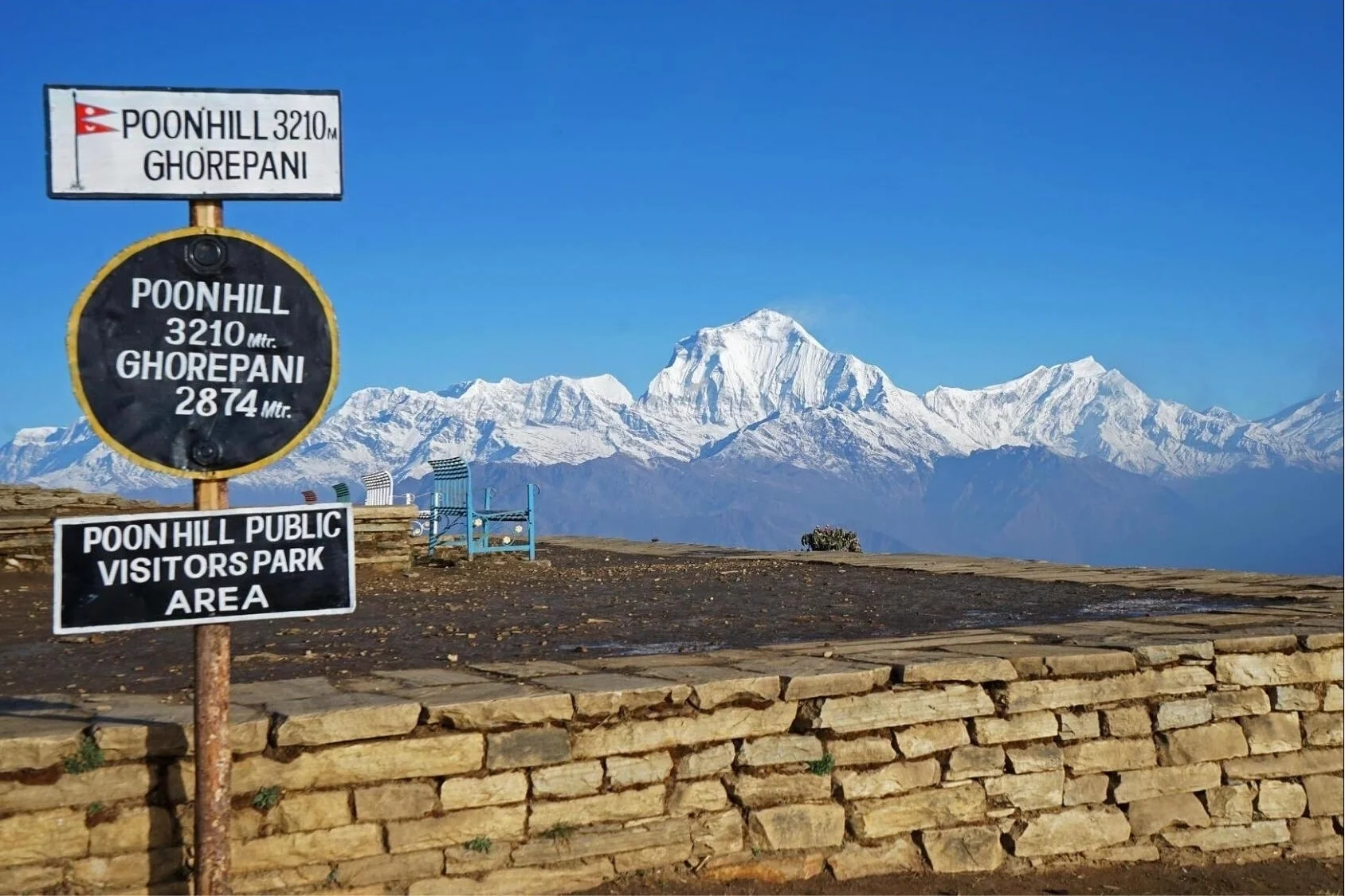
Moreover, it brings trust with transparent pricing and local expertise. Thus, the classic Poon Hill Trek route provides the most return for the least amount of complexity.
Why Poon Hill Is Nepal’s Best Short Trek in Both Autumn and Spring
Discover why Poon Hill Trek is Nepal’s best short trek in autumn and spring with views, easy trails, costs and guided service by Haven Holidays.
Key Reasons Poon Hill Draws Tourist Attention:
- Short duration Himalayan trek
- Best sunrise viewpoint in Annapurna region
- Ideal Nepal autumn trekking option
- Colorful spring trekking Nepal experience
- Poon Hill Trek Weather in Autumn: Clear Skies from Ghorepani to Poon Hill Viewpoint
Meanwhile, the best short trek in Nepal is Poon Hill (3,210m) for combining Himalayan views with cultural villages and easy accessibility. Hence, trekkers reach outstanding viewpoints without extreme altitude risks or long walking days.
In addition, the Ghorepani Poon hill trek fits beginners, families, and travelers who have a small quantity of time, seeking Himalayan scenery. Thus, autumn and spring make this trek universally appealing.
Secondly, Poon Hill trek in autumn trekking from September to November is characterized by stability, safety, and visual clarity. Consequently, there are sharp views of the 7,219-meter Annapurna South, 6,993-meter Machhapuchhre, and 8,167-meter Dhaulagiri.
Besides, dry trails make less fatigue between Nayapul at 1,070 meters above sea level and Ghorepani at 2,860 meters above sea level. Hence, it becomes ideal for first-time trekkers in autumn. Meanwhile, spring trekking is best from March to May, enhancing scenic beauty through seasonal vegetation.
Therefore, the rhododendron forests flower brilliantly via trails to Tikhedhunga (1,540m) and Ghorepani (2,860m). Besides, higher temperatures enhance walking comfort in mornings and evenings. Thus, spring attracts nature lovers and repeat trekkers.
Moreover, its relatively short duration also makes it very popular during both seasons. Hence, trekkers are able to complete the route quite comfortably within four to five days. Additionally, moderate altitude does not pose significant risks associated with altitude sickness.
It, therefore, remains safe and manageable every year of the season. Importantly, views at sunrise from Poon Hill (3,210m) are consistently rewarding in both seasons. Hence, autumn presents crystal-clear golden landscapes.
Meanwhile, the spring will show layers of clouds with soft light effects. Thus, photographers and casual trekkers alike feel satisfied. Most notably, cultural immersion strengthens the trek's value beyond the scenery. Hence, trekkers pass Gurung and Magar villages like Ulleri (2,070m). Moreover, local teahouses give traditional food and warm hospitality.
Thus, cultural activities make a balance with physical exercise. In addition, cost efficiency increases the attractiveness of the trek. Hence, the average cost for a Poon Hill Trek is about US$ 350 to US$ 550 per person.
Additionally, Haven Holidays Pvt. Ltd. includes permits, guides, accommodation, and transport. Thus, travelers get great value. Finally, this trek has been enhanced with professional planning from Haven Holidays Pvt. Ltd. along with local expertise.
Hence, licensed guides take care of pacing, safety, and logistics. Besides, they prepare customized itineraries according to the seasonal conditions. Thus, Poon Hill remains Nepal’s best short trek in both autumn and spring.
Meanwhile, Poon Hill Trek in Autumn comprises clear skies, temperature, visibility, and trekking conditions from Ghorepani to Poon Hill.
Moreover, Autumn on the Poon Hill Trek is mostly considered stable and predicted with a whole lot of accuracy in Nepal. Thus, trekkers go through days that are dry with minimal rainfall and visibility that remains consistent. Besides, the skies remain clear from Ghorepani at 2,860 meters to Poon Hill at 3,210 meters. Thus, autumn becomes the key trekking season.
Actually, the daytime temperatures are still comfortable enough for walking during autumn. Accordingly, temperatures range between 10°C to 18°C at Ghorepani (2,860m). Moreover, cool mornings develop trekking efficiency. Hence, the physical endurance improves automatically.
At night, it cools down moderately but still remains tolerable. Temperatures, therefore, lie in the range of 2°C to 6°C at higher altitudes. Moreover, teahouses offer blankets and hot meals.
Thus, comfort is guaranteed. Besides, the mountain visibility is immense during an autumn sky. Consequently, trekkers enjoy uninterrupted views of Annapurna I (8,091m), Annapurna South (7,219m), and Dhaulagiri (8,167m).
Moreover, Machhapuchhre also sharp above 6,993m appears during the time of sunrise.
Hence, the conditions of photography become optimal. Importantly, trail conditions remain dry and well-maintained during this period. Stone staircases near Ulleri - 2,070m give a feeling of comfort and less slipperiness. Also, less mud cuts down the joint strain.
Therefore, this results in considerable enhancement of walking comfort. Curiously, during autumn mornings, the winds remain gentle.
Consequently, sunrise hikes from Ghorepani at 2,860m to Poon Hill at 3,210m remain pleasant. Besides, it increases thermal comfort due to calm winds. Thus, early rising becomes quite rewarding. In addition, autumn weather enables a very reliable transportation and logistics system. Hence, road access to Nayapul at 1,070m remains uninterrupted.

Moreover, Poon hill trek remains unaffected by flight delays. Thus, reliability in the journey increases. Finally, Haven Holidays Pvt. Ltd. also plans autumn treks to coincide with the best time of year, weather-wise. Hence, guides choose optimal sunrise timing and resting stops. Moreover, pre-booked lodges prevent overcrowding stress.
Therefore, weather during autumn promises an easy and memorable Poon Hill Trek.
Summary of Weather during Autumn
Aspect × Condition
Sky clarity Excellent visibility
Temperature Cool and comfortable
Trail condition Dry and stable
Best viewpoint Poon Hill (3,210m)
Poon Hill Trek Weather in Spring: Mild Days, Comfortable Hiking Conditions
Understand spring weather on the Poon Hill Trek: mild temperatures, forest in bloom, safe trails, and comfortable hiking in the Annapurna.
Actually, spring weather in the Poon Hill Trail in Spring remains mild, stable, and highly suitable for trekking. Because of this, trekkers experience pretty favorable daytime temperatures and extended daylight hours. Moreover, conditions remain ideal from Nayapul (1,070m) to Ghorepani (2,860m).
As such, spring is considered one of the most favorable trekking seasons. Second, the daytime temperatures during spring are comfortable enough for one to walk steadily. Consequently, temperatures at mid-elevations range between 12°C and 20°C. Besides, warm air reduces stiffness when doing morning starts.
Therefore, hiking feels smooth and relaxed. While in spring the mornings and evenings remain cool but manageable. So, temperatures drop gently near Ghorepani at 2,860m and Poon Hill at 3,210m. Besides, light layers provide enough warmth. Thus, trekkers avoid extreme cold discomfort.
Moreover, spring weather conditions promote lush vegetation and blooming forests. Thus, it is obvious that the rhododendron forests thrive between Tikhedhunga (1,540m) and Ghorepani (2,860m). Brightly colored flowers also improve many trails.
Consequently, trekking in spring feels quite visually satisfying. Importantly, trail conditions remain non-hazardous and passable during spring. As a result, the minimal snowfall ensures clear stone staircases near Ulleri (2,070m). Besides, controllable moisture keeps dust at a low level. Thus, stress on the joints decreases during climbs.
Interestingly, spring skies are mostly clear and occasionally light clouded. This, therefore, allows the trekkers to enjoy good visibility during mornings. Besides, soft clouds enhance the landscape's depth. Hence, scenery appears dynamic and layered. In addition, spring weather conditions improve in terms of wildlife and bird sightings. Therefore, forests feel lively with birds and insects. Moreover, it increases the natural atmosphere and makes trekking more appealing. Thus, spring conditions are preferred by nature lovers.

Finally, Haven Holidays Pvt. Ltd. plans spring treks in order to maximize weather comfort. Thus, guides schedule early hikes and proper rest stops. In addition, flexible schedules accommodate afternoon heat. Therefore, spring weather conditions offer a good Poon Hill Trek experience.
Spring Weather Highlights:
- Mild daytime temperatures
- Blooming rhododendron forests
- Comfortable hiking conditions
- Ideal Season for Spring Trekking in Nepal
Mountain View in Spring: Crystal-Clear Annapurna and Dhaulagiri Panorama from Poon Hill
Enjoy the autumn mountain views at Poon Hill with crystal-clear Annapurna and Dhaulagiri panoramas at one of the best visibility seasons in Nepal.
First of all, autumn offers the clearest mountain views from Poon Hill-3,210m. Therefore, it gives the trekkers a view of sharp Himalayan outlines under blue skies. Post-monsoon air cleans up the dust and haze, too. Hence, visibility becomes maximum.
Secondly, the views of sunrise in the autumn are very bright and clear. Accordingly, Annapurna I (8,091m) and Annapurna South (7,219m) shine golden. Also, there is the coveted sight of Machhapuchhre (6,993m) appearing against clear horizons. Hence, the moments of sunrise are unforgettable. Meanwhile, Dhaulagiri dominates the western skyline clearly in autumn with 8,167m.
Thus, the trekkers see massive ice walls and ridges with clarity. Furthermore, the visibility over longer distances improves scale perception. Accordingly, autumn scenery feels dramatic.
Moreover, steady weather stability enhances viewing reliability. Therefore, most mornings come with clear panoramic views. Moreover, guides confidently schedule sunrise hikes.
Hence, expectations meet the reality. Importantly, the clarity of autumn is quite helpful in photography. Therefore, colors seem sharper and contrast is enhanced.
Also, mountain textures are clearly defined by shadows. Thus, photographers prefer autumn trekking Nepal. Early mornings are usually characterized by very calm atmospheric conditions. Hence, wind seldom upsets viewing comfort at Poon Hill-3,210m. In addition, stable air increases clarity of vision.
Thus, watching time extends comfortably. Surrounding views also gain from clarity this season. Hence, Ghorepani-2,860m is a vantage point for the evening view of the mountains.
Besides, trails provide scenic stops along the way. Thus, views extend beyond the moments of sunrise. Finally, Haven Holidays Pvt. Ltd. optimizes autumn treks for panoramic success. Therefore, guides choose the best timing and positioning. The coordination of groups also avoids crowding of people.
Thus, autumn brings Nepal's best mountain views from Poon Hill. Autumn Mountain View Summary Table
Mountain Elevation Visibility Quality
Annapurna I 8,091m Excellent
Annapurna South 7,219m Excellent
Dhaulagiri 8,167m Outstanding
Machhapuchhre 6,993m Crystal clear
Mountain Scenery in Spring: Snow-Capped Peaks with Soft Clouds over Annapurna South
Discover the mountainous scenery during the Poon Hill Trek with snowclad peaks, gentle clouds, and views of Annapurna South and Annapurna scenery.
Firstly, the spring mountain scenery on the Poon Hill Trek is gentle. Thus, the trekkers get to see peaks with snow alongside soft-drifting clouds.
Furthermore, the air in the spring adds to the Himalayan feature. As such, scenery appears artistic and naturally well-balanced.
Secondly, Annapurna South (7,219m) looms large in the spring landscape from Poon Hill As a consequence, the snow-crowned peaks stand out starkly against blue or white skies.
Further, the light clouds reduce the sharp edges on the mountain. Thus, the impressions seem peaceful and picturesque. However, Machhapuchhre peaks at 6,993m with partial clouding.
Thus, the fishtail design looks dramatic yet subtle. Furthermore, spring helps to increase contrast around the peak. Hence, the mountain is seen as mysterious and elegant.
Moreover, Annapurna I (8,091m) is still visible during the clear spring As a result, the trekker gets to view enormous ice faces that are glowing Further, the movement in the cloud forms patterns. Accordingly, scenery appears dynamic and interesting. Worth highlighting is the occasional sighting of Dhaulagiri (8,167m)
Consequently, trekkers experience episodes of surprise visibility. Also, the clouds bring an added element of emotion with their Thus, spring views appear inexplicable yet thrilling.
In particular, lowlands add to the mountain scenery in spring. Thus, green hills and forests adorn snow-capped mountains majestically. Further, there are rhododendrons around Ghorepani.
Thus, scenery appears to be multi-layer Moreover, spring clouds also decrease the intensity of sunlight present in sunrises. Thus, lighting looks diffused and warm.

In addition, the shadows appear to be softly blended and harmony. Therefore, picture takers can express creativity. Lastly, Haven Holidays Pvt. Ltd. offers spring treks during favorable viewing periods.
Thus, there are guide-led initial excursions prior to cloud formation. What’s more, expertise in planning will ensure scenic satisfaction. So, the spring mountain environment provides a serene Himalayan experience.
Spring Scenery Highlights
- Snow-capped Annapurna South views
- Soft cloud formations
- Layered Himalayan landscapes
- Best spring trekking in Nepal visuals
Sunrise Experience at Poon Hill in Autumn Compared to Spring: The Real Experience for Trekkers
Contrast the experience of watching the sunrise at Poon Hill in autumn compared to the experience in the spring season with actual visibility levels, colors of the horizon, clouds, and the Himalayan ranges that trekkers
Firstly, the sun rise experience at Poon hill (3,210m) is vastly different for autumn and spring seasons. As a result, color and clarity differ among the climbers.
Furthermore, both seasons offer incredible experiences related to the Himalayas. Accordingly, seasonal realities should be factored in within the terms of such
Secondly, sunrises in autumn are sharp, bright, and crystal-clear. Thus, Annapurna South (7,219m), Annapurna I (8,091m), Moreover, cloud-free skies provide improved visibility.
Therefore, mountains have a sharply defined outline. On the other hand, sunrises in spring have a softer, more atmospheric
Thus, light clouds partially cover Machhapuchre (6,993 Additionally, golden tones spread gradually over mountain summits. Consequently, these scenes appear artistic as well as serene. Moreover, sunrises during autumn produce reliable results most mornings.
As a result, trekkers rarely have any reason to Weather stability also helps make hikes earlier.
Therefore, dependability is high. Spring sunrises differ every day as a result of cloud positions.
Thus, some days contain whole panoramas. In addition, other mornings show a partial glimpse with striking clouds. So, surprise is incorporated into the experience.
In particular, the strength of color can vary significantly depending on the season Consequently, the season of autumn has very vibrant orange and golden colors.
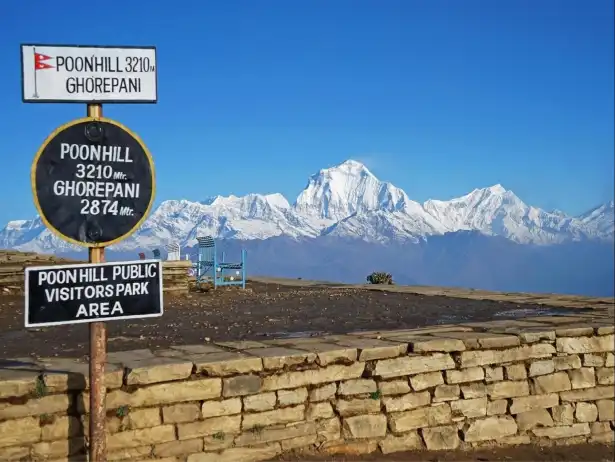
In contrast, there are pastel colors in spring with low contrasts. Therefore, a photographer chooses depending on his preference. Also, the intensity of the crowd affects sunrise comfort. Consequently, autumn attracts more people when it is peak. By contrast, spring is not so crowded.
Therefore, a view of space changes season to season Lastly, the management of the sunrise climb by Haven Holidays Pvt. Ltd. is prudent in all seasons. As a result, guides place groups in order. Also, timing adjustments enhance viewing quality. Therefore, trekkers have the best sunrise experience possible at Poon Hill.
Autumn vs Spring Sunrise Comparison Table
Aspect Autumn Spring
Sky clarity Excellent Moderate
Cloud presence Minimal Soft clouds
Color tone Sharp golden Pastel warm
Reliability Very high Variable
Rhododendron Forests in Spring: Ulleri to Ghorepani in Full Bloom
Full bloom trails of rhododendron forests during spring and colorful Himalayan scenery on the Poon Hill Trek-from Ulleri to Ghorepani.
Most importantly, spring converts the Ulleri to Ghorepani trail into the most colorful forest walk of Nepal. Thus, trekkers walk through heavy rhododendron forests in peak bloom. This section is situated between Ulleri at 2,070m and Ghorepani at 2,860m. The scenery during the spring then becomes the defining highlight of the trek.
Secondly, the rhododendron trees bloom in red, pink, white, and crimson shades. Because of this, forest corridors look luxuriant and three-dimensional. Plus, stone staircases are naturally adorned with fallen petals. Thus, walking is pleasurable and a feast for the eyes.
Meanwhile, temperate spring temperatures add to the comfort of hiking in the forests. Therefore, mild weather supports slow exploration and frequent photo stops.
In addition, thick forests provide shade to reduce heat exposure. Hence, the energy levels are constant. The ecology along the trail comes alive during spring months.
Therefore, due to these flowers, birds, butterflies, and insects increase the activity of the forests. Added to that, natural sounds enrich the atmosphere of trekking.
Consequently, the immersion into nature deepens. Importantly, rhododendron forests bear cultural significance in Nepal. Because of this, rhododendron is thought to be the national flower by locals.
Besides this, villagers also collect the petals for preparing some of their local dishes in the traditional way. Thus, trekking connects nature with culture.
Here, the density of the forest increases progressively towards Ghorepani at 2,860 m. Therefore, blooms at a high altitude seem fresher and denser. In addition, cooler air prolongs the freshness of flowers. Hence, the upper sections feel more dramatic.
Moreover, spring lighting enhances the colors of forests. Warm tones under canopies are, therefore, created by filtered sunlight. Also, clouds diffuse harsh light effectively.
Hence, the conditions for photography remain ideal. Finally, Haven Holidays Pvt. Ltd. times spring treks for peak rhododendron bloom. Hence, guides plan routes carefully between late March and April. Besides, pacing permits easy forest appreciation.
Thus, trekking in the rhododendron forests during spring becomes unforgettable.
Spring Rhododendron Highlights:
Ulleri 2,070m to Ghorepani 2,860m Full bloom
Nepal national flower experience
Best sceneries of spring trekking Nepal
Nature photography ideal trails
Autumn Landscapes: Hills of Gold, Green Terraces, Peaks Afar
Poon Hill Trek dates back to the colorful landscape of autumn, with golden hills, green terraces, and crystal-clear Himalayan peaks.
Meanwhile, Autumn landscapes along the Poon Hill Trek appear rich, warm, and well-balanced. Trekkers, therefore, enjoy the golden hills mixed with deep green terraces. Besides, post-monsoon freshness enhances color saturation.
Thus, it makes the scenery feel clean and vivid. Down below, agricultural terraces close to Nayapul 1,070m glow green after monsoon harvest. Thus, farmland contrasts in beauty with dry forest slopes.
Moreover, village life seems active and colorful. Cultural scenery accordingly enhances visual beauty. While at the same time, higher hills show gold and brown colors of autumn. Therefore, grasses dry naturally under clear skies.
Besides, sunlight enhances earthy tones. Landscapes, therefore, are warm and inviting. Moreover, distant Himalayan peaks are sharply outlined during the autumn period. Thus, Annapurna South 7,219m and Dhaulagiri 8,167m stand clearly.
Moreover, it is sharply outlined by Machhapuchhre at 6,993 meters. Thus, it remains dominantly background scenery. Importantly, the air clarity in autumn is such that it provides long-distance visibility. Therefore, haze-free conditions define terrain depth accurately.
Further, sky and land contrast is also enhanced. Thus, pleasures from viewing increase. Note that the colors of forests change rather subtly throughout the autumn. Therefore, green forests mix with yellowing leaves. In addition, seasonal change adds texture variety.
Thus, walking would feel visually dynamic. Moreover, sunset light greatly enhances the beauty of autumn landscapes. Therefore, evening light casts golden shadows across hills. Besides, villages shine warmly during dusk. Thus, daily scenery feels cinematic.
Finally, Haven Holidays Pvt. Ltd. tailors autumn treks to scenic diversities. Hence, guides choose optimal view-points and rest stops. Furthermore, itinerary pacing maximizes daylight scenery. Thus, landscapes of autumn present the classic beauty of trekking in Nepal.
Color Summary Table of Autumn Landscape
Feature Visual Character
Hills Golden, warm
Terraces Deep green
Peaks - Crystal clear
Sky Blue and sharp
Poon Hill Trail Conditions in Autumn: Dry Stone Steps and Stable Paths from Tikhedhunga to Ghorepani
Autumn trail conditions on the Poon Hill Trek offer dry stone steps, stable paths, and safe hiking from Tikhedhunga to Ghorepani.
First, the conditions along the Poon Hill trails in autumn are dry, firm, and highly reliable on the Poon Hill Trek. Therefore, trekkers experience stable footing from Tikhedhunga (1,540m) toward Ghorepani (2,860m).
Besides, post-monsoon weather cleanses mud and debris from pathways. Thus, trekking in autumn feels secure and predictable. The famous stone staircases between Tikhedhunga (1,540m) and Ulleri (2,070m) remain absolutely dry. Consequently, the trekkers can climb easier with improved balance and reduced risk of slipping.
In addition to that, dry steps improve rhythm and endurance. Thus, physical fatigue decreases noticeably. While the trails above Ulleri at 2,070 meters are compact and dust-free. Therefore, shoes have a very good grip on natural surfaces.
Besides, fallen leaves seldom cause accidents because of the low level of moisture. Thus, walking comfort remains at a high level. Autumn weather also prevents erosion and landslide disruptions. Thus, trails get to remain open and well-maintained.
Besides, local communities repair the pathways before peak season. Hence, route reliability increases. Importantly, stable trails support consistent trekking pace. Hence, guides also manage daily distances effectively.
Besides, the beginner will also be able to get confident much faster. Hence, the improvement of enjoyment in trekking takes place. Notably, autumn dryness protects joints and muscles. Because of this, knees suffer less during the descent.
Also, stable footing improves one's posture. Hence, the risk of getting injured diminishes. Pack animals and porters also travel efficiently on fall trails. Thus, logistics remain efficient and timely. In addition, congestion on trails cuts down on accidents.
Thus, the safety improves as a whole. The third and most crucial reason for visiting during this season is the benefits of trail stability, preferred by Haven Holidays Pvt. Ltd. The guides therefore confidently schedule longer walking sections. Besides that, droughts guarantee the same service quality. Thus, autumn trail conditions support a smooth Poon Hill Trek.
Autumn Trail Condition Summary:
Dry stone steps
Stable forest paths
Very little mud risk
Best season for beginners
Poon Hill Trail Conditions in Spring: Fresh Trails, Occasional Mud, and Forest Walks
Actually, Poon Hill Trail in Spring is reported, while on the Poon Hill Trek, include some fresh forest paths, occasional mud, and scenic walks from Tikhedhunga to Ghorepani.
First, the spring trail conditions of the Poon Hill Trek feel fresh, lively, and naturally dynamic. Because of this, the trekkers walk through renewed landscapes after winters. Moreover, the trails regaining softness between Tikhedhunga (1,540m) and Ghorepani (2,860m). Thus, trekking in spring feels refreshing. Stone steps near Ulleri (2,070m) are safe but sometimes damp. Consequently, trekkers need to have steady pacing and focus.
Additionally, light moisture does a lot of good to dust control. Accordingly, it enhances respiratory comfort. While in spring, the forest trails look colorful and shady. Consequently, fallen leaves mix with the soil to provide soft surfaces.
Moreover, walks in the woods tend to be really immersive and tranquil. Thus, it feels peaceful to trek. Additionally, the occasional spring shower brings about small squelchy mud spots. Hence, balance is improved by using trekking poles. The shoes will also provide safety. Hence, preparation counts.
Importantly, the spring moisture supports vegetation growth along trails. Therefore, pathways are natural growth of greenery. Besides, flowers add to visual interest. Hence, landscapes make up for small difficulties. Notably, active trail maintenance continues in spring. Consequently, local villagers repair erosion straight away. Besides, the main routes are still well-marked. Thus, navigation remains smooth.
Additionally, softness in the trail in spring reduces joint impact while descending. Thus, knees receive more gentle landings. Additionally, trekking feels less harsh physically. Thus, comfort improves.

Lastly, Haven Holidays Pvt. Ltd. manages the professional creation of spring trails. Thus, guides modify their walking speed and cadence. Moreover, the safety checks remain the same. Thus, spring trails deliver a rewarding Poon Hill Trek experience.
Highlights of Spring Trail Conditions Feature.
Stone steps holding a slight dampness
Smell of forest paths fragrant and soft
Presence of mud: Occasional
Scenic value: Very high
Crowds in Autumn: Ghorepani and Poon Hill are the most sought-after trekking destinations during the peak season.
Understand the autumn crowd on Poon Hill Treks with insights into peak trekking seasons at Ghorepani and Poon Hill viewpoints.
Firstly, autumn crowd levels on the Poon Hill Trek increase significantly due to ideal trekking conditions. Therefore, this season does not let down trekkers who come from all over the world. Moreover, clear skies and stable weather attract large guided groups. Thus, autumn is the busiest time of year for trekking.
Moreover, the Ghorepani is 2,860 meters above sea level and enjoys high occupancy during the autumn months. As a result, the teahouses are full by the late afternoon. Besides, dining halls are made so bright and social. Hence, bookings in advance become essential.
Meanwhile, the viewpoint at Poon Hill-3,210m receives heavy traffic of trekkers during the time of sunrise. Hence, the trekkers assemble early for panoramic views. Also, photographers fight for first positions in the front view. Thus, sunrise moments come across as energetic and crowded.
Moreover, the trail sections from Tikhedhunga (1,540m) to Ulleri (2,070m) remain busy day in and out. As a result, the walking speed is slightly slower during rush hour. Pack animals also use the same narrow paths. Therefore, patience becomes vital. Importantly, autumn crowds create a lively trekking atmosphere. Therefore, trekkers can interact effortlessly with people around.
Besides, shared experiences build community spirit. Thus, social trekkers enjoy the environment. Notably, festival seasons increase domestic trekking traffic.
Therefore, Dashain and Tihar holidays attract Nepali visitors. Furthermore, cultural energy enriches villages. Therefore, local life is festive.
Also, the services logistics are influenced by the crowded conditions. Therefore, Haven Holidays Pvt. Ltd. does strategic early departures. Furthermore, guides are fully aware of spacing the groups. Thus, comfort does not get out of hand.
Finally, autumn crowds are a testament to the popularity of this trek rather than an inconvenience. Therefore, a well-planned event cuts stress to the minimum. Further, organized schedules ensure the smooth movement of immigrants. Thus, autumn remains rewarding despite peak crowd levels.
Overview of Autumn Crowd
Trekking peak season Nepal
Busy Ghorepani lodges
Crowded sunrise at Poon Hill
High social trekking atmosphere
Spring Crowd Levels: Equally Distributed Trekkers and Quiet Villages
Experience Spring Crowd on the Poon Hill Trek: A well-balanced trekker ratio, villages devoid of chaos, and relaxed hiking.
First, it is well-distributed and average spring crowd in Poon Hill Trek. Therefore, trekkers enjoy scenic trails devoid of congestion. Besides, the flow of visitors is spread evenly over weeks.
Thus, trekking is relaxed. It is also assured that Ghorepani (2,860m) has comfortable lodge availability during spring. As a result, trekkers find rooms easily. Besides, dining halls also stay quiet. The evenings, therefore, are placid.
Likewise, sunrise at Poon Hill, 3210m, is less popular among trekkers as compared to autumn. It therefore feels more comfortable when viewing space. Moreover, photographers are free to move. Sunrise is, therefore, personal.
Moreover, the trails between Tikhedhunga (1,540m) and Ulleri (2,070m) are not so busy. Hence, the speed of walking remains constant. Besides, the nature sounds overcome the surroundings. Hence, the immersion enhances.
Importantly, spring villages feel unhurried and friendly. Because of this, villagers interact with trekkers on a more personal level.
Besides, cultural interaction goes even deeper. Thus, village life is more genuine. Importantly, it balances the crowd levels and reduces the pressures on the trails. Hence, environmental impact remains lower. Besides, trails heal themselves naturally.
Hence, sustainability improves. Further, Haven Holidays Pvt. Ltd. prefers the spring season for easy group movement. Consequently, guides allow flexible pacing.
Moreover, rest stops feel unhurried. Therefore, comfort increases. Spring crowd balance is ideal for trekkers who seek solitude in the mountains. Therefore, nature lovers prefer this season. In addition, peaceful villages tap into emotional connections. Hence, spring gives a peaceful experience of the Poon Hill trek.
Teahouse Availability and Food Experience in Autumn on the Poon Hill Trek
Check for teahouse availability and the food experience during autumn on Poon Hill Trek, considering lodge comfort, meal variety, and reliable service.
Specifically, Poon Hill Trek during autumn, a lot of teahouses are still available on the Poon Hill Trek because of high demand for trekking. Hence, most of the teahouses function fully from Nayapul at 1,070m to Ghorepani at 2,860 meters.
Besides, the owners of lodges get ready: they prepare rooms and kitchens in advance of the high season. Hence, services offered are not only stable but can also be relied upon.
Secondly, Ghorepani-2,860m has the highest number of teahouses in the autumn. Consequently, there are a variety of lodgings for trekkers to stay in that range in comfort level. In addition, dining halls are kept warm and social in the evenings. Hence, nights become lively with the staying over. Food variety increases manifold during the autumn trekking season.
Thus, menus comprise dal bhat, noodles, soups, pasta, and pancakes. Fresh vegetables also come down regularly from the lower villages. Thus, meal quality improves.
Moreover, the availability of hot meals is very consistent throughout the route. As such, trekkers enjoy cooked breakfasts prior to their predawn hikes to Poon Hill at 3,210 meters. Warm drinks also support early morning comfort. Therefore, levels of energy remain balanced.
Importantly, the autumn demand slightly increases the prices of food and accommodation. Hence, the meals are marginally costlier than during the spring season. Besides, food costs reach about USD 15 to USD 25 per day. Thus, budgeting becomes very important.
Notably, their teahouse kitchens maintain their hygiene standards throughout the high tourist season. Thus, fast service turnover ensures fresh preparations. Large numbers are also managed effectively by experienced staff. Therefore, the safety of food remains intact.
Besides this, locally produced goods take the front stage in all autumn menus. Therefore, the trekkers taste fresh potatoes, seasonal greens, and homemade pickles. Besides, it gives flavor to the cultural spirit. Thus, meals are made to feel real.
Finally, Haven Holidays Pvt. Ltd. makes a prior booking of teahouses for autumn treks. Hence, groups avoid last-minute shortages. Guides also make sure to coordinate meal timing.
Therefore, autumn teahouse experience stays smooth and satisfying.
Autumn Teahouse and Food Highlights
- Fully operational tea houses
- Wide food variety
- Reliable hot meals
- Slightly higher seasonal cost
Comfort of Tea-houses, Local Hospitality in Spring along Poon Hill Route
Mainly, the comfort at the spring teahouse and local hospitality are the main attractions on the Poon Hill Trek, comfortable peaceful lodges, warm services, and cultural interaction.
First, spring teahouse comfort on the route to Poon Hill is relaxed and laid-back. Therefore, no lodges operate under peak season pressure. In addition, rooms are quieter and larger. Therefore, the quality of rest improves.
For instance, Ghorepani 2,860m teahouses have better room availability in spring. As a result, trekkers choose desired rooms conveniently. Common areas may also be considered calm and warm. Hence, the evenings are peaceful.
Meanwhile, spring food service features freshness and local sourcing. That is why all vegetables and herbs look so bright right after winter. Besides, meals become light and nourishing. Thus, this will make digestion feel easier.
Also, in spring, the local hospitality becomes more personal. Accordingly, the hosts are very open with the trekkers. The cultural stories and traditions are also shared.
Hence, emotional connection strengthens. Importantly, spring temperatures improve sleeping comfort naturally. Consequently, rooms stay moderately warm overnight.
Besides, fewer blankets are enough. Thus, the quality of sleep improves. Food prices remain a little lower during the spring season, notably. Thus, the average cost of food per day varies between USD 12 and USD 20. Value for money also increases.
Thus, spring suits the budget-conscious trekkers. Moreover, it keeps teahouse hygiene intact with lighter crowds. This is why kitchens use norms of cleanliness. In addition, slower service enables preparation to be carried out with due care. This is because it makes meals feel well-cooked. Spring is, therefore, preferred by Haven Holidays Pvt. Ltd. for authentic teahouse experiences.
Therefore, trekking guides would call for cultural interactions in a respectful way. Flexible schedules also promote relaxed dining. Thus, comfort in the teahouse during spring enhances the Poon Hill Trek.
Overview Comfort Spring Teahouse Aspect
Spring Experience Availability of rooms
High Hospitality Personal
Food freshness Excellent
Cost level Moderate
Cultural Encounters during Poon Hill Trek in Autumn: Gurung and Magar Villages during Festival Season
Enjoy full autumn cultural encounters in Poon Hill Trek, the villages of Gurung and Magar, festivals and traditions along with original village life.
Mainly, Autumn cultural encounters on the Poon Hill Trek feel so lively due to Nepal's main festival season. Hence, Gurung and Magar villages resonate with rituals, colors, and mass gatherings.
Besides, trekking during festivals adds a depth of culture beyond mere sceneries. Thus, autumn trekking becomes culturally enriching. The villages around Tikhedhunga at 1,540m and Ulleri at 2,070m actively celebrate Dashain and Tihar. As a result, trekkers are witness to tika ceremonies, music, and family gatherings.
Besides, the traditional clothes show up more often. Therefore, cultural visibility is enhanced.
While on the trail, the Magar communities are very communal in their way. Therefore, it hosts social activities and shared meals. Elders also instruct rituals that are filled with symbolic meanings. Hence, the cultural authenticity is intact.
Moreover, Gurung villages closer to Ghorepani record 2,860m above sea level emphasize hospitality during festivals. Consequently, trekkers are accorded warm welcomes and explanations of the culture. In addition, natives share festive foods gladly. Hence, interactions come across as meaningful.
Importantly, festival season affects daily village routines. Agricultural work, therefore, is put on hold as one celebrates.
Besides, the prayer flags are shown very catching. Therefore, villages become joyful. Notably, autumn festivals strengthen the cultural identity among younger generations. Therefore, dances and songs take part in children.
Besides, traditions pass visibly from generation to generation. Hence, continuity of culture becomes reflected. Additionally, one is supposed to be respectful during festivals by not going on a trek. Therefore, guides brief trekkers on etiquette.
Besides, photography follows permission protocols. Thus, cultural respect remains preserved.
Finally, Haven Holidays Pvt. Ltd. aligns autumn treks with cultural calendars. Thus, schedules permit time for observation during festivals. In addition, guides explain traditions in detail. Therefore, autumn's cultural encounters heighten the trekking experience in Poon Hill.
Autumn Cultural Highlights
- Gurung festival traditions
- Village rituals of the Magar
- Dashain and Tihar celebrations
- True cultural immersion
Cultural Life in Poon Hill Trek in Spring and Autumn: Ulleri, Banthanti and Ghorepani
Explore spring cultural life on the Poon Hill Trek, with daily village routines in Ulleri, Banthanti, and Ghorepani.
First of all, spring cultural life in the Poon Hill route reflects daily routines, not festivals. Villages depict working lifestyles. Besides, trekkers observe the natural village rhythms.
Secondly, Ulleri at 2,070m undergoes busy agricultural preparation in spring. As a result, villagers fix up terraces and raise livestock. Besides, women manage routine household chores efficiently. Consequently, there is a balance in daily life.
Meanwhile, Banthanti works as a rest point for villagers and trekkers. Main activities, therefore, are dominated by wood collection and tea preparation. Besides, natives are easygoing socially. Thus, cultural exchanges come across as natural.
Besides, Ghorepani village (2,860m) keeps consistent village rhythm in spring season. Accordingly, lodge owners get ready to cater to the demand from upcoming trekkers. Besides, schools and shops function as usual. Hence, life in the community feels stable. Importantly, spring allows one to observe the traditional livelihoods more deeply.
Hence, farming, animal care, and trading remain at a view. Added to that, cultural practices seem unwritten. Thus, authenticity increases. Notably, local hospitality is more personal in spring. As such, villagers interact with trekkers calmly.
Moreover, the conversations sound real. Hence, the cultural bonds grow stronger. Moreover, spring village life points out sustainability practices. Thus, firewood is utilized carefully by the locals. Besides, organic farming is dominant. Thus, harmony in the environment becomes visible.
Finally, Haven Holidays Pvt. Ltd. focuses on spring respectful village engagement. Thus, guides support cultural learning. Moreover, slow trekking supports observation. Thus, spring cultural life enriches the Poon Hill Trek.
Summary Table-Spring Village Life
Village × Elevation × Cultural Emphasis
Ulleri 2,070m Agriculture
Banthanti 2,210m Daily trade
Ghorepani 2,860m_ Community life
Best Season for Poon Hill Trek: Autumn or Spring with Haven Holidays Pvt Ltd
Explore the perfect time for Poon Hill Trek with Haven Holidays Pvt. Ltd. when autumn and spring seasons can be compared based on climate, landscapes, and comfort level.
First of all, the most suitable time for a trek to the Poon Hill is determined on the basis of climatic stability, landscape, and comfort during hiking. Thus, autumn and spring are the best times for trekking.
Moreover, both seasons provide good visibility of the Himalayas and easy trails. Therefore, it is important that trekkers weigh the pros of each
Secondly, Autumn trekking is conducted from September to November in the Poon Hill trek. Therefore, “stable weather” enables comfortable walking and the clear view of mountains. Furthermore, there are also excellent views from Poon Hill at 3,210m. Accordingly, autumn is suited for photographers. On the other hand, Spring Trekking takes place between March, May, with relatively warm temperatures during the daytime
As a result, there are rhododendron blooms in the Ghorepani. Furthermore, trails look colorful and vibrant. Therefore, spring is attractive to nature enthusiasts.
Additionally, autumn is characterized by cool weather with very little rainfall.
Further, the activity of trekking seems physically comfortable Therefore, resistance increases. It should be noted that spring brings longer days and warmer mornings. Trekkers also have flexible walking times.
Additionally, sunrise spots offer pleasant views at Poon Hill (3,210m). Consequently, Spring is suitable for beginners. Additionally, the number of spectators in the stadium may differ from Consequently, the traffic during the autumn season is greater.
Furthermore, spring is relatively busy. Hence, crowd preference matters.
Additionally, Haven Holidays Pvt. Ltd. customizes itineraries seasonally.
Therefore, guides adjust pacing and accommodation choices. Moreover, safety standards remain consistent. Thus, service quality stays reliable.
Finally, both seasons deliver exceptional trekking experiences. Therefore, autumn favors clarity and festivals. Moreover, spring favors flowers and warmth. Thus, the best time depends on personal preference.
Conclusion: Poon Hill Trek in Autumn vs Spring – Which Season Is Right for You?
Compare autumn and spring Poon Hill Trek to select the correct season according to the weather, landscapes, comfort, and trekking goals.
Firstly, a personal set of priorities must be set before concluding the comparison of the Poon Hill Trek season. Thus, it is essential that trekkers consider weather, landscapes, and comfort
Additionally, both season guarantee trekking safety. So, neither of them seems wrong.
Secondly, the autumn season comes with unparalleled mountain clarity and festivities. As a result, vistas from Ghorepani (2,860m)
Moreover, Himalayan sceneries are still clear Thus, autumn is ideal for visually-priority
However, spring focuses on natural scenery and rural life. Thus, there are Rhododendrons in blossom along the trails at U
Further, the warmer air promotes comfort. Therefore, spring is a relaxing season.
Moreover, the reliability of weather affects the safety during trekking .It is for these reasons that autumn is characterized by conditions of low rainfall.
In fact, there is a certain predictability of warmth Therefore, both seasons are safe.
It is essential to note that cost variations are minimal irrespective of the season. Hence, the cost of packages for the Poon Hill Trek is about USD 350 to 600. Price will also depend on services. Consequently, season is less determined by budget.
In particular, the styles of trekking experience change with seasons Thus, autumn is full of dynamic celebrations. And, of course, spring is a period of time when Consequently, emotional preference is significant.
In addition, Haven Holidays Pvt. Ltd. considers both the preference for a season as well as the Hence, guides design experiences carefully. Furthermore, the logistics industry is professional. Consequently, service continuity remains intact.
Finally, the choice of season depends upon individual trekkers' plans. Autumn will therefore be suitable for seekers of clarity. Furthermore, it is ideal for nature lovers too. Hence, the Poon Hill Trek is satisfying in both seasons.
Season Decision Table
Criteria Autumn Spring
Weather Stable Warm
Scenery Clear peaks Flowers
Crowd Busy Moderate
Comfort Cool Mild
Note: This article originally appeared on the Haven Holidays Nepal Blog and has been republished here with permission..
About Haven Holidays Nepal: Haven Holidays is a locally based trekking company in Kathmandu, offering tailor-made adventures to Nepal’s most iconic destinations including Annapurna Base Camp, Everest Region, Manaslu Circuit, and Langtang Valley. Visit us at www.havenholidaysnepal.com
| Concerned URL | https://www.havenholidaysnepal.com/blogs/poon-hill-trek-in-autumn-vs-in-spring |
|---|---|
| Address | |
| Source | https://www.havenholidaysnepal.com/blogs/poon-hill-trek-in-autumn-vs-in-spring |
| Keywords | Poon hill Trek |
| Target group(s) | Destinations , Businesses , Travellers , Education, Research, Consultancy , NGOs, Partnerships, Networks |
| Topics | Natural Heritage & Biodiversity , Travel, Transport & Mobility |