Knowledge Networking Portal for Sustainable & Responsible Tourism


 Annapurna Circuit Trek with Snow Leopard Sightings- A Guide
Why Winter Is the Best Season to Spot Snow Leopards on the Annapurna Circuit
Learn why winter is considered the best season to see snow leopards on the Annapurna Circuit for Haven Holidays Pvt. Ltd by taking part in safe and professionally-guided treks.
Winter Snow Leopard Chances by Region:
| Region | Elevation (m) | Winter Sightings Likelihood | Notes |
| Manang | 3,519 m | Very High | Blue sheep migrations attract leopards |
| Yak Kharka | 4050m | High | Frequent ridge and slope movement |
| Ledar | 4,200 m | High | Trails are quiet, hence a good visibility of the surroundings is possible. |
| Thorong Phedi | 4,540 m | Moderate | Harsh cold reduces daytime activity |
Moreover, winter decreases the flow of trekkers on the Annapurna Circuit, which starts from Besisahar (760 m) and rises toward Thorong La Pass (5,416 m). Since there are fewer people disturbing the environment, snow leopards will appear more frequently near trails and pasturelands. Hence, remote sections of Manang(3,519 m) and Yak Kharka (4,050 m) offer better opportunities for sightings. This serene environment enriches the entire trekking experience.
Similarly, the seasonal decline in temperature affects the behaviour of snow leopards in a very predictable manner. Since prey animals such as blue sheep descend to lower slopes, it becomes easier for the snow leopards to hunt them, so they follow the prey. Therefore, trekkers who pass through Pisang (3,200 m), Ledar(4,200 m), and Thorong Phedi (4,540 m) see more movement of wildlife. Haven Holidays Pvt. Ltd. makes full use of this opportunity by offering many well-planned winter itineraries.
Additionally, clear winter skies enhance wildlife observation across the Annapurna region. Because cold air reduces moisture, visibility is remarkably sharp from morning to late afternoon. Hence, trekkers have unobstructed views of Annapurna II (7,937 m), Gangapurna (7,455 m), and surrounding ridges used by snow leopards. In such ideal viewing conditions, the confidence and excitement among visitors also grow. However, winter trekking requires preparation as temperatures go below −15°C at high altitudes. Therefore, Haven Holidays Pvt. Ltd recommends proper layering, warm gloves, insulated boots, and quality sleeping bags. Similarly, it ensures that the basic components regarding safety pacing, timely acclimatization, and weather assessment are properly evaluated at each village. Due to this very fact, winter wildlife seekers stay safe and sound.
Winter, however, imparts a different serenity to teahouse villages on the circuit. Since the crowd thins considerably, local lodges in Manang and Thorong Phedi are cozy retreats with personalized service. Because of this, trekkers enjoy quiet nights and warm meals until they resume their hunt for the snow leopard. The cold climate is superbly offset by this cultural comfort.
Actually, Winter has remained the most reliable season for spotting snow leopards across the Annapurna Circuit, whereas wildlife concentrates at accessible altitudes with outstanding visibility, hence providing rare viewing opportunities for the trekkers.
Additionally, Haven Holidays Pvt. Ltd guides on expert guidance, safe routes, and well-designed itineraries create an enriching experience. As such, the winter trekking turns out to be quite memorable and meaningful in wild life.

December–February Snow Leopard Behavior: What Trekkers Should Know
Learn how snow leopards behave from December to February on the Annapurna Circuit and plan your trek with Haven Holidays Pvt. Ltd.
Winter Snow Leopard Behavior Highlights
- Increased daytime movement in early morning and late afternoon.
- Frequent usage of south-facing cliffs to warm up and rest.
- Wider hunting range due to lower prey density.
- Lower valley descent following the migration of blue sheep.
- Reduced territorial displays when survival needs increase.
Although snow leopards continue to be elusive throughout the year, their behavior changes significantly between December and February. Because the prey animals will shift to lower valleys during winter, the movement of a snow leopard follows predictable paths. Hence, trekkers walking through Manang (3,519 m), Humde (3,330 m), and Yak Kharka (4,050 m) see evidence of movement quite frequently. Haven Holidays Pvt. Ltd trains guides to read these patterns effectively.
Besides, because of the reduced prey density in winter, snow leopards expand their hunting radius. Since survival rests on efficient energy use, most of them habitually patrol ridges, frozen rivers, and rocky gullies. As a result, trekkers notice fresh tracks, scrape marks, and territorial scent sprays along narrow trails. Due to such clues, wildlife enthusiasts understand the presence of a predator.
Similarly, winter stimulates snow leopards to move more during the day than in warmer seasons. Since extreme nighttime cold diminishes activity, they usually hunt in early morning or late afternoon. Thus, trekkers walking toward Ledar (4,200 m) and Thorong Phedi (4,540 m) may see them at peak movement hours. Haven Holidays Pvt. Ltd plans walk times accordingly to catch these wild-life patterns.
In addition, snow leopards prefer steep slopes where sunlight increases warmth during cold hours. As south-facing cliffs build up more heat, these become ideal rest zones in winter. Thus, trekkers scanning sunlit ridges around Pisang (3,200 m) and Ngawal (3,660 m) increase their chances of spotting the cats. In fact, this awareness also enhances the general trekking experience.
Even so, snow leopards are very cautious and avoid the direct contact of humans. Because of that, trekkers need to walk quietly, avoid sudden movements, and keep a safe distance during observation. Similarly, guides at Haven Holidays Pvt. Ltd ensure responsible wildlife viewing, which does not disturb natural behavior. This kind of ethical approach supports long-term conservation.
Also, the territorial conflict in winter becomes less because snow leopards do not give much priority to dominance when food is a great priority. Given that prey scarcity forces individuals to travel widely, marking behaviors become less frequent. Hence, trekkers find fewer aggressive territorial marks on the trail. This shift reflects seasonal survival strategies.
Finally, knowledge of winter snow leopard behavior will help trekkers adjust their expectations and trekking pace accordingly. Since the Annapurna region has natural advantages in winter, the ideal time for observation remains in the December-February window. What is more, a guided tour by expert guides at Haven Holidays Pvt. Ltd adds to safety, visibility, and knowledge. Thus, the trekkers will get rare insight into one of the world’s most mysterious predators.
Where Snow Leopards Are Most Commonly Seen on the Annapurna Circuit Trail
Find out about some common snow leopard spotting regions on the Annapurna Circuit and embark on a guided trek with Haven Holidays Pvt. Ltd.
Important Snow Leopard Sightings Zones:
| Place | Altitude | Likelihood |
| Manang | 3,519 m | Very High |
| Yak Kharka | 4,050 m | High |
| Ledar | 4,200 m | High |
| Thorong Phedi | 4,540 m | Moderate |
| Humde | 3,330 m | Moderate | Morning |
Moreover, the snow leopards have adequate shelter and hunting grounds as there are rugged cliffs encircling Manang. As blue sheep populations are also found in this region, it becomes easy to notice the prey and predator relationship. Therefore, it becomes common knowledge among trekkers that snow leopard footprints and calls can be seen and heard near Gangapurna Glacier at 4,600 m.
Similarly, Yak Kharka is preferred snow leopard habitat due to easier movement because of open slopes. Blue sheep graze on exposed ridges. As a result, snow leopards frequently travel through. Not surprisingly, trail use by trekking tourists frequently reveals scrape marks, scat, and even fresher paw prints on the trail.
Likewise, Ledar is a transition area connecting low valley regions and passes at a higher altitude. As snow leopards move via these routes during winter months, it ceases to be an inactive zone. As a result, tourists trekking at either early morning or late evening hours get more chances. Haven Holidays Pvt. Ltd adjusts trekking timings based on maximum activity.
Nevertheless, Thorong Phedi still presents an alternative observation site thanks to its impressive rocky sides. Due to the presence of optimal camouflage, snow leopards rest or move undetected via narrow gullies. It is therefore essential to have a guide in these conditions as he will be useful in pointing out hints amidst these hard-to-observe environments. Additionally, it should be noted that the high valley area surrounding Humde at an altitude of 3,330 m also exhibits serious wintering activities. As Humde is close to fertile regions with grazing lands, there would be prey as well as predators. Hence, it becomes an attractive spot for scanning.
Finally, these regions constitute the core where snow leopards are seen most frequently along the Annapurna Circuit. Secondly, winter not only reduces accessibility but also brings wildlife into regions that are viewed at an accessible elevation. Thirdly, travel organizers like Haven Holidays Pvt. Ltd. provide safety and a structured program for visiting these snow leopard sighting regions.
Winter Annapurna Circuit Route Overview for Wildlife-Focused Trekkers
Discover the best winter trail on the Annapurna Circuit for snow leopard enthusiasts with Haven Holidays Pvt. Ltd.
Winter Wildlife Trekking Essentials:
- Bring layered clothing that can withstand temperatures below -15°C.
- To spot more wildlife, walk either early morning or late afternoon.
- It is recommended that you drink fluids to acclimate your body to the pressure caused by altitude
- Follow guidelines carefully for animal interpretation and pacing.
- Use your binoculars to scan the distant mountain ranges for snow leopard movement.
Despite being difficult, winter makes the Annapurna Circuit an attractive option for animal enthusiasts on a trek. Since snow leopards, blue sheep, and Himalayan foxes are often seen at lower altitudinal regions, winter becomes a perfect season for sightings. As a result, animal enthusiasts embark on a planned route. Planning of this route requires expertise, an area where Haven Holidays Pvt. Ltd. specializes.
Moreover, the winter trekking trail begins from Besisahar at 760 m and then moves gradually to Chame at 2,650 m. The reason for choosing these villages as trekking start points is that these villages are snow-free. So, acclimatization becomes smooth for trekkers before they enter the area of snow leopards.
Similarly, on the trail from Chame and Pisang (3,200 m), there are varied landscapes and initial movement of wild life. As there are Himalayan thar and musk deer on forested slopes, sometimes snow leopards travel on these routes. As such, trekkers acquire introductory knowledge on tracking at this stage. The region exposes them to what they will encounter at more elevated locations.
Furthermore, from Pisang to Manang (3,519 m), it then becomes the center for winter wildlife trekking. As Manang is near Gangapurna Glacier and grazing area, there will be preys and predators. So, it becomes a common spot for tourists to begin their scanning. A acclimatization day is set here for its exploration. It is an event set by Haven Holidays Pvt. Ltd.
Despite that, there is a marked transition as they ascend from Manang to Yak Kharka at 4,050 meters. As winter forces these animal migrations with the melting and accumulation of snow, there are more animal movements. It is thus an area that presents some very good animal sightings.
Additionally, the trail that leads from Yak Kharka to Ledar Pass (4,200 m) becomes confined to traditional leopard tracks. As leopards prefer rocky slope tops and silent slopes, scanning becomes imperative. As a result, trekkers normally walk slowly and search carefully early in the morning. This will enable them to sight leopards against winter light.
Further, reaching Thorong Phedi via Ledar represents an exciting and rich wildlife experience as it ends with a push to an altitude of 4, 540m. Due to extreme cold at this altitude, snow leopard sightings occur during warmer times. Therefore, noon sightings remain an area of focus.
Lastly, the winter Annapurna Circuit trail presents unparalleled opportunities for snow leopard and wildlife sightings. As a result of better visibility and low-altitude animal migration, it presents a unique Himalayan experience for trekkers.
Also, it should be noted that Haven Holidays Pvt. Ltd. maintains efficient organizational and safety standards for winter treks. As a result, animal enthusiasts return from the Annapurna Circuit loop with confidence.
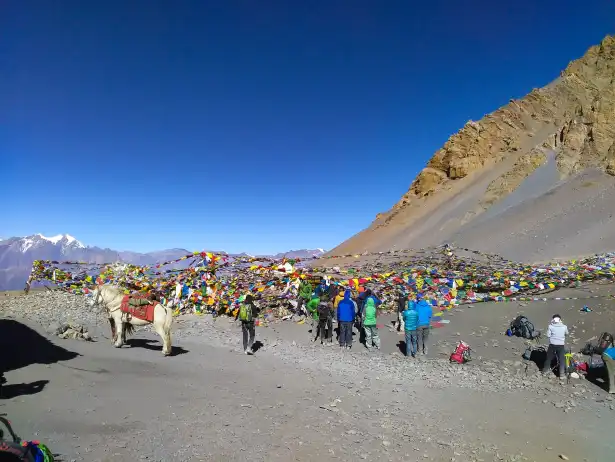
Safe Winter Trekking Advice for Snow Leopard Habitats at Higher Altitudes
Stay updated with necessary winter trekking tips when exploring snow leopard territories on an Annapurna Circuit trek with the expert help of Haven Holidays Pvt. Ltd.
Winter Essentials for Snow Leopard Habitats:
| Acclimatization | High | Rest in Man |
| Clothing | Critical | Use insulated layers | Protects |
| Footwear | High | insulated boots |
| Gear | High | Carry microspikes |
| hydration | necessary | drink warm water |
| Weather | Monitoring | Critical |
| Follow guide alerts | Avoids storm |
| Timing | Important | Start Early |
Moreover, acclimatization becomes an integral part of trekking to Ledar (4,200 m) and ThorongPhedi (4,540 m). Because Alps sickness begins appearing with more regularity during winter months, it becomes necessary for tourists to climb very carefully.
Therefore, staying an additional day at Manang becomes an excellent practice and enhances endurance.
At the same time, multi-layer winter clothing will serve as a safeguard against wind and low temperatures. Due to low wind chill below -20°C near Thorong La Pass, a good insulating effect will also be required at an altitude of 5,416 m. As a result, down jackets, insulating clothing, warm gloves, and waterproof trousers will be necessary.
Moreover, cautious pacing becomes an imperative aspect on trails covered with snow. Ice will form on shaded trails at Yak Kharka and Ledar. As a result, it becomes essential for people to walk carefully. Therefore, micros pikes and trekking poles will help with stability on ice. Haven Holidays Pvt. Ltd recommends careful pacing.
Despite that, hydration should not be overlooked in cold regions either. First, as temperatures plummet and air dries up, dehydration sets in quicker than people would normally expect. As such, it is imperative for trekkers to drink warm water.
Furthermore, winter storms may develop unexpectedly at higher altitudes. As snowfall reduces visibility at an accelerated rate, guides keep a watchful eye on the weather. As a result, it becomes necessary for trekking parties to be flexible about daily itineraries.
Moreover, early starts become absolutely necessary for trekking. Given that winter daylight is still short, it becomes necessary for the trekking start early. As a result, trekkers will have reached the destination before the lowering of temperatures. Also, it corresponds with the peak animal migration.
Finally, winter trekking would be feasible with planning and expertise. As winter trekking spots remain tough, it becomes essential for tourists to adhere carefully to expert advice. Several professional travel organizers also remain at your service. Similarly, Haven Holidays Pvt. Ltd. functions as an efficient travel organizer with proper safety and expertise while traveling in winter. Wildlife enthusiasts remain completely safe.
Temperature, Weather, and Visibility During December, January, and February
Know about winter temperature, weather, and visibility on Annapurna Circuit from December to February with Haven Holidays Pvt. Ltd.
Insights into winter weather and visibility:
- During winter, as soon as snowfall
- The skies are normally clear because of the dry winter air.
- Nighttime temperatures drop considerably below -15°C in higher-lying regions.
- Visibility continues to be best early in the morning.
- Snow showers may have temporarily obstructed narrow trails.
- There are strong winds near exposed areas like Thorong La Pass.
Although it experiences very low temperatures on the Annapurna Circuit in winter, it presents some of its finest Himalayan sightseeing opportunities. Because there are low levels of rainfall and it is very dry from December to February, mountains such as Annapurna II (7,937 m) and Gangapurna (7,455 m) are very clearly visible. As a result, trekkers get clear blue skies for most of the days. Haven Holidays Pvt. Ltd. plans winter itineraries on this basis.
Moreover, temperature fluctuations from day and night are considerable on the trek. As lower villages with temperatures comparable to Chame at 2,650 m remain warmer, they provide an acclimatizing opportunity. Therefore, acclimatization occurs gradually before proceeding into colder regions with animal life around Manang at 3,519 m and Yak Kharka at 4,050 m.
Similarly, it will be very chilly at night in high places. Due to this, it will be necessary for trekking participants to have clothing that will resist low temperatures below -15°C at night, as at Ledar (4,200 m) and ThorongPhedi (4,540 m). As a result, it will be necessary for people to have four-season sleeping bags and insulated sleeping mats.
Furthermore, there remains stable weather conditions during the daytime. This is because there are fewer cloud formations. As a result, as the dry winds prevail in the upper valleys, it leads to visibility extending for several kilometers. Therefore, it aids trekkers considerably as they have optimal viewing conditions for scanning wildlife.
Despite that, snowfalls can still be anticipated at times. Since temperatures remain below zero at higher altitudes, snow accumulation becomes rapid on shaded trails. As a result, proper pacing becomes necessary while walking around frozen gullies. Haven Holidays Pvt. Ltd guides will be with you to assist while walking around these regions.
Also, there are stronger wind conditions at Thorong La Pass, which stands at 5,416 m. As it is an exposed trail, the velocity of the wind affects the warmth and visibility. Thus, it becomes necessary to plan carefully with guides about the times to cross.
Similarly, winter provides nights with considerable duration and reduced daylight. As there is early sunset around the valley tops, trekkers usually have to start early. Consequently, they will arrive at the Lodge before it becomes cool once again. Again, it fits well with times of maximum animal movement.
Finally, winter sets in and changes the Annapurna Circuit into a chilly but crystal-clear trekking destination. As a result of greater visibility and coming down of wild life, there are optimum scanning chances. Also, Haven Holidays Pvt. Ltd. understands proper paces and weather checks so that December-February becomes an rewarding season.
Necessary Winter Equipment for Snow Leopard Sightings on Annapurna Circuit
Find out what winter gear you will need on your snow leopard sighting trip on the Annapurna Circuit with tips offered by Haven Holidays Pvt. Ltd.
The Basics of Winter Kit for Snow Leopard Sightings:
- Thermal base layers for all-day insulation
- Wind-resistant down jacket for extreme cold weather
- Waterproof trekking boots with insulated inner lining
- Ice SPDs for ice trail sections
- Trekking poles for support and safety
- Warm gloves/mittens and a woolen cap
- Sunglasses for snow glare with UV protection
- Mask for preventing frostbite
- Throughout history, humans have sought ways to
- 10x Binoculars or Spotting scope.
- Four season sleeping bag Freezing nights
Although winter will increase the odds of snow leopard sightings, it will require proper equipment for a smooth trek. Since the temperature drops below -20°C at Yak Kharka (4,050 m) and Thorong Phedi (4,540 m), it will be necessary for trekkers to plan properly. As a result, it will be imperative for tourists to have the necessary winter accessories. Professional guides from Haven Holidays Pvt. Ltd will be useful for planning.
Moreover, multi-layer clothing constitutes the basis for winter attire. As the Upper Annapurna region experiences incessant low temperatures, it becomes imperative for climbers to wear warm inner layers, fleece jackets, and down-filled materials. Consequently, wearing warm outer layers safeguards against wind percolation on exposed ridges.
At the same time, insulated boots are still necessary for trekking on frozen trails. Due to quick snow accumulation at Ledar (4,200 m), it becomes necessary for boots to be insulated and have good grip. Water-resistant boots with hard soles are thus preferred.
Likewise, proper use of hands and heads becomes an essential task at higher heights. As there would be quicker loss of heat at the tops of hands and heads, it would be necessary to wear warm gloves/mittens and wool Caps. So, layered gloves are preferably used as aids for trekking while scanning for wild life.
Despite these factors, optical equipment will improve the snow leopard sighting experience. Since snow leopards have an excellent camouflage blend among the rocky mountains, having a pair of binoculars will greatly aid trekkers in scanning distant mountain ranges. As a result, 10x binoculars or portable spotting scopes will be very useful.
Also, safety equipment helps protect climbers against dangers on ice. As ice develops on shaded slopes around Manang (3,519m) and Yak Kharka(4,050m), microspikes assist with balance. Therefore, trekking poles act as an added aid on steep climbs.
Further, necessary accessories also provide comfort throughout prolonged observation sessions. As strong winds with low temperatures are still prominent around Gangapurna Glacier at an altitude of 4,600 m, face buffs and wind masks also act as useful tools. Hence, wearing sunglasses also helps protect eyes from snow glare.
Finally, winter trekking for wildlife becomes worthwhile when adventurers have the right equipment. It should be noted that snow leopard trekking destinations are always chilly. As a result, it becomes very important to prepare properly. It should be added here that Haven Holidays Pvt. Ltd. assists tourists with equipment necessary for trekking on snowy mountains with an emphasis on animal watching.
How Haven Holidays Pvt. Ltd. Organizes Snow Leopard Treks Based on Snow Leopards
Find out more about how Haven Holidays Pvt. Ltd. arranges professional snow leopard winter trekking expeditions on the Annapurna Circuit.
How Haven Holidays Pvt. Ltd Deals with Snow Leopard Treks:
| Trek Component | Company Approach | Benefit to Trek |
| Acclimatization | Slow and methodical | Prevents altitude sickness |
| Wildlife Guides | Professional local guides | Increases chances of sightings |
| Route Planning | Winter-optimized routes | Provides safety and comfort |
| Accommodation | Trustworthy partner will provide accommodation | Offers warmth |
| Gear Support | Pre-Hike Gear Advice | Ensures proper Safety Monitoring |
| Weather check every day | Prevents hazardous exposure | Ethical Practices |
Although snow leopard trekking requires efficient planning, Haven Holidays Pvt. Ltd. arranges these winter trips methodically. As these winter trips include high-altitude destinations at Manang (3,519 m), Yak Kharka (4,050 m), and Ledar (4,200 m), there arises a need for proper guidance. As a result, these trips are planned with equal focus on viewing snow leopards and staying safe.
Moreover, the firm acclimatizes all trekkers before every trek. As a result, with a high prevalence of altitude sickness at Pisang above 3,200 m, the strategy shields participants. Consequently, there are ample rest days at Manang.
Similarly, Haven Holidays Pvt. Ltd. arranges guides with expertise in wildlife for these winter expeditions. As snow leopards are rarely spotted, it requires expertise on the movement pattern of these leopards. Consequently, activity spots around Gangapurna Glacier at 4,600 m and Yak Kharka ridges are recognized.
Likewise, safety planning for winter conditions also helps with each trekking day. As the temperatures drop drastically at ThorongPhedi (4,540 m), guides observe the weather conditions constantly. Therefore, they plan the trekking schedule so as not to walk during either a storm or trail conditions that might be hazardous.
Nevertheless, it should be noted that the company also considers responsible behavior among wild animals. As snow leopards should never be approached, humane distance is kept during sightings. Thus, tourists watch them from a safe location without making a sound.
Additionally, the organization employs convenient lodges that are found in reachable winter regions. Some teahouses remain closed due to winter at higher altitude destinations. Nevertheless, Haven Holidays Pvt. Ltd works with trustworthy local agencies. Consequently, trekking participants are provided with warm food and a heated dining hall for supper. As an added feature, the organization assists the trekking parties with preparation for essential winter materials before commencing the trek. As some of these materials might be hard to source in distant locations, it becomes imperative to prepare ahead of time. Consequently, all the necessary winter materials are supplied as listed by Haven Holidays Pvt. Ltd.
Lastly, Haven Holidays Pvt. Ltd uses local knowledge and understanding of the snow leopards and planning with expertise to offer unique winter trek experiences. Since snow leopard travel involves specific knowledge, they make sure that participants have a successful and insightful journey. Additionally, adventurers get either an adventure or an understanding about conservation within the Annapurna region. Thus, these winter travel experiences offer long-term satisfaction for animal enthusiasts.
Best Villages and Viewpoints for Wildlife Photography in Winter
Unravel the greatest winter viewing spots and villages on the Annapurna Circuit for Wildlife Photography with expert advice from Haven Holidays Pvt. Ltd.
Best Winter Wildlife Photography Locations in Annapurna Circuit Trek:
- Manang (3,540 m): Blue sheep sightings and expansive views
- Khangsar (3,734 m): Fox tracks, silent winter ambiance
- A. Yak Kharka (4,110 m): Snow leopard migration routes
- Ledar (4,200 m): High contrast winter lighting
- Thorong Phedi (4,540 m): Bird life and Ridge photography
- Humde (3,330 m): Valley views and animal tracks
To begin with, winter wildlife photography can be done in tranquil Himalayan spots on the Annapurna Circuit. To start with, there are quiet trails and ample opportunities for observation of snow leopards and blue sheep. To add more, there is ample winter light for better images. Thus, these select observation spots are included in winter itineraries offered by Haven Holidays Pvt. Ltd.
Secondly, Manang Village at 3,540 m remains the most rewarding spot for winter viewing. The valley stretches with a clear view of Annapurna II at 7,937 m and Gangapurna at 7,455 m. Moreover, blue sheep commonly graze on the slopes. As such, photographers will get an opportunity to click images with prominent mountains.
Likewise, Khangsar Village(3,734 m) also provides a serene atmosphere perfect for winter photography. Khangsar Village is located close to Tilicho Lake and therefore allows ample opportunities for Hill Fox photography. Again, there are less-crowded trails, which enable a slowly observational photography session. Therefore, Khangsar Village is very productive for winter photographers.
Moreover, Yak Kharka itself (4,110 m) becomes a natural migration path for flora and fauna. Snow leopards usually follow blue sheep migrations on mountain ridges near the village. Also, winter grasses provide musk deer favors in secluded spots. As a result, photo enthusiasts get an opportunity with long lens camerals.
Similarly, Ledar (4,200 m) also offers excellent high-angle positions. The rocky cliffs around the settlement area sometimes display snow leopard pug marks. In fact, the clean air conditions improve contrast during sunrise photography. Therefore, Ledar will continue to be an imperative location for capturing images of snow leopards during winter.
Additionally, there are extensive views offered by the surroundings at Thorong Phedi (4,540 m). Wildlife sightings occur less often at this area; however, the winter lighting effects are stunning and combine very well with the landscape. Additionally, there are Himalayan birds of prey on steep cliff sides. As a result, ThorongPhedi acts as a secondary viewpoint for photographers.
Lastly, winter photography practitioners should not forget safety procedures. Cold weather affects batteries’ longevity, and paths with snow also need cautious foot traffic. Also, guides from Haven Holidays Pvt. Ltd. help with appropriate positioning and animal observation. Therefore, every site becomes more productive with these guides.
Therefore, Annapurna Circuit presents unbeatable destinations for winter wildlife photography experiences with proper guidance. Unique sightings and perspective opportunities are offered by each village. Hence, Haven Holidays Pvt. Ltd. arranges safe and fruitful experiences for photographers interested in capturing rare Himalayan wildlife species during winter.
Accommodation and Teahouse Conditions During the Snow Leopard Season
Find out more about winter accommodation and teahouses, as well as snow leopard season on the Annapurna Circuit, with Haven Holidays Pvt. Ltd.
Winter tea-houses:
| Location | Elevation | Heating |
| Manang | 3,540m | Good |
| Khangsar | 3,734 m | Moderate |
| Yak Kharka | 4,110 m | limited |
| Ledar | 4,200 m | Thorong |
| Phedi | 4,540 m | Minimal |
First, winter trekking for snow leopard sighting requires proper understanding and planning regarding accommodation. While Annapurna Circuit still remains feasible, teahouse services will be more basic during winter. Moreover, people need to be ready for fewer meals and limited heating. Therefore, Haven Holidays Pvt. Ltd. will provide better teahouses that are trekable in winter.
Secondly, most teahouses in Manang have good winter services. Teahouses at 3,540 m offer warm dining halls, blankets, and clean rooms. Moreover, the proprietors are not idle due to an increase in winter wildlife tourism activities. As a result, Manang acts as a reliable axial center for snow leopard tracking expeditions.
Actually, Khangsar, at 3,734 m, also offers basic but warm family-run lodges. The rooms are unheated, but they are equipped with thick quilts and insulated windows. Also, winter meals offer warm soups and ‘dal bhat’ dishes. As a result, trekkers find these places and services very attractive.
Moreover, tea houses at Yak Kharka have minimal staff. The dining hall usually consists of a central heater that functions at night. Also, there are chilly rooms, and so winter sleeping bags remain a must. Consequently, Haven Holidays Pvt. Ltd. selects the warmest available lodges.
Equally, there's Ledar Camp (4,200 m) with basic accommodation available during snow leopard migration. Also, there will be fewer food options because of limited supplies. Again, tourists should be ready to encounter ice-cold toilets and water. As a result, winter readiness will be vital.
Also, there are teahouses at ThorongPhedi at an altitude of 4,540 m. It is the highest form of accommodation offered in this region. The facilities here are very basic with no heating and electricity. Moreover, trekkers have to cope with the cold temperatures at night with multi-layered clothing. As a result, acclimatized schedules are followed before reaching Phedi by Haven Holidays
Finally, winter accommodation can be tolerated with proper understanding. Trekkers get warm food, sound accommodation, and amicable treatment. Again, better facilities and easy accessibility are ensured for those who travel with guides. So, snow leopard season becomes a successful and fruitful destination.
Therefore, winter accommodation on the Annapurna Circuit can still be very simple but very safe as well if properly maintained. All teahouses offer warmth, food, and basic shelter. Hence, Haven Holidays Pvt. Ltd. always manages to get the best winter accommodations available during snow leopard season.
Wildlife Guides/Local Experts: Why You Need Them in Winter
Why expert wildlife guides and local specialists are crucial to safe, successful winter snow leopard tracking on the Annapurna Circuit.
Key Reasons You Need Wildlife Guides in Winter:
- Deep knowledge about snow leopard behavior in winter.
- Accurate identification of the tracks and territorial signs
- Safe navigation of icy trails and steep ridges
- Strong communication with the local communities
- Knowledge of the hotspots to view wildlife around Manang and Khangsar
- Emergency support and winter-weather guidance
- Wildlife viewing ethics
- The success rate in sighting is improved, with the advantage of efficient routes being taken.
First of all, winter snow leopard tracking requires a highly experienced wildlife guide who has knowledge about the seasonal movement pattern. Similarly, the Annapurna Circuit includes steep ridges and cold valleys that lie between Manang (3,540 m) and Yak Kharka (4,110 m). Additionally, winter weather conditions reduce visibility and make the trail less safe. Thus, Haven Holidays Pvt. Ltd. provides clients with trained local experts in order to have responsible, informed tracking.
Secondly, local guides understand the behavior of snow leopards in winter. They identify fresh pugmarks, scrape marks, and territorial signs on ridges near Ledar at 4,200 m. Additionally, their expertise reduces unnecessary trail wandering. Hence, trekkers access high-probability locations faster and more safely.
Moreover, local guides know winter feeding habits that will affect sightings. Blue sheep congregate on south-facing slopes near Khangsar (3,734 m) in colder months. In addition, predators follow the herds around closely. Because of this, guides bring trekkers to strategic winter viewpoints.
Likewise, winter experts help trekkers deal with unfavorable weather conditions. Suddenly, it starts getting extremely cold just after sunset at ThorongPhedi (4,540 m); the icy trails also ask for slow and cautious pacing. Therefore, Haven Holidays Pvt. Ltd guides adjust trekking hours for maximum safety.
Here, guides also facilitate the maintenance of respectful distances from wildlife. The snow leopard, for example, remains cautious during the hunt in winter. Moreover, guides try to avoid noise and any kind of sudden movement that would disrupt natural patterns. Hence, trekkers enjoy ethical wildlife viewing.
Similarly, guides manage the essential communication with local communities: villagers in Manang (3,540 m) often report fresh wildlife sightings. Furthermore, guides translate local updates into actionable trekking decisions. For this reason, trekkers enjoy increased chances of meaningful encounters.
Furthermore, guides accompany trekkers in case of an emergency. Winter conditions have heightened risks of mild frostbite and altitude discomfort. In addition to that, the guides are trained in first aid and winter safety. Guided groups, therefore, handle winter challenges more convincingly.
Finally, the winter wildlife trips are richer and safer with expert support, wherein the trekker gains knowledge and confidence besides improved sighting opportunities. Besides, Haven Holidays Pvt. Ltd always ensures that there is reliable local partnership for responsible travel in wildlife. Thus, the tracking of nature in winters becomes rewarding and well-guided.
In particular, professional wildlife guides are of utmost importance during the winter tracking of snow leopards. They provide safety combined with knowledge and insights into community aspects. Thus, Haven Holidays Pvt. Ltd. ensures each winter trek comes with skilled local specialists for responsible and meaningful wildlife travel.
Responsible Snow Leopard Tracking: Ethical Guidelines for Trekkers
Follow some of the essential ethical guidelines for responsible snow leopard tracking on the Annapurna Circuit led by experts from Haven Holidays Pvt. Ltd.
Ethical Practice-purpose-Winter Importance-Trekker Action:
- Keep a distance - Protect natural behavior Crucial during hunting - Stay with guide
- Avoid loud noises as well. Reduce stress Increase winter sensitivity Move quietly
- Stay on trails Protect habitat
- Snow hides fragile ground.
- Follow marked paths
- No littering - Do not disturb the ecosystem.
- Waste is frozen into position.
- Pack all waste out
- Respect locals
- Support conservation
- Villagers can do update sharing.
- Listens and learn from them.
- Use responsible operators
- Support conservation initiatives
- Winter places a strain on wildlife
- Use certified tour guides
First of all, responsible snow leopard tracking starts with respect for the fragile winter ecosystem. Sensitive habitats within this area also include parts near Khangsar at 3,734 m and Manang at 3,540 m. In addition, during the particularly strict months, the winter wildlife is challenged by energy problems. Hence, it is required for trekkers to minimize upsets while observing predators and prey.
Actually, trekkers must keep a safe viewing distance from the wildlife. The snow leopards require undisturbed territory for stalking blue sheep on slopes near Yak Kharka (4,110 m). Also, approaches that are too close disrupt natural behaviour. Hence, Haven Holidays Pvt. Ltd guides ensure calm and responsible viewing positions.
Moreover, it is to be ensured that trekkers do not obstruct the movement of wildlife. The winter herds take very specific ridgeline routes above Ledar at 4,200 m; predators also depend on these corridors to hunt their prey. Therefore, trekkers should follow the instructions given by guides and stick to the earmarked trails.
By the same token, patience and restraint are similarly critical in ethical wildlife photography. Photographers should refrain from making loud noises or sudden movements. Additionally, bright flashes can startle sensitive species. Guides thus prepare safe photography settings out of respect for animals and their habitats.
Additionally, litter or traces of food must not be left behind by trekkers. Waste attracts scavengers, affects natural cycles in winters, and usually gets hidden by snow, causing long-term damage. Thus, responsible trekkers pack out all waste even in remote areas.
Similarly, respect for the local community is one of the ethical bases for snow leopard tracking. The villagers around Manang's area (3,540 meters) share conservation knowledge and cultural habits. Besides, many support protection efforts for snow leopards. Thus, it is expected that the trekkers listen with respect and follow the advice of the locals.
Also, responsible travel means making responsible choices in selecting operators. Haven Holidays Pvt. Ltd supports community-based conservation on the Annapurna Circuit. The guides also train in responsible tracking and winter wildlife safety. Therefore, trekkers contribute to sustainable winter tourism.
Finally, responsible trekking ensures the protection of snow leopards and secures conservation gains. Trekkers have important experiences that are non-damaging to wildlife. Guided winter travel promotes long-term respect for the environment. Therefore, responsible tracking ensures adventure in balance and sustainability.
In the end, responsible snow leopard tracking creates harmony between trekkers and nature. Ethical actions protect fragile winter habitat, support conservation, and thereby ensure Haven Holidays Pvt. Ltd leads their trekkers through a safe, respectful, and meaningful snow leopard experience.
Awareness on Snow Leopards Ecosystems - Manang and Mustang Region
Learn about the special snow leopard habitat and ecosystems of Manang and Mustang with information on snow leopard prey and wintering habits on the Annapurna Circuit.
Main Characteristics of Manang–Mustang Snow Leopard Ecosystems:
- Ridges as hunting corridors at high altitude
- Blue sheep and Himalayan tahr as prominent prey species
- Migrates to lower regions with onset of winter months
- South-facing slopes with natural warmth and visibility
- Cliff shelters as locations for rest and energy conservation
- Some cliff shelters were created as
- Local communities offering useful updates on local wildlife
- Local inhabitants are
- Projects enabling conservation and stability
- Clear winter visibility helping with track identification
To begin with, the snow leopard ecosystem in Manang, at an altitude of 3,540 m, and Mustang, at 3,800 m, occurs within mountainous regions and valley regions. The regions comprise cold desert regions with mountain ranges and isolated canyons, making it difficult for prey species to be spotted by snow leopards. Additionally, snow leopard migration routes are determined by feeding behavior during winter.
Secondly, there exist prey species necessary for snow leopard survival. Blue sheep graze on rocky slopes above Yak Kharka at an altitude of 4,110 m. Also, Himalayan tahr and marmots support the winter food chain. It can be seen that movement of prey species affects visibility significantly.
Moreover, there are some winter-specific behavioral traits among snow leopards due to snowy conditions. Also, heavy snow pushes prey species down the Khangsar valley at lower elevations (3,734 m). Moreover, snow leopards have some regular hunting routes on mountain ridges. As a result, snow leopard tracks can be commonly seen on sunny slopes.
Similarly, extreme winter conditions affect habitat. Snow leopards look for sheltered sites around Ledar (4,200 m) for energy conservation. Also, snow leopards prefer south-facing ridges. It is because of this reason that guides with Haven Holidays Pvt. Ltd arrange visits to these winter ranges.
Also, there are benefits from human settlements. Manang and Mustang residents monitor animal populations on a daily basis as they engage in agriculture and livestock production. There are also vital updates given about new animal sightings and migration. As such, local knowledge aids greatly in winter tracking success among trekkers.
Likewise, conservation efforts enhance stability within ecosystems. Community-based projects promote animal and habitat conservation. Additionally, winter trekking income goes toward snow leopard conservation. Therefore, eco-tourism enhances stability within ecosystems.
Also, winter environments allow better visibility for nature enthusiasts. Dry air and limited vegetation make a great photographic background. Moreover, snowy slopes have fresh animal tracks that guides can easily interpret. As a result, winter season becomes perfect for learning about predator ecology.
Lastly, it can be noted that snow leopard ecologies are typified by a precarious harmony among factors associated with winter and terrain. Trekkers have experiences because they have been warned about winter ecology. Therefore, it might be added that Haven Holidays Pvt. Ltd. retains treks that safeguard winter ecology.
In summary, the Manang and Mustang snow leopard ecosystem is surprisingly biologically rich during winter. A trekker adopts a better understanding with professional help and responsible travel. As a result, Haven Holidays Pvt. Ltd. introduces tourists to knowledgeable and ecologically aware winter exploration.
Winter Annapurna Circuit Itinerary Specifically Designed for Wildlife Lovers
Follow a winter Annapurna Circuit trekking itinerary for nature enthusiasts interested in taking up a snow leopard tracking program with guides from Haven Holidays Pvt. Ltd.
Wildlife Itinerary During Winter
| Day | Location & Elevation |
| Day 1: | Dharapani (1,960 m) |
| Day 2: | Chame (2,670 m) |
| Day 3: | Pisang (3,200 m) |
| Day 4: | Manang (3,540) |
| Day 5: | Khangsar (3,734 m) |
| Day 6: | Yak Kharka (4,110 m) |
| Day 7: | Ledar (4,200 m) |
| Day 8: | ThorongPhedi (4,540 m) |
| Day 9: | Thoro ng La (5,416 m) |
| Day 10: | Muktinath (3,760 m) |
Secondly, winter travel days are shorter due to low temperatures. A hotspot area surrounding Khangsar (3,734 m) and Yak Kharka (4,110 m) demands an early start. Also, better visibility in the morning aids tracking. As a result, travel times are set based on movement times for predators.
Moreover, rest days allow better acclimatization and better opportunities for viewing wild life. Climbers get an extra day in Manang as they trek to blue sheep routes. Moreover, acclimatization walks are done by guides towards winter ranges. As a result, chances for snow leopard pug marks sightings improve.
Similarly, acclimation days at higher altitude demands careful pacing. Treks to Ledar (4,200 m) and ThorongPhedi (4,540 m) turn ice-cold during winter mornings. Furthermore, tracking animal trails demands slower and cautious movement on narrow ridges. Consequently, winter schedules permit flexible timings.
Additionally, Thorong La Pass with an altitude of 5,416 m requires early travel. The winds get stronger after sunrise. Also, stable weather prevails before noon. Consequently, travel occurs with experienced winter guides from Haven Holidays Pvt. Ltd.
Equally, the trekking trail goes downwards to Muktinath (3,760 m) for the final sighting of wildlife. The lower valley contains foxes and Himalayan Vultures. Moreover, there are opportunities for photography on the surrounding ridges. As a result, trekkers complete the trek with successful observation of wildlife.
Further, customized itineraries emphasize conservation-friendly travel. Also, guides brief tourists on responsible trekking and avoiding harm to the habitat. Moreover, winter travel helps local communities as tourists get accommodation at teahouses. Consequently, wildlife-based itineraries promote sustainable travel.
At Last, an Annapurna Circuit winter trekking schedule considers jungle exploration and safety. Adventurers get exposed to snow leopard habitats and expert knowledge. Therefore, customer service at Haven Holidays Pvt. Ltd. is assured for a meaningful winter adventure.
Therefore, a winter wildlife tour itinerary showcases optimal environments, times, and tracking. Trekking enthusiasts will have experience with professional assistance. As a result, all winter tour itineraries offered by Haven Holidays Pvt. Ltd include safety, knowledge about winter life, and responsible travel.
Wildlife Permits, ACAP Regulations, and Conservation Charges for Winter Treks
Learn about winter trekking permits, ACAP rules, and conservation fees with expert guidance from Haven Holidays Pvt. Ltd. for an adventurous yet safe Himalaya trek.
Winter Trek Permit and Fee Chart:
| Permit | Type | Region | Cost (USD) |
| ACAP | Entry Permit | Annapurna | USD 25 |
| TIMS | Card | All regions | USD 15 |
| Restricted Area Permit (RAP) | Upper Mustang | USD 50 per person per day |
| Restricted Area Permit (RAP) | Manaslu | Entry into restricted | USD 75-100 per week |
Meanwhile, permits and conservation regulations impact all winter trekking expeditions conducted in Nepal, and these aspects remain effectively communicated by Haven Holidays Pvt. Ltd. Thus, all winter trekking expeditions have specific guidelines that need to be followed as per rules and regulations devised by conservation agencies operating within regions like Annapurna. It is for these reasons that proper permits are essential while promoting responsible trekking.
Also, it should be noted that all trekking enthusiasts are required to carry an Annapurna Conservation Area Project Entry Permit. The money raised from these permits goes towards supporting conservation and village communities, including Chame at 2,670 m altitude and Manang at 3,519 m. Going forth, it should be noted that winter also boosts monitoring due to conserved habitats that are protected as a result.
Moreover, the TIMS Card will also be mandatory for most winter treks. The TIMS Card contains information about the climbers for rescue and safety arrangements in remote valley regions, such as Pisang Valley at 3,200 m or Thorong La Pass at 5,416 m. Moreover, due to winter, there are chances of delay due to weather as well. Therefore, it would be necessary to carry your TIMS Card with you.
Additionally, there are specific winter trekking destinations with rules and regulations applicable for wildlife. ACAP ensures that hikers adhere to silent zones and minimal impact travel concepts within critical habitats. Consequently, guidelines help minimize disruptions within winter conditions. Based on this consideration, it can be noted that Haven Holidays Pvt. Ltd. briefs tourists on concepts related to animal welfare before engaging in the journey.
Likewise, conservation fees vary based on the region. ACAP costs foreign trekkers NPR 3,000, but there are lower rates for nationals from anywhere within SAARC. Moreover, controlled regions such as Upper Mustang at 3,840 m have special permits that cost substantially higher. Hence, there is a need for seasonal updates before making any decisions.
Furthermore, winter trekking also requires special rules on behavior at campsites and waste. It is necessary that all garbage be brought back because there might be biodegradable materials beneath the snow. Moreover, winter winds have optimal conditions for disseminating waste at high-altitude villages, such as Yak Kharka at 4,110 m.
Similarly, photo-graphing wild animals demands more caution, especially during winter. Snow leopards, blue sheep, and Himalayan foxes appear frequently within settlements. Photographers should not pursue nor trap these creatures. Moreover, there are restrictions on remote control aircraft, commonly known as drones, as set by ACAP.
Finally, winter trekking becomes easier with the help of a reliable organization. Companies like Haven Holidays Pvt. Ltd. assist with permits and adhere to ACAP guidelines, as well as help tourists with conservation measures. As a result, tourists enjoy confidence and assistance in tough environments. Finally, working with an experienced organization will make winter trekking a safe and successful endeavour.
Day-to-Day Chances of Snow Leopard Sightings-What's Realistic?
Find out about the realistic possibilities of snow leopard sightings on winter treks with the insight of Haven Holidays Pvt. Ltd and expert guides of Himalayan wildlife.
Key Ways to Improve Chances of Snow Leopard Sightings
- Go on a guided winter trek with expert wildlife guides.
- Spend more days around known habitats
- Scan ridges during early morning hours
- Don't make noise, sudden movements end
Meanwhile, snow leopards evoke deep interest among winter trekkers, and Haven Holidays Pvt. Ltd puts realism into the sighting of such wild cats among visitors. Thus, for winter trekkers, it is important to understand the aspect of viewing an elusive, rare predator that roams high mountains, such as Manang (3,519 m) and Naar (4,110 m). Consequently, winter journeys should not be burdened with disproportionate expectations. Ultimately, knowledge of the facts enhances satisfaction and responsible wildlife travel.
Here, snow leopards prefer steep, rocky habitats between 3,000 m and 5,500 m. They camouflage well against grey rock cliffs around villages like Kagbeni and Jharkot. Similarly, the movement of snow leopards depends on the availability of prey, mainly blue sheep. A sighting is thus extremely rare.
Further, winter also enhances the prospect a little, since the prey comes down to lower ridges. The snow leopards follow them into accessible zones along the Annapurna and Manaslu trails. Moreover, the snow makes fresh paw prints and scat visible, which is thrilling for trekkers. Therefore, indirect sightings become more frequent than direct encounters.
In addition, local guides look for and track daily signs to predict movement patterns. They look for scratch marks, fresh kills, and territorial markers near remote cliffs. Besides, the guides from Haven Holidays Pvt. Ltd share field experience gained from years of winter trekking. Therefore, the chances of observing wildlife are high in guided groups.
However, sightings on the ground are not always predictable. The footsteps of the snow leopard are silent, their movements vast and long in the unkind terrain. In addition to this, thick fog and winter shades of hills and valleys obscure visibility for trekkers around places like Lho-3,180 m and Samagaun at 3,520 meters above sea level. Thus, trekkers must regard the primary sightings as a rare bonus rather than something certain.
Now, following established best practices will help trekkers improve their chances of viewing them. They need to make an early morning start since snow leopards travel at dawn. Similarly, patience is a virtue during extended hours of slope scanning. Thus, persistence becomes the key.
Actually, long expeditions also provide statistical opportunities: treks with extra nights around high-risk areas such as Khangsar at 3,730 meters or Tilicho Base Camp at 4,150 meters offer many observation windows.
Similarly, very cold temperatures drive wildlife down onto sun-exposed slopes, facilitating spotting. Longer stays, therefore, greatly improve sighting chances. In addition, trekkers should have realistic expectations. Because snow leopard conservation is about minimal disturbance, guides maintain safe viewing distances. At the same time, responsible photography should not stress animals during the winter hardships. Therefore, respecting guidelines supports long-term survival.
Lastly, a winter trek is rewarding even without a direct sighting. Haven Holidays Pvt. Ltd designs itineraries keeping breathtaking landscapes, rare wildlife signs, and Himalayan culture in focus. This means that trekkers will have meaningful winter adventures. Ultimately, the journey offers deep fulfillment beyond the hope of spotting a snow leopard.
Travel and Nepal Trekking Safety During December and February Months
Obtain necessary winter trekking insurance and safety advice on Himalayan routes from December to February with the help of Haven Holidays Pvt. Ltd.
Vital Winter Trekking Insurance Policies:
- Helicopter evacuation to Kathmandu
- Providing medical services at higher alt
- Weather Interruption Protection
- Emergency repatriation
- Cancellation trip benefits
Meanwhile, travel insurance becomes highly necessary for December-February treks because winter conditions enhance dangers within regions like Manang, which is at 3,519 m. Also, travel insurance should incorporate high-altitude risks, weather, and helicopter evac. Again, Haven Holidays Pvt. Ltd helps tourists select travel insurance for high altitude destinations.
Moreover, helicopter evacuation services should be an essential feature within an insurance package for winter trekking expeditions. Unexpected storms might occur around Gokyo (4,790 m) and Larke Pass (5,106 m). Moreover, it is necessary for an insurer to set standard altitude measures that should correspond with the maximum trekking height. Therefore, it stands clear that Haven Holidays Pvt. Ltd includes comprehensive trekking itineraries.
Additionally, health insurance should also encompass frostbite and hypothermia care because low temperatures warrant intense health risks. Also, strong winds associated with Thorong La Pass and Dharmasala at 5,416 m and 4,460 m respectively raise health risks. Similarly, health evacuations should also be guaranteed from distant villages, for instance, Samagaun at 3,520 m.
Furthermore, winter safety planning requires knowledge and observation. That is, snow, avalanches, and ice winds limit visibility at an elevated valley at Dingboche(4,410 m). Moreover, expert guides assess trail changes and develop movement. As a result, safety is guaranteed with Haven Holidays Pvt. Ltd. on winter trek.
Further, it becomes imperative for participants to carry necessary winter materials. In this regard, insulated boots, crampons, and heavy gloves will be essential for traversing ice sections. Moreover, staying hydrated will be imperative as a result of reduced dehydration signals due to low temperatures. As a result, it is imperative that Haven Holidays Pvt. Ltd provides necessary winter recommendations.
Additionally, winter trekking requires professional supervision for making claims with the insurer. Treks with guides have faster reporting of emergencies because of facilitated communication. Also, helicopters are approved for quicker evacuation by the insurer once guides confirm event facts. Thus, Haven Holidays Pvt. Ltd. manages evacuations effectively on evacuees eligible for winter season.
Moreover, cancel for any reason coverage becomes relevant, as winter storms affect Lukla Airport (2,860 m). Flight delay costs additional accommodation and food expenses for Kathmandu (1,400 m). Similarly, it becomes necessary for trekkers to check with their insurer about delay-related winter conditions. As such, Haven Holidays Pvt. Ltd recommends flexible winter coverage for trekkers.
Finally, winter trekking needs proper insurance planning with regard to health, weather, and altitude. In addition, expert guides from Haven Holidays Pvt. Ltd assist trekking participants with proper insurance plan acquisition, which helps provide easy rescue services. At the same time, supervision helps make travel on snowy routes safer. Consequently, winter Himalaya trekking will be safe due to proper insurance.
Photography Tips for Documenting Snow Leopards and Winterscapes
Master professional photography techniques for filming snow leopards and winter scenes on Himalayan treks with tips from Haven Holidays Pvt. Ltd.
Important Photography Techniques During Winter Treks:
- Photography on winter
- Use telephotos on wildlife
- Telephotos should be
- Photograph during golden hours
- Protect batteries from cold
- Use exposure compensation for snow scenes. - Move stealthily around wildlife areas
Meanwhile, winter trekking presents special opportunities for photography in high-altitude areas where snow leopards exist near Manang (3,519 m) and Khangsar (3,730 m). Furthermore, Haven Holidays Pvt. Ltd. helps photographers with guidance from experts on various itineraries dedicated to wildlife. Also, winterlight emphasizes textures and shadows. As a consequence, planning leads to successful photography outings.
Moreover, snow leopards also travel on mountain ridges with an elevation ranging from 3,000 m to 5,500 m. Their natural habitat acts as camouflage, making it hard for people to locate them near distant cliffs at Jharkot (3,519 m) and Jomsom (2,743 m). Moreover, it requires a lot of scanning and waiting.
Furthermore, telephoto lenses become a necessity for taking photographs of snow leopards. A 400-600 mm lens will allow distant movement without disrupting the animal. Similarly, tripods will enable waiting for an extended period in low temperatures. Consequently, winter photographers should be very careful with equipment.
Likewise, winter scenarios require adjusting exposures because of snow reflection. Bright snow paddies at Tilicho Base Camp with an elevation of 4,150 m confuse photo meters. At the same time, it might be necessary for photographers to raise the level of exposure adjustment for brightness.
Further, the illumination of sunrise/sunset light enhances the background perspective. The initial light falls on mountain tops such as Annapurna II (7,937m) and Gangapurna (7,455m). Moreover, shadows offered by golden hours enhance frozen valleys and ridges. Consequently, shooting winter images at optimal timing is imperative.
In fact, low temperatures reduce battery life. Camera photographers should have extra batteries stored in either warm pockets at Gokyo (4,790 m) or Lho (3,180 m). Similarly, lens fogging occurs as a result of changes in temperature. Accordingly, equipment handling should be done with gradual transitions.
Moreover, snow leopards get disrupted with any abrupt movement or sound. Camera trappers have to be silent observation posts on ridges. Conversely, trackers from Haven Holidays Pvt. Ltd. provide concurrent tracking support. Hence, it becomes more likely with more composed and tranquil moods. Moreover, rules on composition improve winter mountain photography. Noteworthy foreground subjects, for instance frozen streams near Samdo at an altitude of 3,860m, help enhance perspective.
Additionally, leading lines focus the viewer's interest on distant mountain peaks. Therefore, composition rules improve picture impact. Finally, winter trek photography will offer valuable pictures of wildlife and stunning Himalayas. Moreover, it should be noted that qualified knowledge on guidance offered by the company, Haven Holidays Pvt. Ltd, will enable winter trek photographers to practice meaningful and professional photography. Therefore, winter trek photographers will be able to capture significant moments of Himalaya.
Transportation - Challenges and Solutions for Winter Annapurna Treks
Learn about major transport problems and ways to deal with winter travel issues in the Annapurna region with assistance from Haven Holidays Pvt. Ltd.
Winters on Annapurna Transport Issues and Solutions:
- Snow and ice make mountain roads hazardous.
- Planes Experience Delays and Cancellation
- Jeeps make winter travel safer
- Adding extra buffer days decreases stress
- Experienced drivers improve safety
Thus, transport becomes an issue while winter trekking in Annapurna as snow, fog, and wind make traveling difficult in this region. It should be added that on routes leading to Chame (2,670 m) and Manang (3,519 m), there might be road obstructions due to snowfall. At the same time, while traveling in December-February weather, it might be necessary for trekkers to be flexible with schedules.
Moreover, there are disrupted flights due to winter conditions to Jomsom Airport at 2,743 m, given that high winds and low visibility hamper flights. Also, flights occur during short periods with good weather. Conversely, flights can be disrupted, leading to road rerouting via Beni at 899 m. Therefore, trekkers should be prepared for disrupted flights due to winter.
Furthermore, road conditions between Besisahar and Manang become tough due to snow on steep gravel roadways. Cars proceed at low speed on ice patches at Pisang (3,200 m) and Humde (3,330 m). Moreover, there are landslides at midday because of melting snow. As a result, winter tourists need excellent alternative plans and buffer days.
Here, jeeps are still considered the most reliable form of transportation for reaching Annapurna via winter. These vehicles perform better on rugged terrain compared to smaller ones, particularly around Dharapani (1,860 m). Additionally, local drivers know how to navigate winter road conditions and can move effectively. Therefore, employing local drivers helps prevent accidents on icy roadways.
Likewise, these jeeps provide affordable transport services for budget tourists. These jeeps link major destinations such as Kathmandu at 1,400 m, Pokhara at 822 m, and Besisahar. Also, these jeeps set out early so as not to get caught up in the late afternoon snowfall. Consequently, safety for winter tourists enhances as a
In fact, they offer transport services for the trekking enthusiasts who prefer guaranteed winter arrangements. In fact, they organize jeep transfers, track weather changes, and make changes depending on weather conditions. Also, they hire trusted drivers who have knowledge about the road to Annapurna. As a result, trekking groups get more confidence.
Moreover, winter storms also impact distant villages such as Khangsar, which stands at 3,730 m, and Yak Kharka, which is 4,110 m. Supples will be hampered as tourists will have to carry necessary commodities. In addition, mule trains will be delayed because winter snow blocks grass land routes.
Furthermore, a problem of communication affects transport even more as winter reduces network strength. Trekkers who travel from Chame to Manang usually have low internet connectivity. Also, drivers use radio communication when they lose network. As a result, delayed communication affects transport cooperation for immediate transfer.
Finally, traveling during winter in Annapurna requires adaptability and planning. Additionally, Haven Holidays Pvt. Ltd. assists tourists with necessary updates and expert drivers. Just like that, planning and additional days prevent stressful waiting. As a result, planning properly will transport tourists through Annapurna without complications throughout December and February.
Why Choose Haven Holidays Pvt. Ltd for a Winter Snow leopard Trek
Find out why a snow leopard trekking winter trip with Haven Holidays Pvt. Ltd. would be an experience like no other.
Reasons Why Trekkers Choose Haven Holidays Pvt. Ltd.:
- Wildlife expert guides
- Effective winter safety procedures
- Reliable transport and logistics
- Ethical Wildlife Handling
- Flexible planning options
Hence, selecting Haven Holidays Pvt. Ltd. for a winter snow leopard trekking experience would provide unparalleled knowledge about remote Himalayan regions. Also, they have an understanding about snow leopard behavior at Manang (3,519 m), Khangsar (3,730 m), and Samdo (3,860 m). Similarly, they have expertise about winter itineraries with equal focus on safety and responsible wildlife observation.
Moreover, qualified guides at Haven Holidays Pvt. Ltd trace animal tracks such as feces, paw imprints, and ridges. They search within an altitude range of 3,500 m-5,000 m because snow leopards inhabit these regions. Hence, there are successful morning spotting sessions for better visibility.
Furthermore, safety on winter trails is also given importance because trails are icy and remote. Moreover, they check avalanche regions around Tilicho Base Camp, which acquires an altitude of 4,150 m, as well as Larke Pass at an altitude of 5,106 m. As a result, all trekkers are kept safe.
Similarly, they provide comprehensive logistical support services for winter travel. The services include transport, permits, and accommodation from Kathmandu at 1,400 m to Manang. Last but not least, they offer tracking and local arrangements with consideration to weather forecasts. As a result, winter travel becomes less uncertain for tourists.
Likewise, Haven Holidays Pvt. Ltd follows ethical practices regarding animal interactions for snow leopard trekking. They maintain a distance and do not make noise. Also, they do not baits as they follow no-baiting rules. So, there are no ill effects because of these practices.
Moreover, they have designed itineraries that allow for more viewing times without hastening acclimatization. Their trekking routes include additional nights at vital habitats, including Khangsar and SamagaunCamps(3,520 m). Again, a deliberate and slower pace enhances health and photography conditions. Consequently, trekkers have enjoyed well-balanced itineraries. Also, it offers useful photography assistance. Leaders point out locations with photography opportunities above ridges and on open slopes. Also, they assist photographers on winter light and angles. Therefore, the undertaking members get better photos of wildlife and landscapes.
Finally, Haven Holidays Pvt. Ltd. also provides reliable services, ample local knowledge, and considerable field expertise for winter snow leopard trekking. Additionally, the services and codes of conduct employed by these travel agencies improve every trip. Similarly, properly planned schedules also enable the production of pleasant and convenient adventure experiences. Thus, enthusiasts prefer Haven Holidays Pvt. Ltd. for authentic winter animal exploration.
Final Words To: Annapurna Circuit Trek with Snow Leopard Sightings
Embark on your Annapurna Circuit Trek with exclusive opportunities for Snow Leopard sightings and expert leadership from Haven Holidays Pvt. Ltd.
As a final note, it should be pointed out that the Annapurna Circuit Trekking Trail presents a very unique blend of adventure, culture, and Himalayan Wildlife opportunities that very few trails offer. The trail goes around Annapurna Massif (8,091 m) and passes through high valleys with Snow Leopards. Actually, it passes through territories with Snow Leopards in winter. Guiding you through these territories with great expertise and organizational skills is provided by Haven Holidays Pvt. Ltd.
Additionally, the trek becomes more mystical as you ascend into the village of Manang and its surrounding cliffs. These are silent regions that form an ideal habitat for Snow Leopards. Their migration routes usually follow blue sheep herds above Manang. Thus, getting to the region during winter season increases your chances as you walk the traditional trail.
Moreover, approaching Yak Kharka at 4,110 m and Thorong Phedi at 4,540 m will put you deep within the range occupied by these big cats. The Snow Leopards primarily prefer rocky outcrops, slope facets, and ridges. Trekkers usually get an indication of footprints around grazing spots and new paths on unmarked snow. Even if a sighting fails to occur, your experience will be rich.
Similarly, crossing Thorong La Pass with an elevation of 5,416 m presents additional challenges and motivation. The area presents an endurance task, but at the same time, it provides magnificent views of Annapurna II(7,937 m), Gangapurna(7,455 m), and TilichoPeak(7,134 m). While Snow Leopards are not common on the spot where you will be crossing, they are found within the surrounding rocks. You will be walking through one of the most impressive natural corridors within the Himalayas.
As a result, your trek downwards to Muktinath (3,760 m) will get you acquainted with a culturally and religiously created landscape. Muktinath is a site visited by Buddhists and Hindus. Wildlife becomes less conspicuous at this stage, but it does not have fewer species. Biodiversity at this stage will be rich at an river valley level.
Moreover, the trail leading to Jomsom and then to Marpha, with an altitude of 2,743 m and 2,650 m respectively, extends warm hospitality and apple trees after the rugged highland regions. The landscape becomes easier, but the experience of high cliff sides and spotting some elusive species remains fresh.
Further, winter trekkers will greatly benefit from the presence of guides because winter conditions include low temperatures and sometimes uncertain wind flow. To make your trekking experience very safe, Haven Holidays Pvt. Ltd. will be there for your acclimatization and will also watch out for proper observation of the wild life. Their knowledge about terrain as well as animal behavior will increase your chances of seeing Snow Leopards.
In conclusion, the Annapurna Circuit Trek with Snow Leopards will be a life-transforming experience for nature enthusiasts. The winter season with its beautiful landforms and villages, and snow-capped Himalayas and its diverse wildlife, will be an excellent combination. Organized tours will be ensured with agencies like Haven Holidays Pvt. Ltd.
Note: This article originally appeared on the Haven Holidays Nepal Blog and has been republished here with permission..
About Haven Holidays Nepal: Haven Holidays is a locally based trekking company in Kathmandu, offering tailor-made adventures to Nepal’s most iconic destinations including Annapurna Base Camp, Everest Region, Manaslu Circuit, and Langtang Valley. Visit us at www.havenholidaysnepal.com
| Concerned URL | https://www.havenholidaysnepal.com/blogs/annapurna-circuit-trek-with-snow-leopard-sightings--a-guide |
|---|---|
| Address | |
| Source | https://www.havenholidaysnepal.com/blogs/annapurna-circuit-trek-with-snow-leopard-sightings--a-guide |
| Keywords | Trekking in Nepal, Snow Leaopard Sighting |
| Target group(s) | Destinations , Businesses , Travellers , Education, Research, Consultancy , NGOs, Partnerships, Networks , Governments & Administrations |
| Topics | Climate Change - Energy and Resource Efficiency , Natural Heritage & Biodiversity , Travel, Transport & Mobility |